
How to Encourage Curiosity Across the Primary Curriculum

I’ve been in many schools, both in the UK and internationally, and I’ve always noticed that curiosity is at its strongest in the early years. It can then seem to fizzle out as the pupils get older, and this is where I’ve started to spot barriers to learning: lack of resilience, lack of recognition of how this learning is meaningful for them, and apathy.
Curiosity is the engine of learning. When pupils are genuinely curious, they ask better questions, persist for longer, and make connections that go beyond the lesson objective. Where do we make the most time for this kind of curiosity? Nursery and reception. The EYFS curriculum is based on curiosity!
Now, although I am not an early years teacher, I do find early years education interesting, especially as I have a two-year-old toddling around at home, being inherently curious about everything! Here are a few takeaways I’ve discovered whilst visiting early years settings to make and keep curiosity thriving.
Start with questions, not answers
Curiosity thrives when pupils feel safe to wonder out loud.
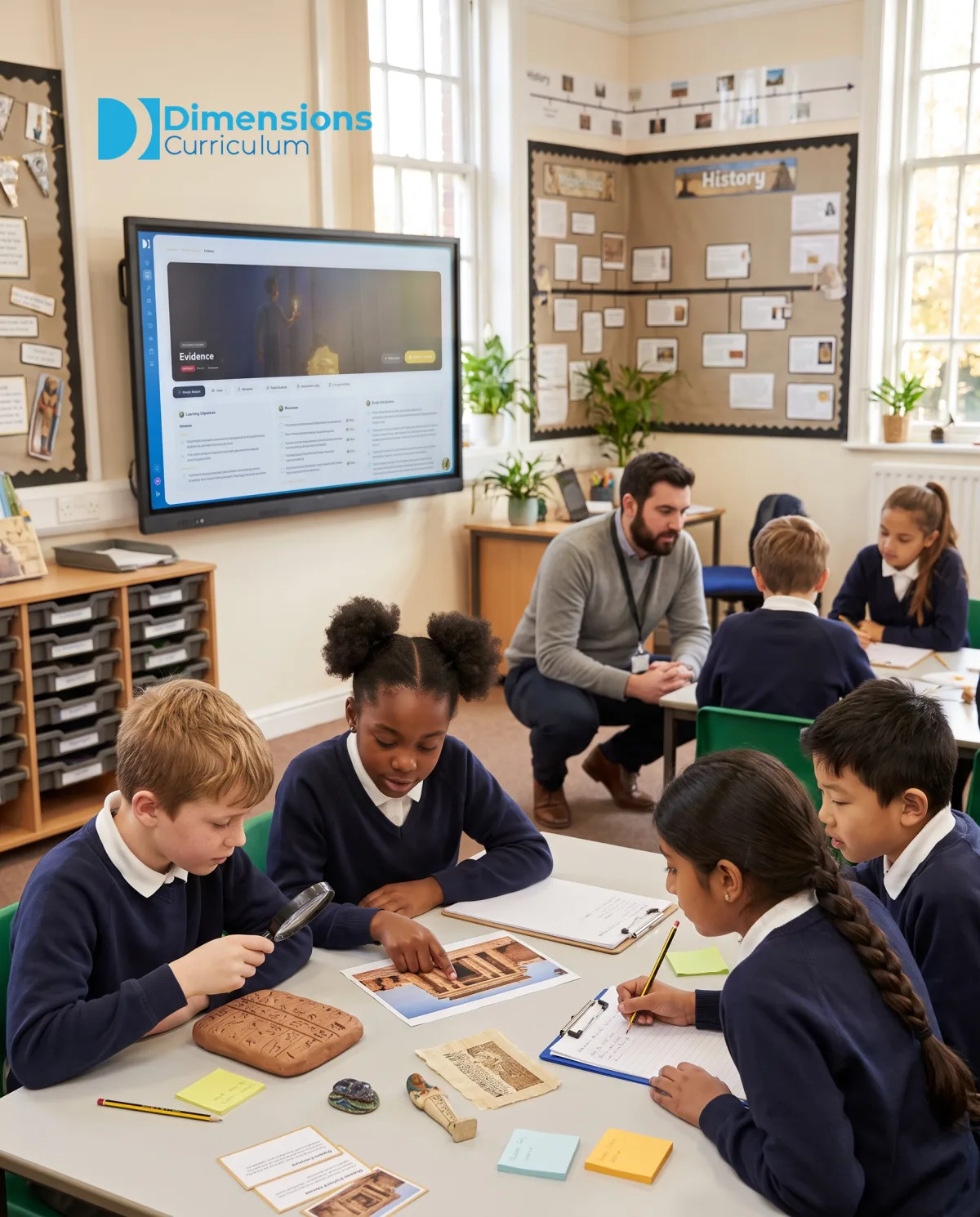
- Begin lessons with a mystery (an image, object, short clip, artefact, or surprising fact) and ask: “What do you notice? What do you wonder?”
- Use question stems on the wall or desk cards: Why…? How might…? What if…?
- Celebrate “good questions” as much as “right answers”. Try a weekly Question of the Week display.
A simple shift helps: instead of “Today we’re learning about rivers,” try “Why do some rivers flood, and what can people do about it?”
Make space for purposeful exploration
Curiosity doesn’t mean chaos. It means structured opportunities to explore.
- Build in short “investigation windows” (5–10 minutes) where pupils test an idea, try a method, or explore sources.
- Offer choice within boundaries: two texts to compare, three materials to test, or a selection of ways to show learning (diagram, explanation, model).
- Use “first draft thinking”: pupils jot initial ideas before you teach the content. They’ll listen differently because they’re looking to refine their thinking.
Teach pupils how to be curious
Some pupils arrive naturally inquisitive; others have learned that school is about compliance. Curiosity can be taught.
- Model your own thinking: “I’m not sure yet… I wonder if… Let’s test it.”
- Teach research skills explicitly: how to skim for key information, how to check a source, how to use a glossary, how to take notes.
- Normalise uncertainty: use phrases like “We’re not there yet” and “Let’s find out”.
Build connections across subjects
Curiosity grows when pupils see that knowledge is connected.
- Revisit big concepts (change, power, community, sustainability, conflict, culture) in multiple subjects.
- Use shared vocabulary across the week: “evidence”, “pattern”, “impact”, “consequence”, “perspective”.
- Plan “bridge questions” that link learning: “How does what we learned about habitats help us think about our local area in geography?”
This helps pupils move from isolated facts to deeper understanding.
Create a classroom culture that rewards thinking
Curiosity is social. Pupils need to feel their ideas matter.
- Use talk structures: think–pair–share, debate circles, and “no hands up” questioning to widen participation.
- Praise effortful thinking: “You changed your mind because of evidence—excellent.”
- Make reflection routine: end with “What are you still wondering?” and keep a class “Wonder Wall”.
Keep it practical: small habits, big impact
If you’re short on time, start with one habit for a fortnight:
- A daily “notice and wonder” starter.
- A weekly investigation window.
- A Wonder Wall question box.
Curiosity isn’t an add-on. It’s a way of teaching that invites pupils to engage with the world—thoughtfully, creatively, and with confidence. When curiosity becomes the norm, learning becomes something pupils do with you, not something done to them.


 Scoill Phurt Le Moirrey
 Woodford Halse School
 Beeston Primary School
 Warton St. Paul’s CE School
 St Andrew’s School