
Practical Ways to Promote Deeper Thinking in Primary Education
After years as a teacher, headteacher (both in the Uk and internationally), and now as an education consultant, I’ve spent a lot of time thinking what really moves learning forward. And honestly? It’s rarely the big initiatives or expensive schemes.
It’s the small, everyday classroom decisions.
Deeper thinking isn’t about making learning harder. It’s about slowing down, helping children notice more, connect ideas, and feel confident enough to change their minds. When that happens, you can feel it, there’s a real buzz. Classrooms become places of curiosity and discussion…and importantly, they’re a pleasure to teach in!
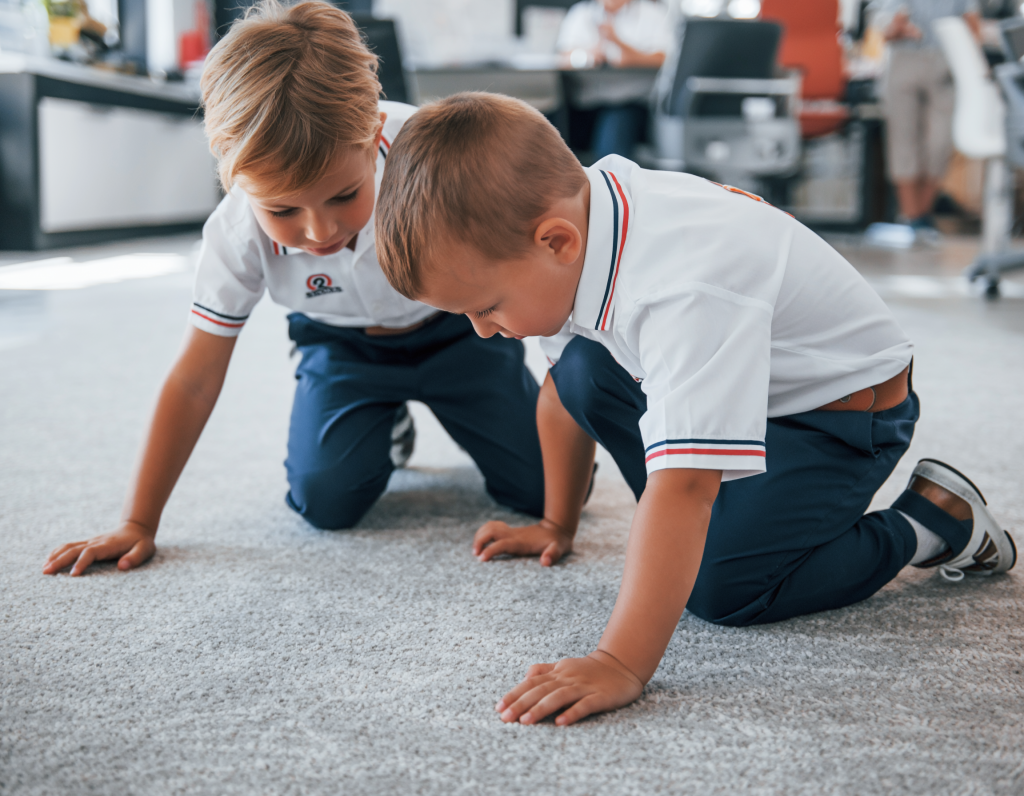
I remember a Year 3 class designing umbrellas. What began simply became much richer. Children didn’t just think about waterproof materials, they tested strength and practicality. They talked, questioned, made mistakes, tried again and refined their ideas. By the end, they could clearly explain why their choices. That’s deeper thinking in action.
One powerful shift is making things visible. When teachers say things like, “I’m not sure yet…”, ‘I need to check that…,” “I’m going to rethink this…,” it gives children permission to do the same. Sentence stems like “I think because…” or “I used to think…now I think…,” help children express how their thinking is evolving and build confidence.
Slowing things down also matters. There is often a pressure to keep pace high: ask a question, get an answer, move on. A simple routine that works well: ask a question, pause (make it a long one), let children talk in pairs, then bring ideas together. That pause is where the magic really happens.
It’s also not about asking more questions, it’s about asking better ones. Questions like” What makes you say that?”, “What’s the same and what is different?’, or “What would change your mind?” can take learning much further. Sometimes one good question is all you need to carry a whole lesson.
Of course, for this to work, classrooms need to feel safe. Many children hold back because they are worried about being wrong. The classrooms that overcome this are the ones that make uncertainty seem normal. Small shifts, giving sentence starters, offering hints instead of answers, and allowing thinking time. Most importantly, it’s about making it clear mistakes are part of learning. When children feel safe to get things wrong, they are far more willing to think deeply.
You don’t need complicated activities to make this happen. Some of the most effective routines I’ve seen are really simple, things like “Which one doesn’t belong?” or ranking ideas shift the focus from getting it right to thinking things through.
Talk plays a huge role too. In every strong classroom I’ve worked in or visited, talk is central, but it’s taught not left to chance. I remember a Year 1 class discussing how to save water. In pairs and in small groups, they were listening carefully, building on each other’s ideas, and even disagreeing respectfully. I can still picture their faces, completely engaged, explaining why saving water mattered and what they could do about it. It was a great reminder that when talk improves, thinking. Improves with it.
One of the biggest shifts in my own practice has been this: don’t just look for correct answers, look for evidence of learning. A child changing their mind, an explanation becoming clearer, or a mistake leading to a better idea. Sometimes the most important moment isn’t the final answer, it’s the journey to get there. When you start noticing that you see far more depth than a finished piece of work alone can show.
Reflection helps too. Simple prompts like “I used to think…now I think…” or “What helped you today?” help children to see themselves as learners.
If I had to sum it up, deeper thinking doesn’t come from doing more. It comes from being more intentional, about what we notice, value and responds to everyday. When we get that right, the impact is huge, not just on learning but in the whole feel of the classroom.
If this resonates with you and you are looking to build more consistent, meaningful opportunities for deeper thinking in your classroom or school we’d love to connect.
If you’re reading this and thinking, yes, we could do more of this, start small. Choose one routine, one sentence stem, or one question you’ll return to again and again. Build it into the everyday. Over time, those small shifts create a classroom culture where children don’t just complete learning — they explore it, shape it, and talk about it with confidence.
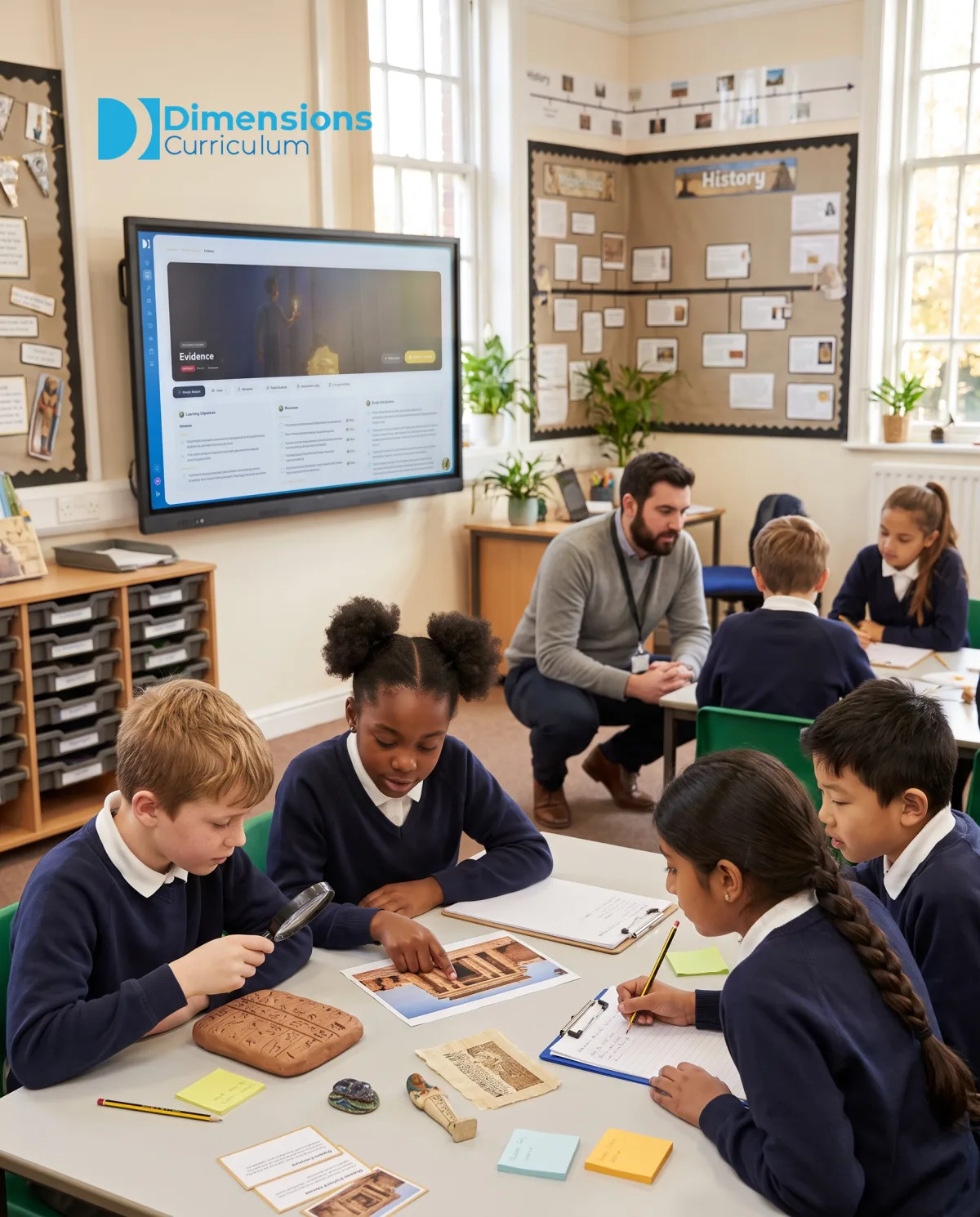
At Dimensions Curriculum, we believe deeper thinking is at the heart of a creative, connected curriculum not an “extra,” but part of what makes learning stick. If you would like to explore practical ways to embed deeper thinking across your curriculum (without adding to workload), we’d love to talk.
Written by Kathy Salmon.

 Scoill Phurt Le Moirrey
 Woodford Halse School
 Beeston Primary School
 Warton St. Paul’s CE School
 St Andrew’s School