
Let’s talk

Ra! Ra! Egypt!: a Year 6 Ancient Egypt cross-curricular topic

If you could leave behind one thing that would still exist in 3,000 years, what would you choose?

The river that made a civilisation, the woman who ruled it as king, and the argument about her that is still going on.

Year 6Also suits Year 5
21Sections to teach
6Subjects, one story
HistoryLead subject
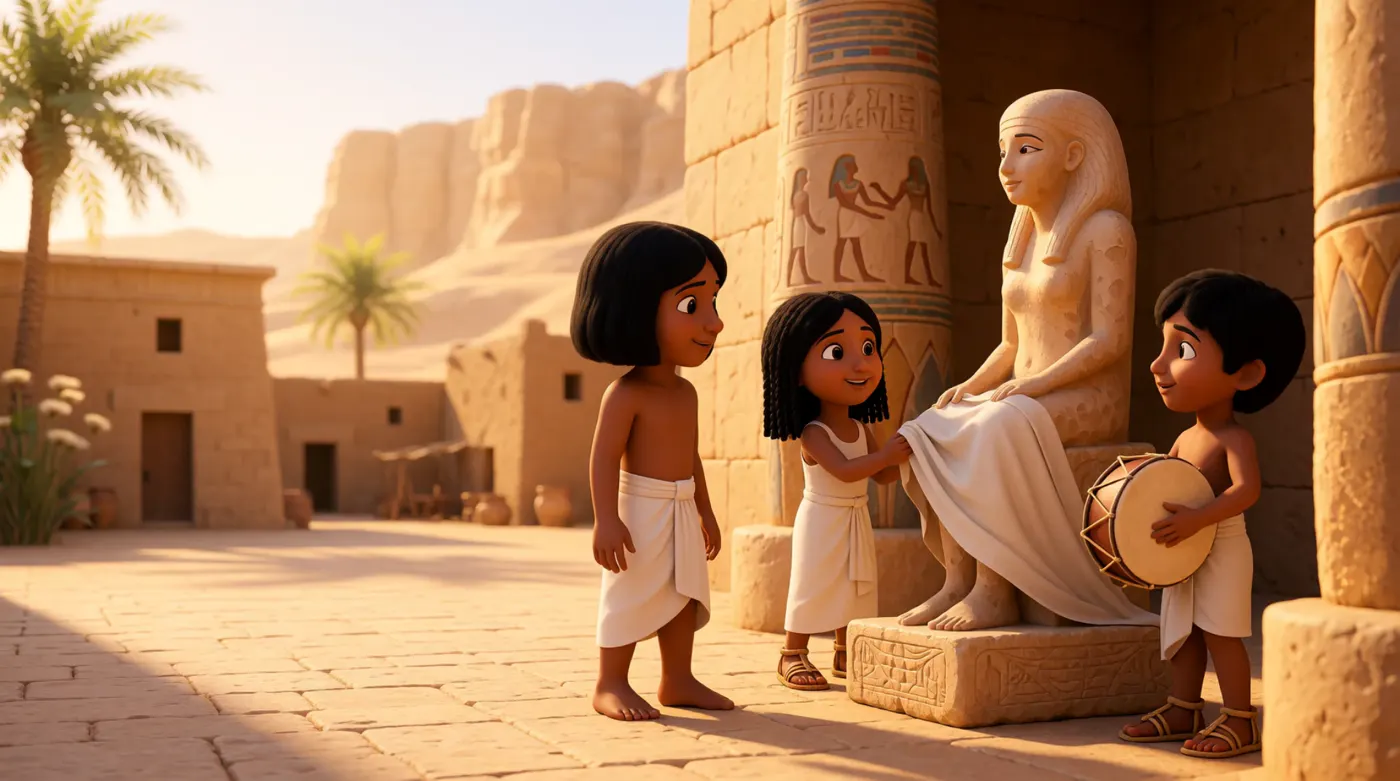
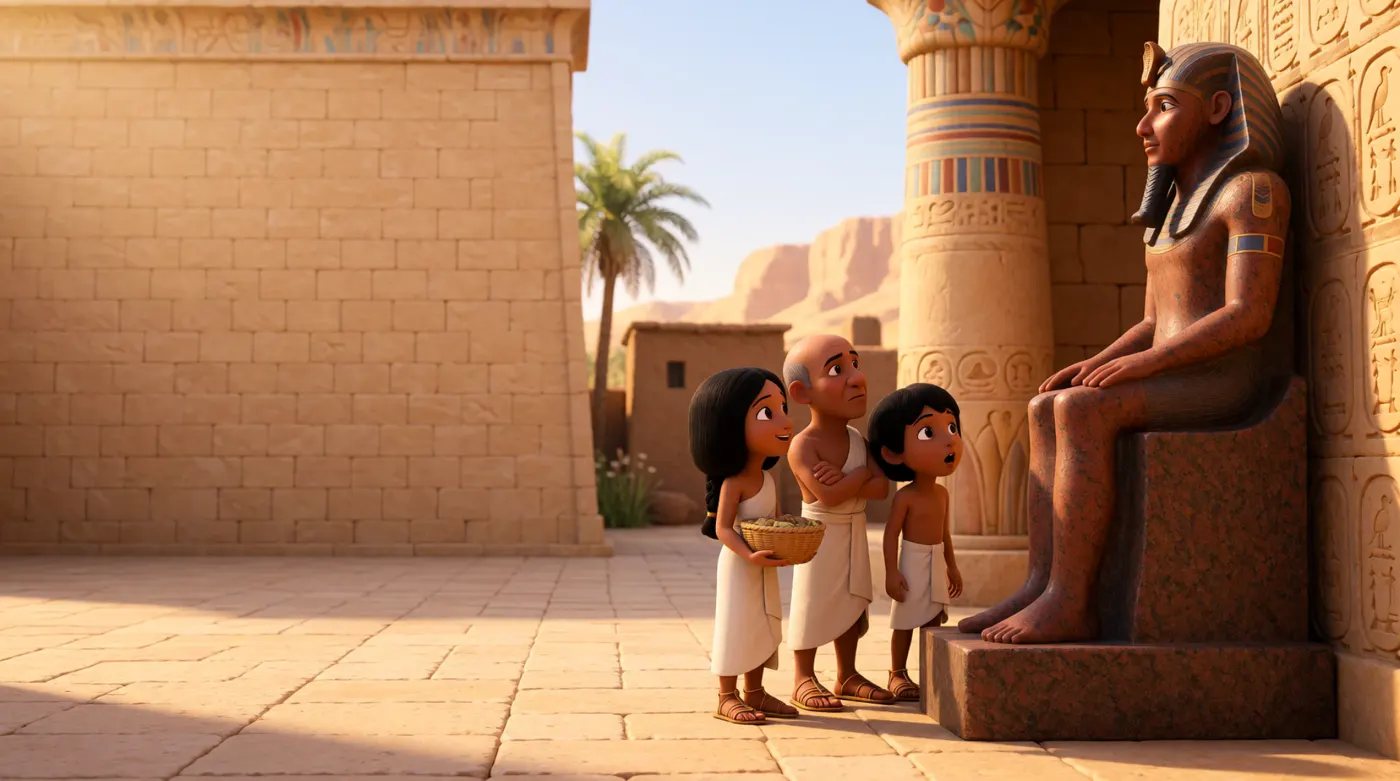
Children and an elder standing before a great seated statue of a pharaoh in a temple courtyard

Ra! Ra! Egypt!, at a glance.

A Year 6 cross-curricular theme unit, led by History. Egyptian civilisation exists because of the Nile, and the story at the centre of it belongs to Hatshepsut: a royal woman who ruled first as regent for a child king, then declared herself pharaoh, ruled for around twenty years, and after her death had many of her images deliberately chiselled away. Twenty-one sections across six subjects follow her through that story and out into the world that made it possible. Geography finds the river and the flood the whole country waited on. Art learns the rules Egyptian artists drew by, reads the reliefs carved to persuade, and builds a monument of its own. Science asks what really happened to the organs, then tests a three thousand year old method for itself and writes it up properly. Music sings, plays and composes for the temple. PSHE meets stereotypes, sharing one river, and how two honest people can disagree. The History runs underneath all of it, and the King List scroll opened in Section 1 is finished in Section 21.

How the story unfolds.

  1. The Nile winding through the desert, a narrow green strip of fields along its banks

    A civilisation built on a river.

    The first third asks what lasts, and why here. Big Question 1 is asked before anything is taught. History Section 1 makes three thousand years physical, with a knotted rope and the Great Pyramid, and only then names Hatshepsut and writes her on the King List scroll. Geography finds the reason any of it happened: one green ribbon through the Sahara, the delta, and Cairo's climate set beside the class's own. Art learns the rule Egyptian artists never broke, head from the side and eye from the front, and History Section 2 asks how we know any of this at all, from Howard Carter's sealed tomb to the statues Hatshepsut had made of herself. PSHE turns that statue into a question about who is allowed to lead, and Geography closes the third with the flood: three seasons, a nilometer, and a Survival Council deciding what a whole civilisation must do when the water fails.

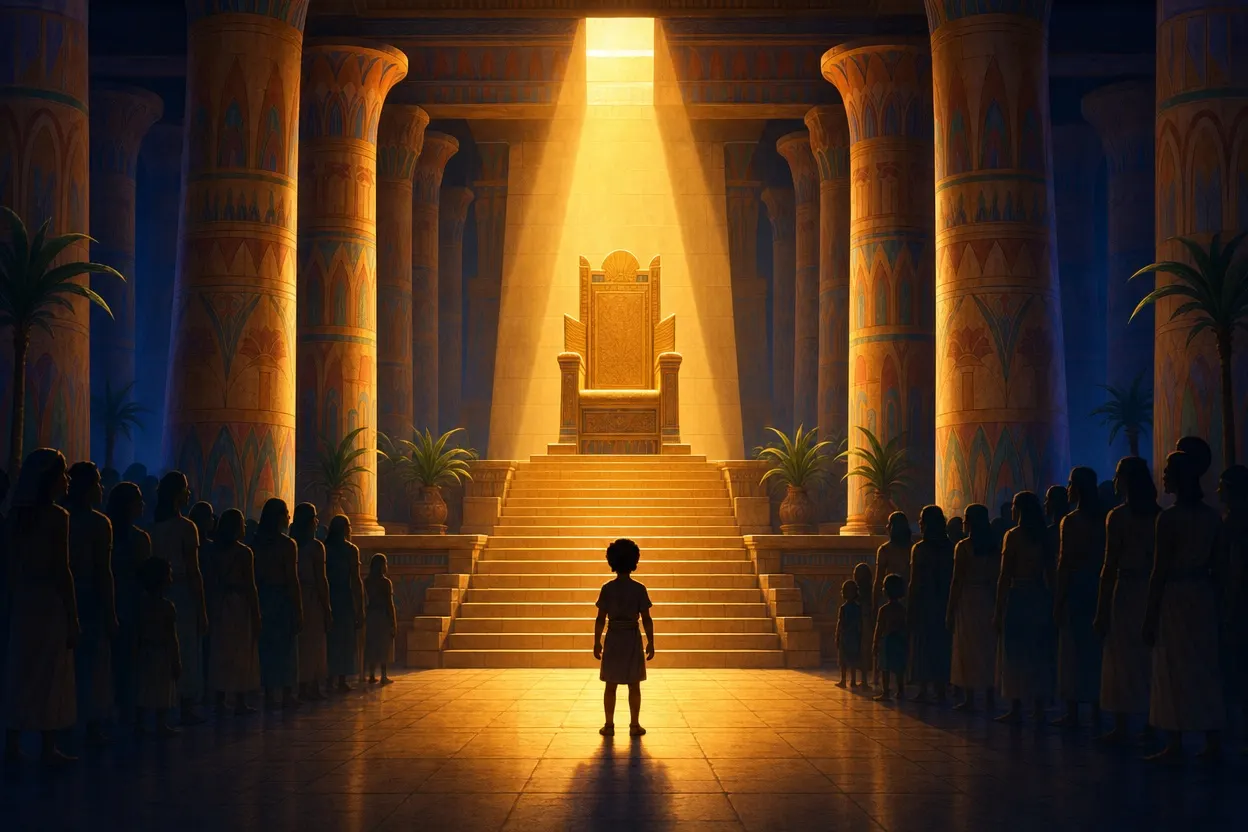
  2. A small figure at the foot of the steps to an empty golden throne in a vast columned hall

    A woman on the throne.

    The middle third asks what she changed, and what came of it. Big Question 2 sets the rule against the problem. History Section 3 weighs three things that lasted for thousands of years against the one thing that changed completely by her time, the shape of the tomb, and then sails to Punt. Science looks again at the canopic jars, finds the one organ they left behind, and learns what the heart really does by measuring pulses before and after exercise. Music meets Ra and the real women who sang for Amun-Ra, and learns a call and response composed for the unit. PSHE puts six people round one river with not enough water to go round. History Section 4 rebuilds her rise to pharaoh as a causal chain and ends on the damage done to her monuments. Art reads the Deir el-Bahri reliefs as persuasion in stone, and Geography maps where people actually lived, and what they gained and risked by living there.

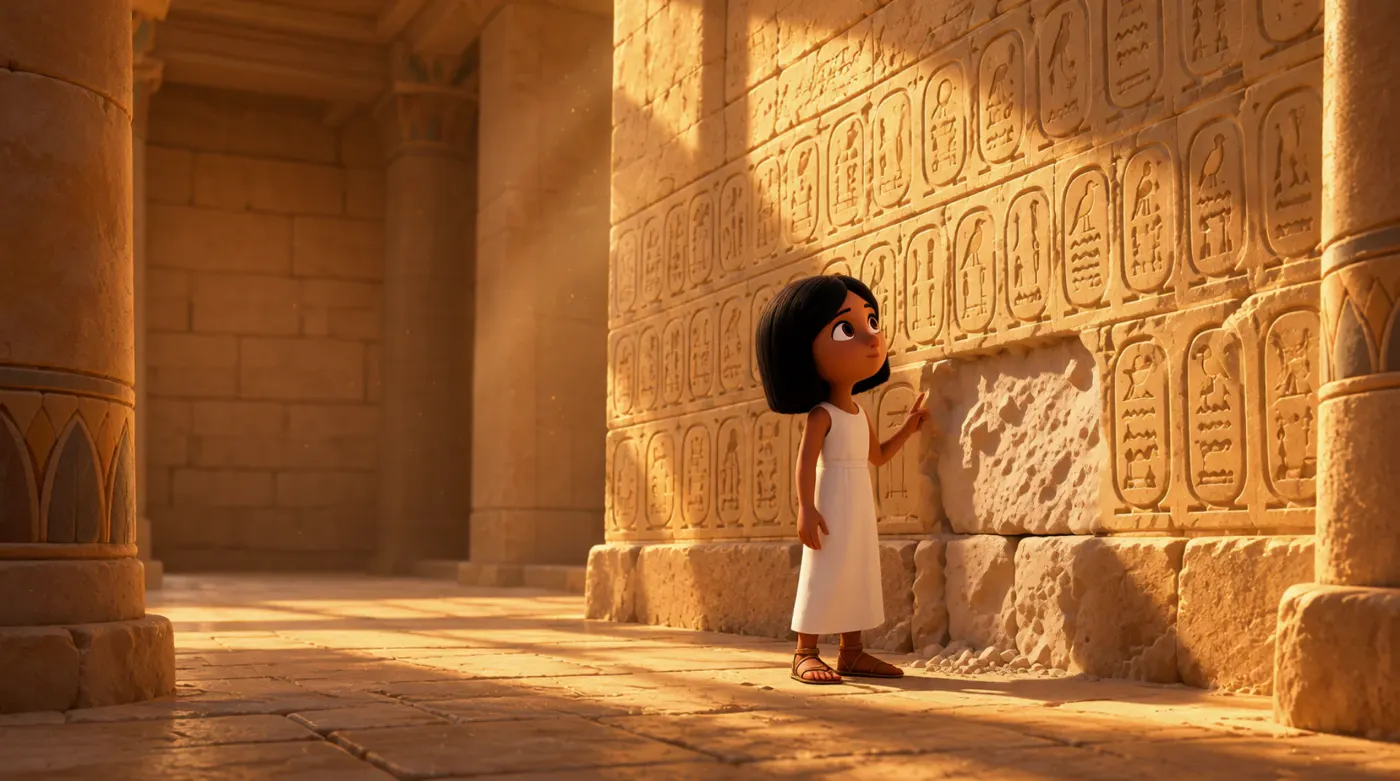
  3. A girl touching a temple wall where a carved name has been chiselled away

    The whole story, or only half?

    The final third asks whether we want the whole story. Big Question 3 opens it. History Section 5 puts two real scholarly interpretations of Hatshepsut side by side, and every pupil writes a verdict of their own. PSHE takes the same two historians and teaches how to disagree assertively. Music plays together on classroom stand-ins for the sistrum and the harp. Science designs a fair test of natron on apple slices, and while the samples dry Art builds a monument to each pupil's own verdict and Music composes for its unveiling. Science then writes the results up as a formal report, and History Section 6 sets Hatshepsut beside Tutankhamun, two pharaohs who vanished from the record in different ways, and finishes the King List scroll.

6 subjects, one journey.

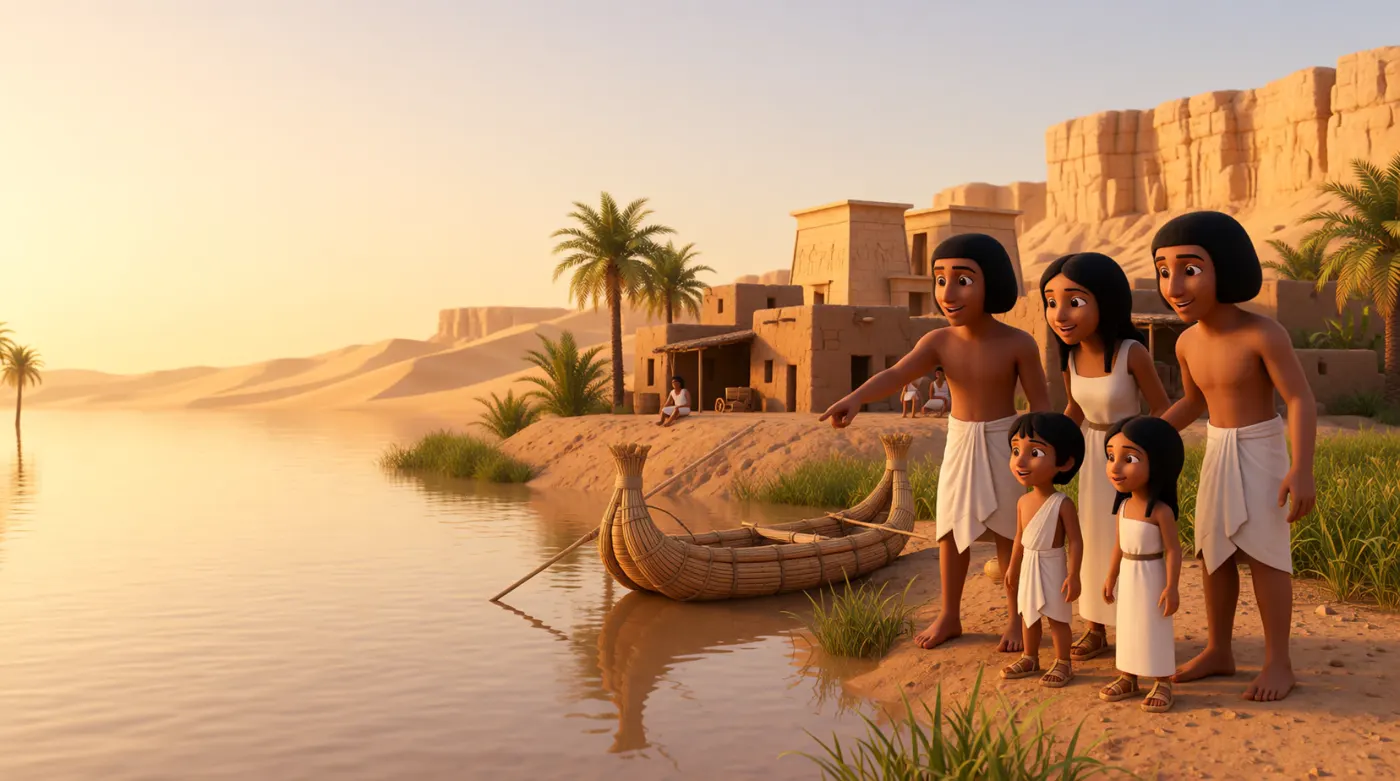
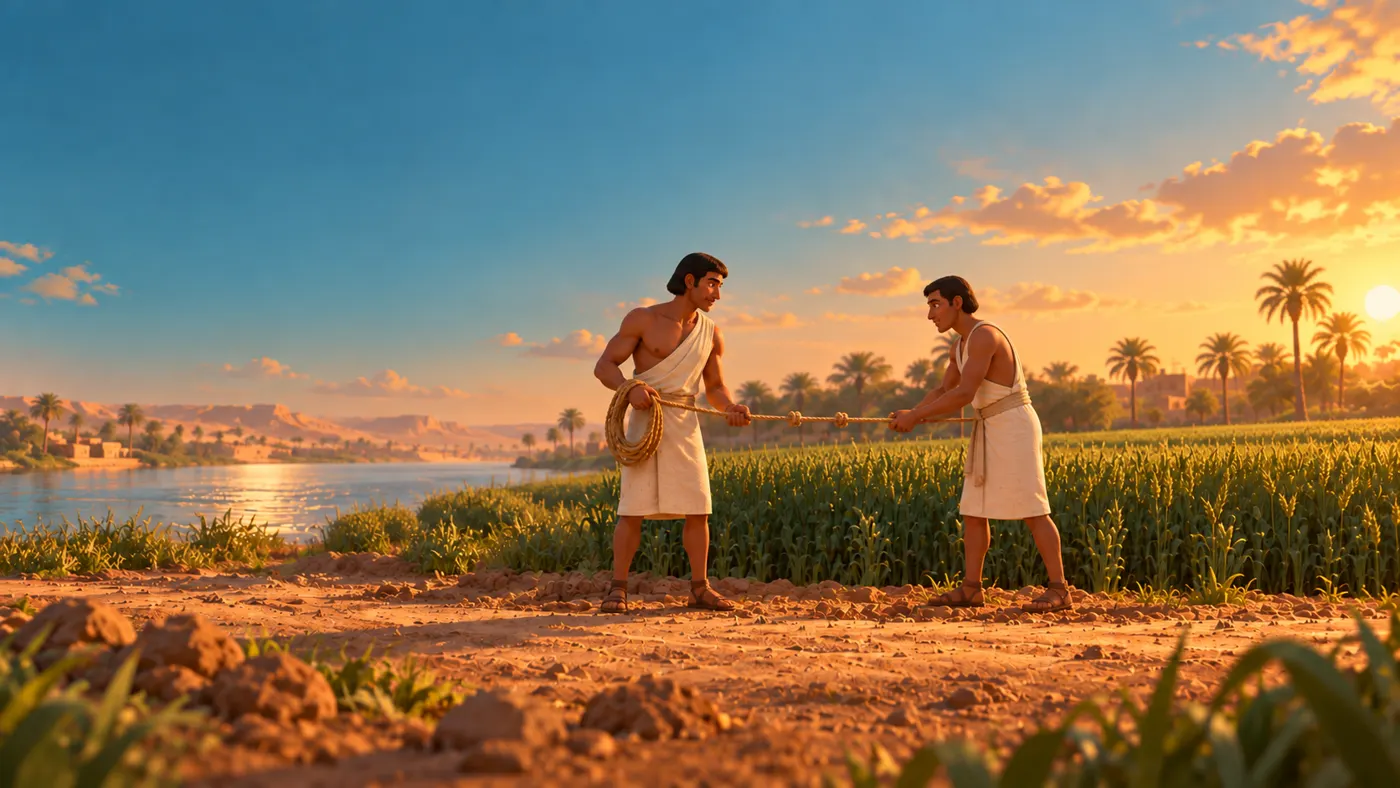
Two Egyptian rope-stretchers measuring a field beside the Nile at sunset

HistoryLead subject

The spine of the unit, and all six pillars in order, each section two activities long. Chronology on a knotted rope and a King List scroll; evidence from a sealed tomb and from the statues she commissioned; continuity and change in the tomb that stopped being a pyramid and the voyage to Punt; cause and consequence in her rise from regent to pharaoh and the damage done to her images after her death; two real interpretations weighed and a verdict written; and a closing comparison with Tutankhamun. Reign dates are taught as estimates everywhere and the erasure is left unresolved on purpose. Six sections.
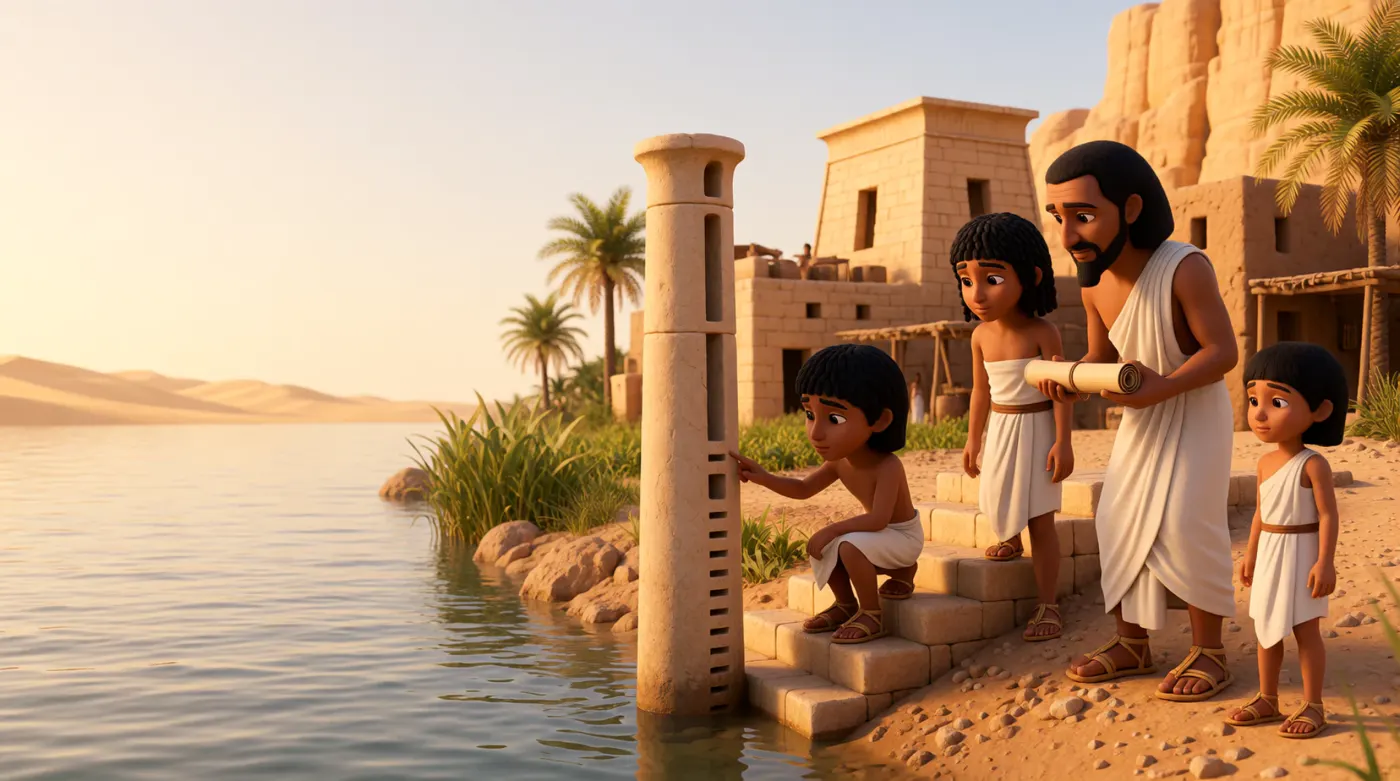
Children watching an official read the water level on a stone nilometer by the river

Geography

Three sections on the river that made Egypt possible. Where it is and why it is so dry, read from a satellite photograph and real climate data for Cairo beside the class's own town. How the yearly flood worked, the three seasons it set, the nilometer that measured it, and what people did when it came too low or too high. And where people actually settled, read from a map and a chart together, ending in a site each pair chooses and defends.

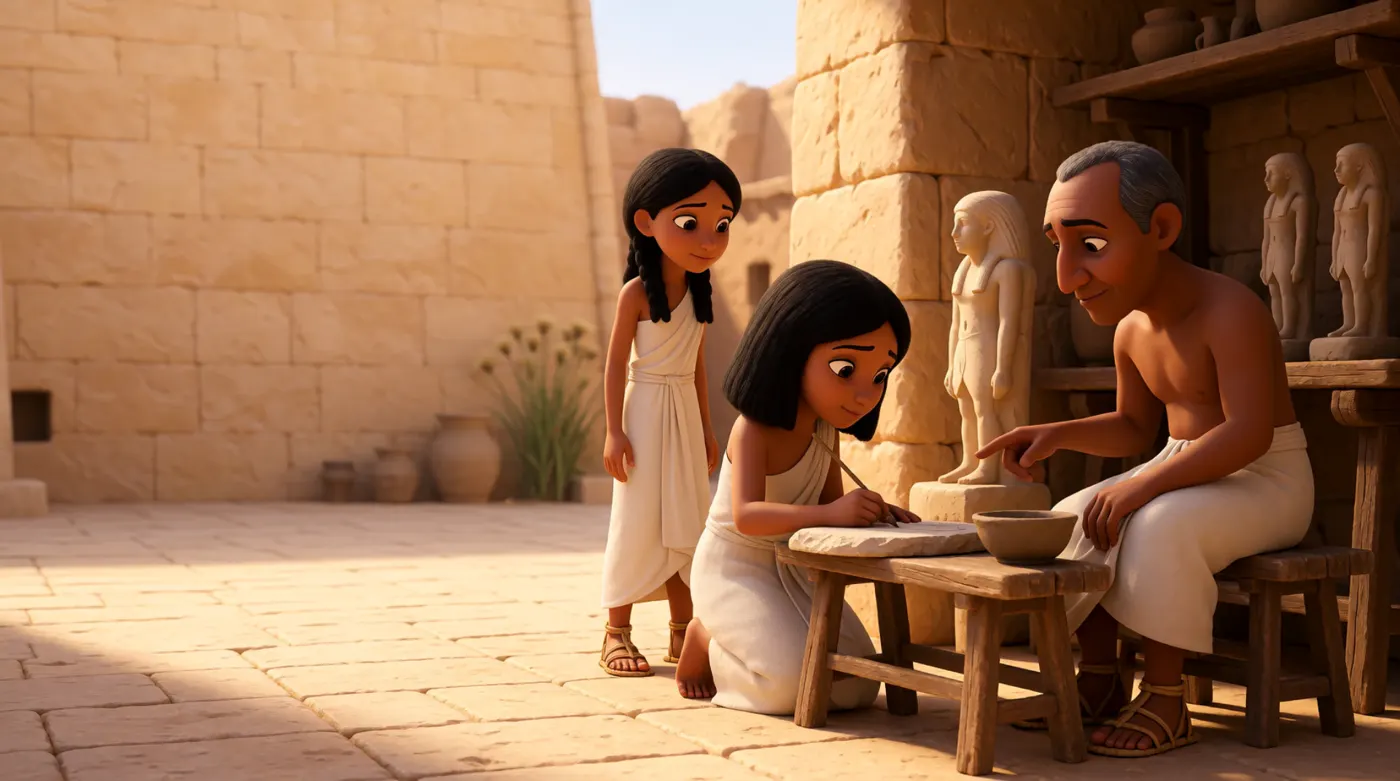
Two girls watching a sculptor carve small statues in his workshop

Art

Three sections that move from drawing to reading to building. The composite view, hierarchical scale and symbolic colour, learned from real tomb paintings and used in pupils' own sketches. The Deir el-Bahri reliefs read as visual communication: a chiselled wall and the Divine Birth scenes, each built to make visitors believe something. And a small wire and clay monument to each pupil's own verdict on Hatshepsut, planned for stability and nudge-tested until it stands.

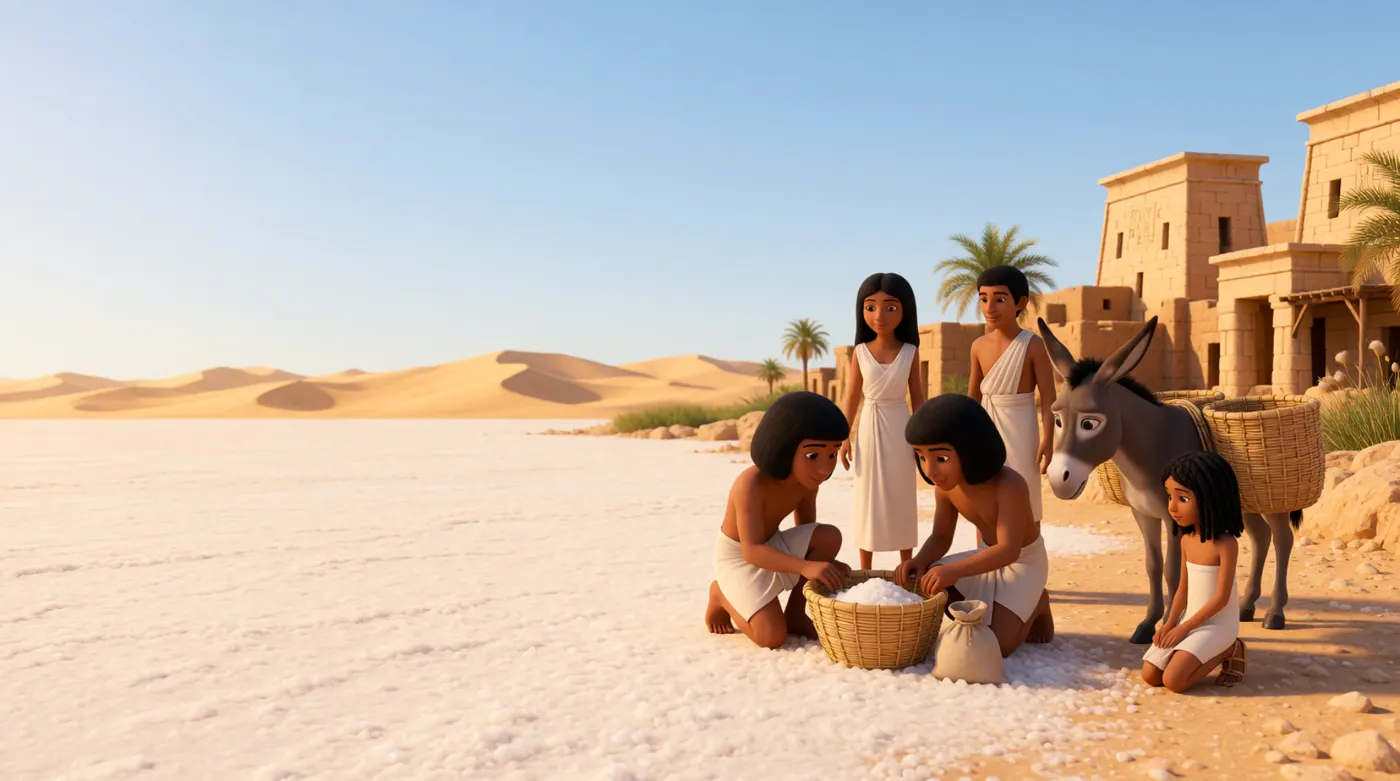
Children gathering white natron salt from a dry lake bed with a donkey and baskets

Science

Three sections that start inside the body and end in a written report. Why four organs went into canopic jars and the heart was left in, then what the heart actually does, measured through the class's own pulses before and after exercise. A fair test of a natron stand-in on apple slices, designed by the groups themselves, weighed on Day 0 and checked daily. Then a formal four-part report from their own real data, with reliability and limitations named honestly.

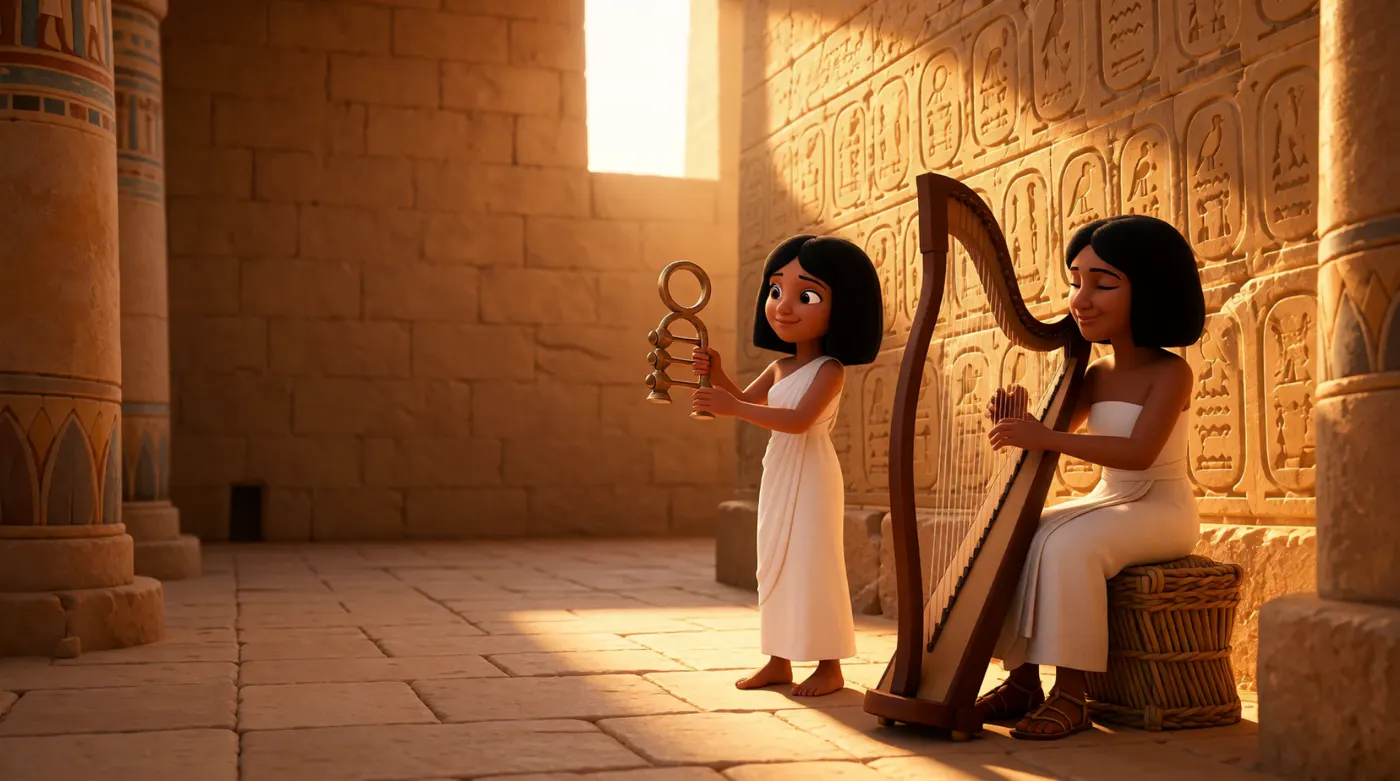
Two girls playing a harp and a sistrum in a temple hall

Music

Three sections that build towards a performance. Ra, Amun-Ra and the real chantresses who sang for him, how to look after a singing voice, and a call and response composed for the unit, sung in two parts. Real temple instruments, a sistrum and a harp, met in photographs and played on classroom stand-ins, rehearsed with four named strategies. Then a short ternary piece composed, recorded and evaluated for the unveiling of the class's own monuments.

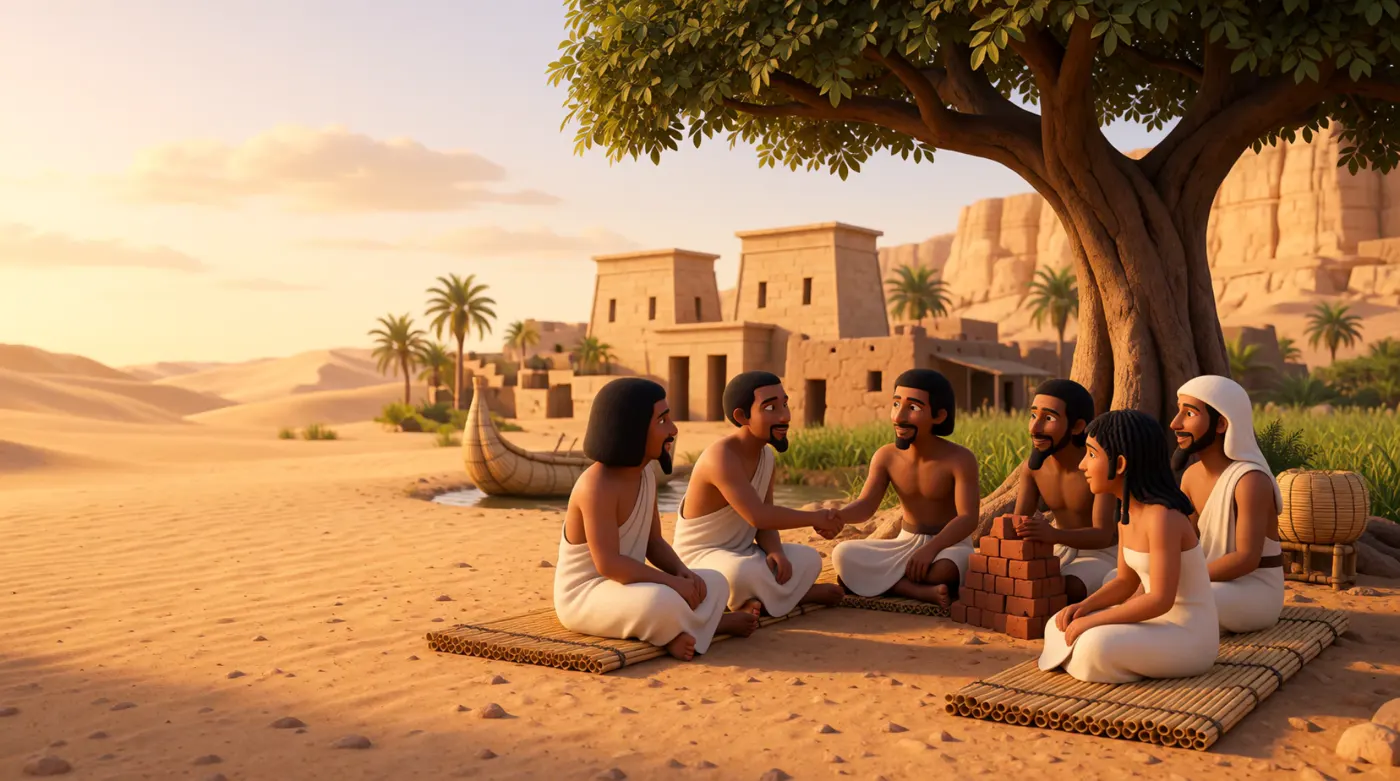
Villagers sitting in a circle under a tree to talk through a dispute about the river

PSHE

Three sections that each grow out of the History. What a stereotype is, and the fixed expectation Hatshepsut faced, with every pupil choosing a stereotype of their own to knock down. Six people with competing needs sharing one river, and the move from whose need matters most to how do we share this. And the two historians from History Section 5 used as a model for disagreeing assertively: same evidence, different weighing, both reasonable.

Every section, in order.

  1. 1HistoryWhere Does Hatshepsut Fit into Egypt's Long Story?
  2. 2GeographyThe Gift of the Nile
  3. 3ArtDrawing Like an Egyptian
  4. 4HistoryHow Do We Know Anything About Ancient Egypt?
  5. 5PSHEWho Is Allowed to Lead?
  6. 6GeographyLiving by the Flood
  7. 7HistoryWhat Lasted for Thousands of Years, and What Hatshepsut Changed
  8. 8ScienceWhat Happened to the Organs?
  9. 9MusicVoices for the Gods
  10. 10PSHEWhose River Is It?
  11. 11HistoryWhy Did Hatshepsut Become Pharaoh, and What Came of It
  12. 12ArtReading the Reliefs
  13. 13GeographySettling Along the River
  14. 14HistoryRightful Ruler or Ruthless Usurper?
  15. 15PSHECan Two People Disagree and Both Be Right?
  16. 16MusicMusicians of the Temple
  17. 17ScienceTesting How Bodies Are Preserved
  18. 18ArtCarving a Legacy
  19. 19MusicComposing for the Unveiling
  20. 20ScienceWriting Up What We Found
  21. 21HistoryHatshepsut and Tutankhamun: Two Vanished Pharaohs

Big questions to think and talk about.

  • If you could leave behind one thing that would still exist in 3,000 years, what would you choose, and would it actually tell the truth about who you were?
  • If the rules say you're not allowed to do something, but breaking them might be the only way to solve a real problem, what should matter more, the rule, or the problem?
  • If you found out that something positive you'd always believed about a person from history was only half the story, would you want to know the rest, even if it changed how you felt about them?

By the end of the unit:

A finished class King List scroll; each pupil's written verdict on Hatshepsut and a small monument built to it; a composed and recorded ABA piece for that monument's unveiling; a formal scientific report written from the class's own preservation test; and a museum label comparing Hatshepsut with Tutankhamun.

What pupils will know about Ancient Egypt.

The gift of the Nile

Egypt is mostly desert. People lived on the narrow green strip beside the river, where the Nile made the land fertile.

Three seasons, one river

The Egyptian year followed the river: Akhet was the flood, Peret was the growing and Shemu was the harvest.

Measuring the flood

A nilometer showed how high the Nile rose. Too low meant a poor harvest. Too high could wash homes away.

A very long story

Ancient Egypt lasted over 3,000 years. The Great Pyramid was already about a thousand years old in Hatshepsut's time.

Regent, then pharaoh

Hatshepsut ruled for the young Thutmose III as regent. Then she declared herself pharaoh, which no regent had done before.

Drawn by the rules

Egyptian artists drew the head from the side, the eye from the front and the shoulders square. Size showed importance.

The heart stayed in

In mummification, four organs went into canopic jars. The heart was left in the body, because it was believed to hold the person's thoughts and feelings.

Natron dries it out

Natron from the desert drew the water out of a body. Without water, the bacteria that cause decay cannot survive.

Singers for Amun-Ra

Chantresses were real women whose job was to sing for the god Amun-Ra. They often played a rattle called a sistrum.

Erased from the record

After her death, many of her images were chiselled away. Historians still argue about who did it, and why.

What it covers, subject by subject.

  • History: constructing a coherent timeline and explaining how periodisation choices shape understanding; referencing sources accurately and weighing conflicting evidence; judging the balance of continuity and change; constructing causal narratives that show triggers and telling short, medium and long-term consequences apart; comparing interpretations and creating one of their own; and synthesising comparisons into generalisations, with an understanding of their limits.
  • Geography: comparing places in different climate zones from maps and data and explaining how location factors shape climate; using a diagram and data to explain a physical event and how people responded; and comparing two datasets to draw a supported conclusion, with a realistic choice for a place and who gains and who loses by it.
  • Art: experimenting, selecting and refining through drawing, justifying technique choices with art vocabulary, and colour chosen to communicate; analysing artwork with evidence and presenting an interpretation that uses its context; and designing and building a sculpture that solves real problems of stability and strength.
  • Science: the human circulatory system and how lifestyle affects it; designing a fair test with a justified method and taking precise measurements; and writing a structured scientific report that explains patterns and evaluates reliability and limitations.
  • Music: singing confidently in parts with interpretation, and keeping the voice healthy; performing with stylistic awareness and using rehearsal strategies; and arranging for an ensemble with attention to texture, balance and contrast, then recording and evaluating a final version.
  • PSHE: how stereotypes limit people and ways to challenge them; handling competing needs through compromise and repair rather than force; and communicating assertively while respecting that others may reasonably think differently.

Books to read alongside

  • Ancient Egypt: Gods, Pharaohs and Cats! Marcia Williams
  • Eyewitness Ancient Egypt DK
  • You Wouldn't Want to Be an Egyptian Mummy! David Stewart and David Salariya
  • Egyptology Dugald Steer, writing as Emily Sands
  • Tutankhamun's Treasure David Long
  • Fantastically Great Women Who Made History Kate Pankhurst
  • A Kid's Life in Ancient Egypt Chae Strathie
  • Secrets of a Sun King Emma Carroll
  • Tales of Ancient Egypt Roger Lancelyn Green
  • Horrible Histories: The Awful Egyptians Terry Deary

More cross-curricular themes.

See the whole curriculum

Year 5

Just Deserts

Follow a lost explorer into the world's deserts

Year 6

Too Hot to Handle

A bundle of newspapers arrives from around the world, and the class run the World Desk, checking every claim about one strange year of weather

Year 3

Athens v Sparta

Nikias of Athens and Elpis of Sparta, a mystery pottery shard and a class Assembly Jar that asks how groups choose

Year 5

Come Fly with Me! America

The class become junior correspondents, commissioned to write a guide that shows America accurately and fairly

See Ra! Ra! Egypt! on Connect.

What schools say about Dimensions.

“As a primary pupil referral unit, creating genuine engagement is essential for our learners. We were looking for a curriculum that places children at the heart of everything and encourages them to immerse themselves in purposeful, meaningful activities. Dimensions has proved to be a strong fit because it enables our pupils to be active, curious learners rather than passive recipients of information. It brings learning to life in a way that motivates them and supports high-quality learning throughout. Plus, the children just love the curriculum!”
BThe Beacon Referral Unit
“Our school fully embraced the Dimensions curriculum and it has brought the world to our classrooms!”
AAlison Steen
“As a school we are really pleased with our decision to go with Dimensions. It has changed the way we teach our topic lessons as a school and has elevated the quality and diversity of the topics taught throughout KS1 and KS2. It is wonderful how the same theme can be so diverse across all age ranges and it has given teachers the confidence to explore themes they may not have taught previously.”
Scoill Phurt Le Moirrey

“Dimensions Curriculum is amazing! We’ve used it for a few years now and the children absolutely love the different topics and are really engaged by the modern and relevant aspect of these. … Added to this is the amazing support that you get from the Dimensions team and nothing is ever too much trouble.”
SSophie Orton
“Introducing the curriculum has been a real game-changer for our team. It’s clear, well-structured, and genuinely supportive of high-quality teaching. Planning is now more streamlined and consistent, while still allowing flexibility for individual classes and teaching styles. The progression is easy to follow, expectations are clear, and it’s saved us valuable time without compromising creativity or impact. A thoughtfully designed resource that’s already making a positive difference in our classrooms.”
Woodford Halse School
“As a class teacher I have really enjoyed using both the Dimensions Curriculum and 3D PSHE. Both products have been very well designed with clear, progressive and sequential plans, incorporating creative, engaging ideas and have given me the peace of mind to know I am teaching the children a quality curriculum. Wouldn’t expect anything less from a product designed by teachers, for teachers. Thank you Dimensions team!”
AAnn Webster
“The Dimensions 3D PSHE curriculum map, programs of study and enrichment unit are so well organised! I am very excited to use it all!”
LLubavitch Primary School
“Children in my school using Dimensions are motivated to learn and can articulate what they are learning and why they are learning it. … The curriculum maps, knowledge organisers and other documents available for subject leadership are super handy and also save on workload. It is excellent value for money.”
LLouise
“Introducing the curriculum has taken the weight off leaders knowing that everything is covered with clear progression documents. Children are getting the breadth and depth of coverage required. It has made a really positive impact especially when planning for mixed age classes. It is great to have the support available for ever changing class structures.”
Beeston Primary School
“I have had an extremely positive experience with Dimensions. They are a fabulous company, producing products to a very high standard that really engage children. Their curriculum is amazing and using it, I have had outstanding progression, engagement and enjoyment both from the children and myself! I would wholeheartedly recommend Dimensions!”
JJules Wilkin
“Music Crew gives teachers much more confidence when teaching music lessons. The children look forward to music and remember what they have learned from previously. The progression is excellent. Music Crew can be adapted to meet the needs of individual classes and the needs of the school.”
Warton St. Paul’s CE School
“It allows teachers to do what they do best, create engaging schemes of work and lessons and then teach accordingly, safe in the knowledge that statutory demands are covered and progression ensured … Our successful inspection outcomes are testament to the confidence we have in Dimensions. I could not ask for more from Dimensions.”
HHelen Ruberto
“We contacted the Customer support team and requested a new document that had the lesson codes and learning objectives for each year group, for each term. They were more than happy to help and emailed the documents to us the same day which was very helpful and exactly what we needed.”
St Andrew’s School
“As a teacher, working in an international school in Hong Kong I have followed the Dimensions Curriculum Thematic Units for a few years now, and I cannot recommend these resources highly enough. I absolutely love how it engages my students, by making learning fun, relevant and interesting for them. … Oh, and I should also mention all the time they save me in planning.”
KKarin Munkholm
“Absolutely loved using the Dimensions Curriculum. It was flexible and creative and allowed us to shape the learning in our school in such a way that it was relevant and purposeful for everyone involved, including the teachers! I enjoyed working with Elaine throughout, and found the support provided to myself as curriculum leader and the staff training given to be excellent.”
SSarah Cooke
“I bought the PSHE Curriculum for my School. The resources are just fantastic! They are packed full of great ideas, easy to use and relevant. I would highly recommend all their resources to any teacher. It’s definitely the way forward.”
KKat Parkinson
“From a teacher’s perspective, this curriculum has revitalized lesson planning. … Overall, this curriculum has been a game-changer. It has enhanced engagement, deepened learning, and created a more dynamic and enjoyable experience for both students and staff. We wholeheartedly recommend this approach to any ASD school …”
SSophie Hatcher
“We have worked with Elaine and the Dimensions team for over 5 years. The staff enjoy teaching the theme units and the pupils love their learning. Ofsted were very impressed with our curriculum and praised the creative learning and experiences the pupils were encountering. … Our school love it.”
AAlison Worthington
“They are a fantastic company with a wealth of knowledge and understanding. Their products are inspiring, innovative, unique to the market and importantly they are fun and exciting. I would recommend every school to have a visit from Elaine or her team, it’s a decision you won’t regret!”
KKJ Krzysiak
“Have used Dimensions to enhance our school curriculum for many years with much success and great results. The support of the Dimensions team and their curriculum has also helped us through two successful OFSTED visits! Would highly recommend.”
DDawn Forrest
“We have seen the knowledge and skills of our children deepen and their experiences in the classroom and of the wider world have broadened. … We have made so many meaningful connections to our whole school vision and values.”
HH Redfern
“Excellent curriculum resources with outstanding provision for all age groups.”
LLiz Budgen
Read more customer feedback