Athens v Sparta: a Year 3 Ancient Greece cross-curricular topic
How many different ways can you think of for a group to make a choice?
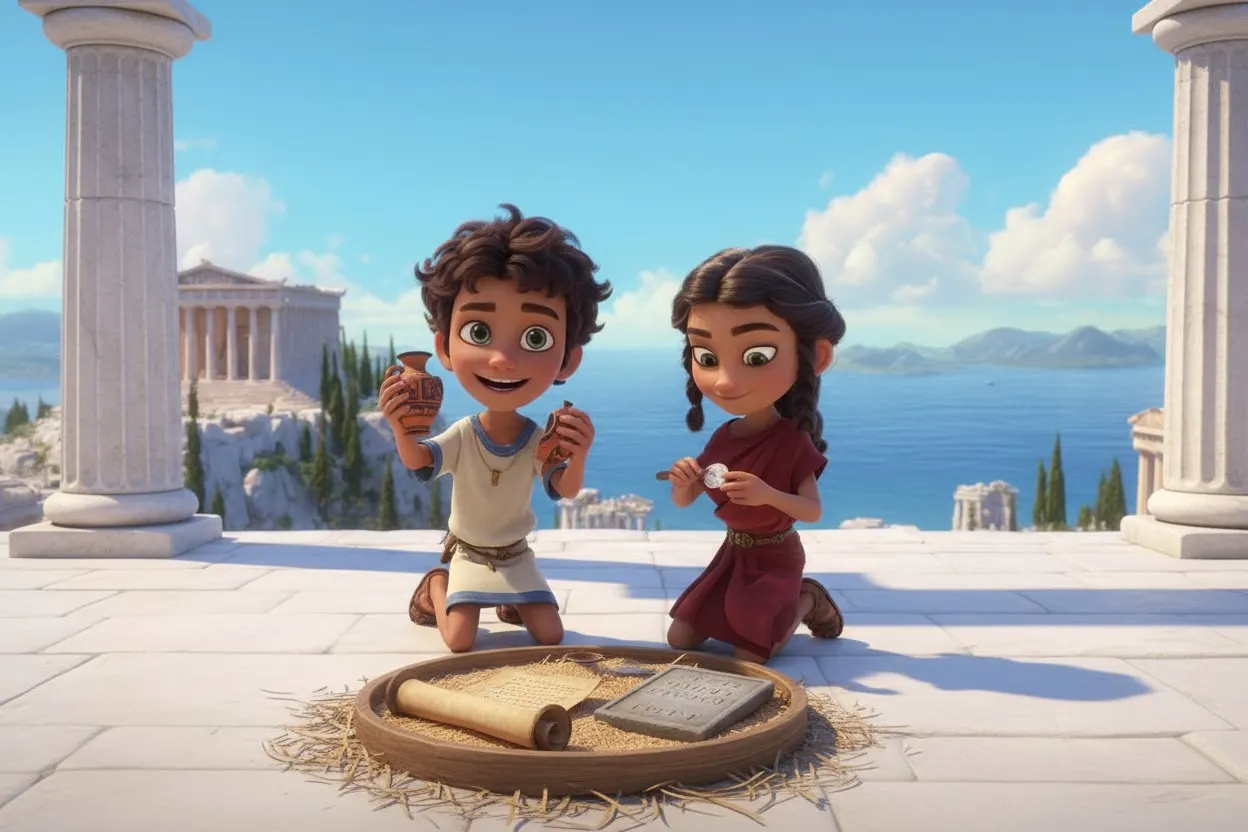
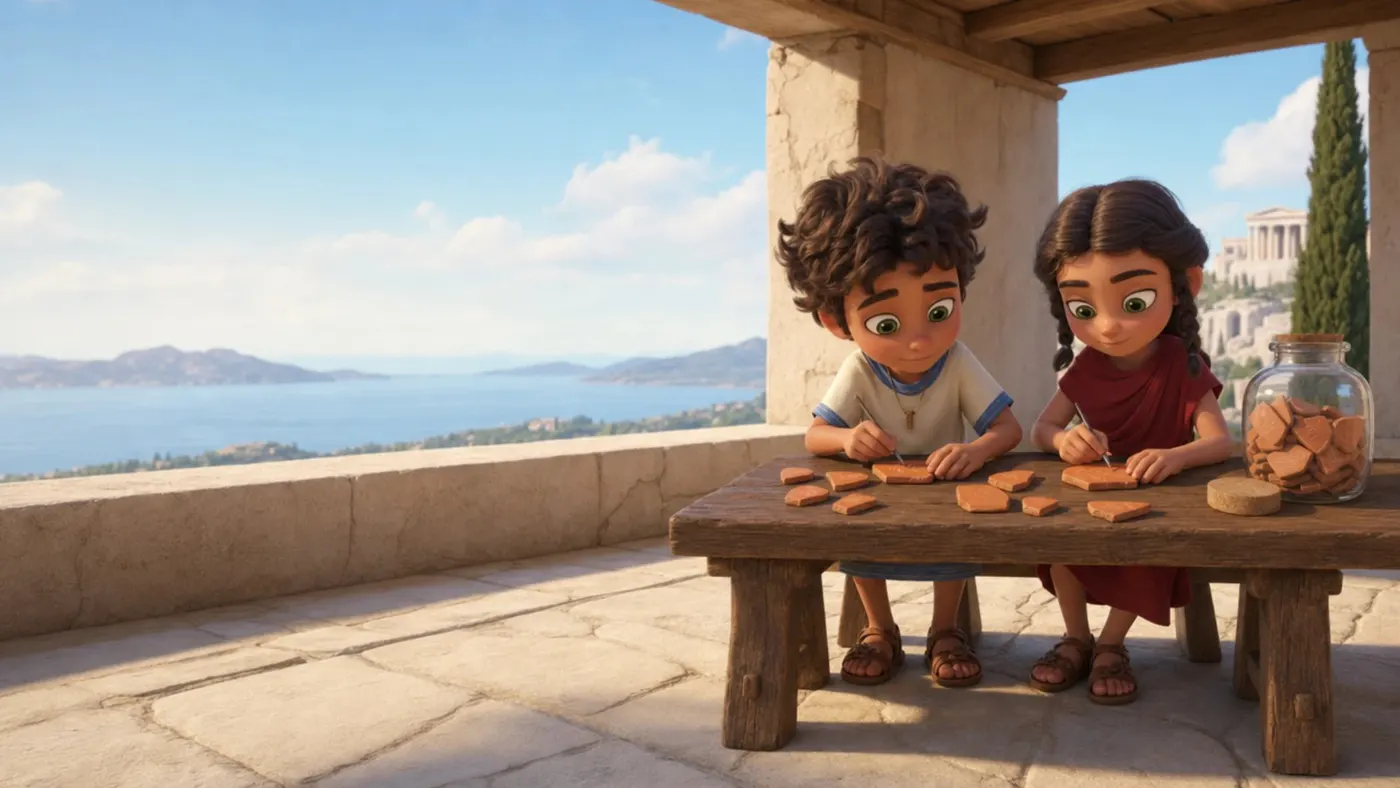
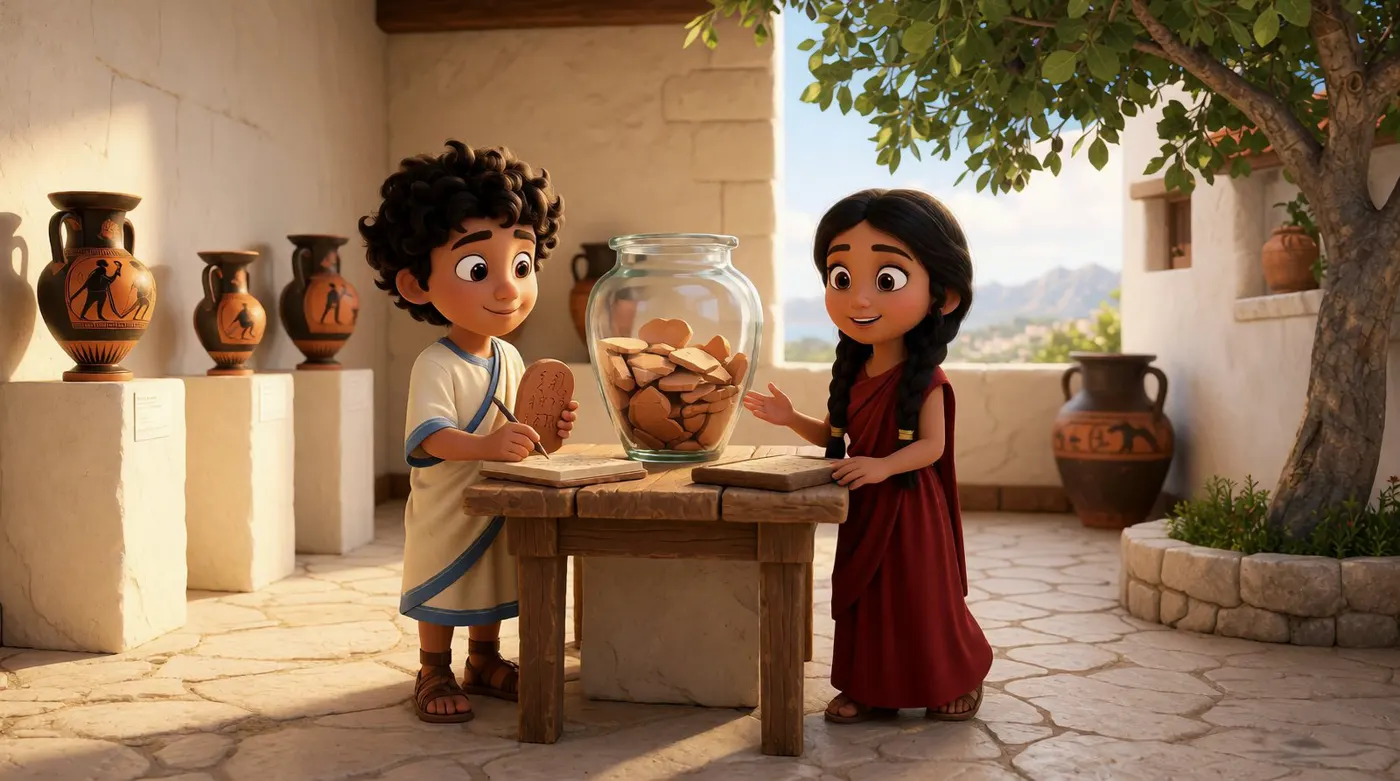
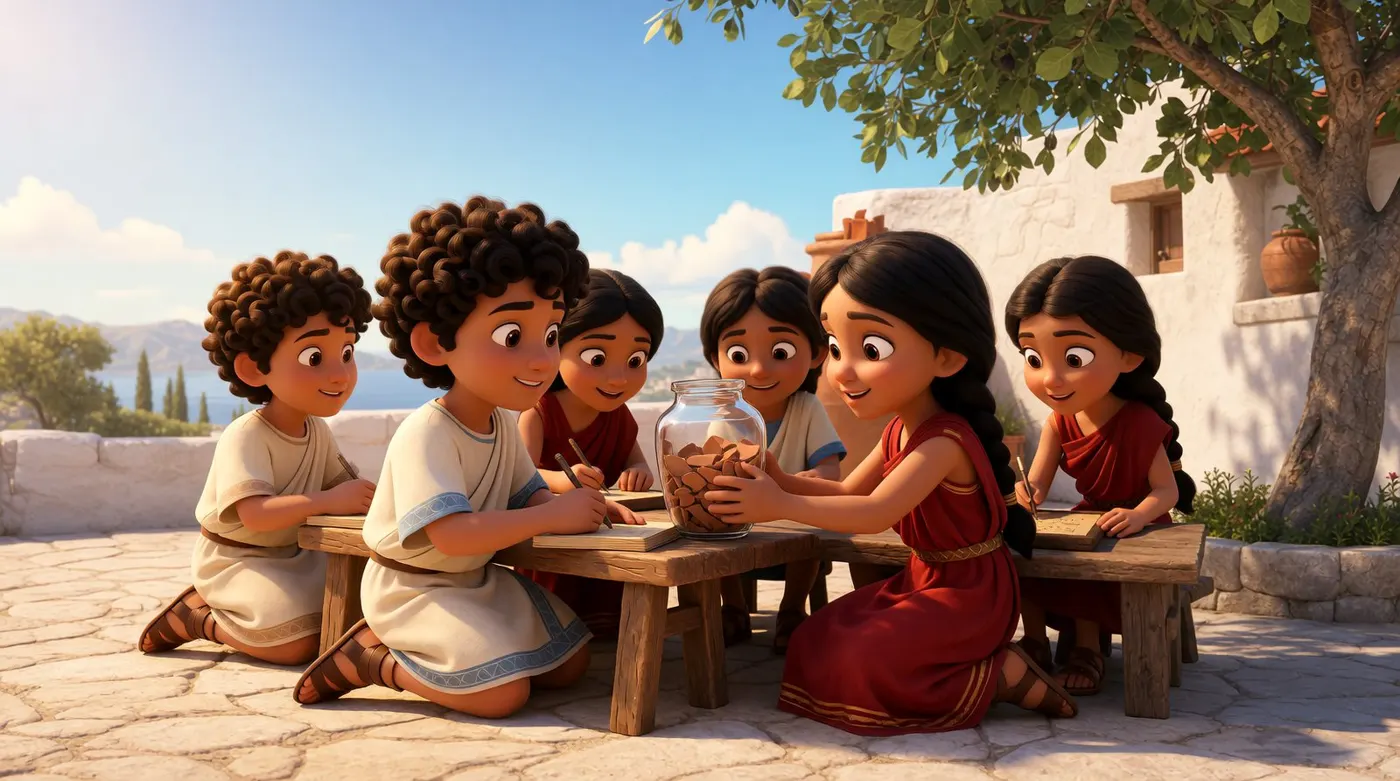
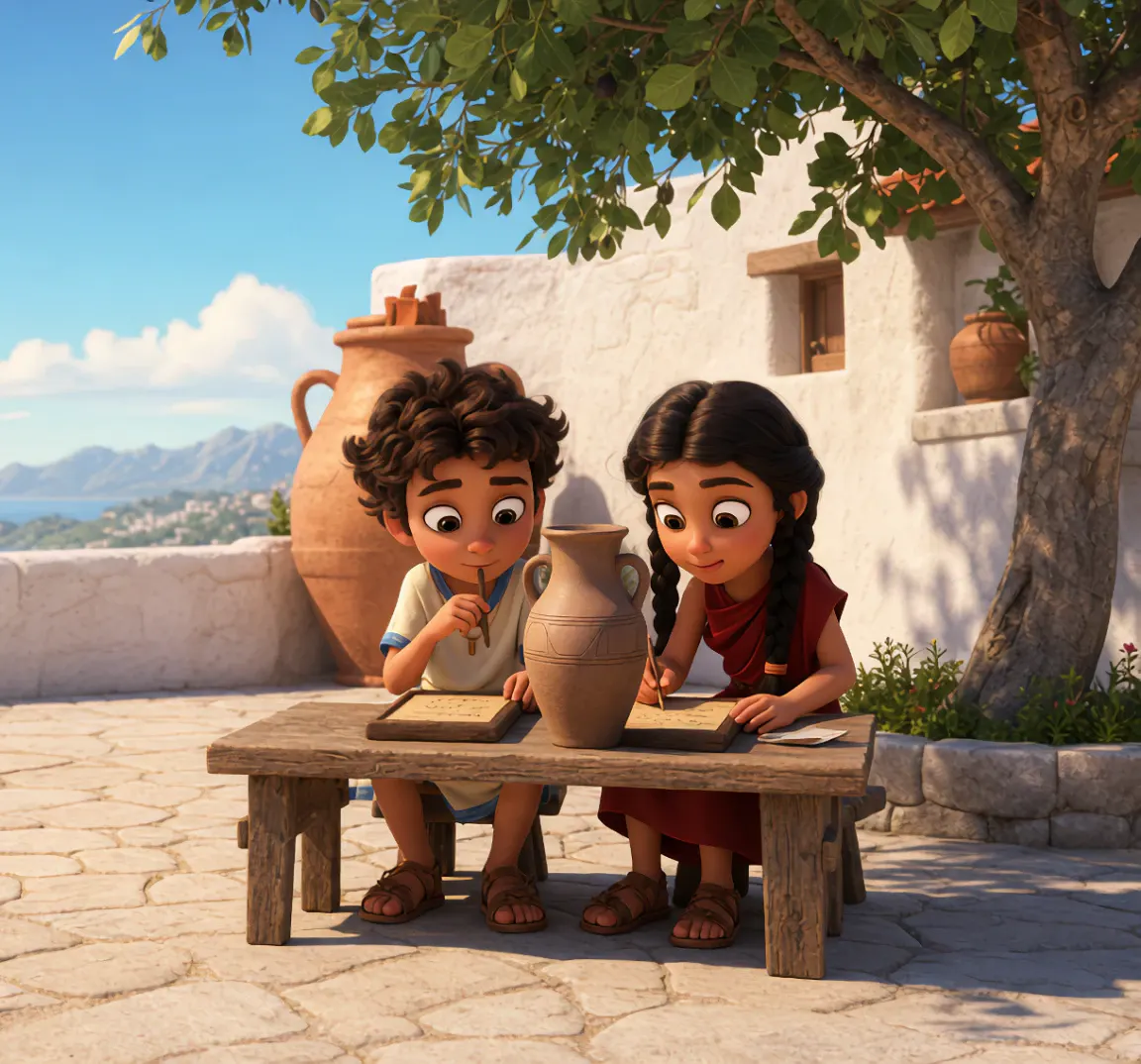
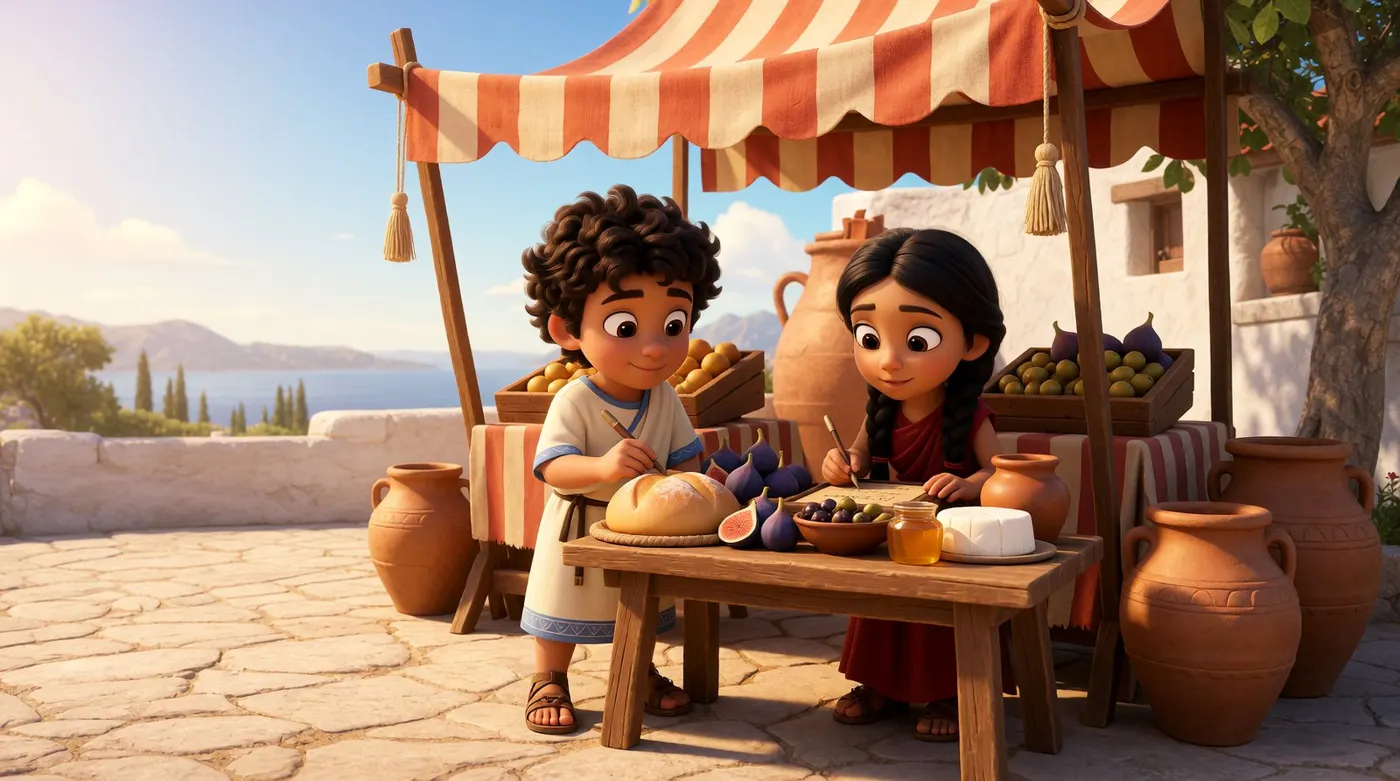
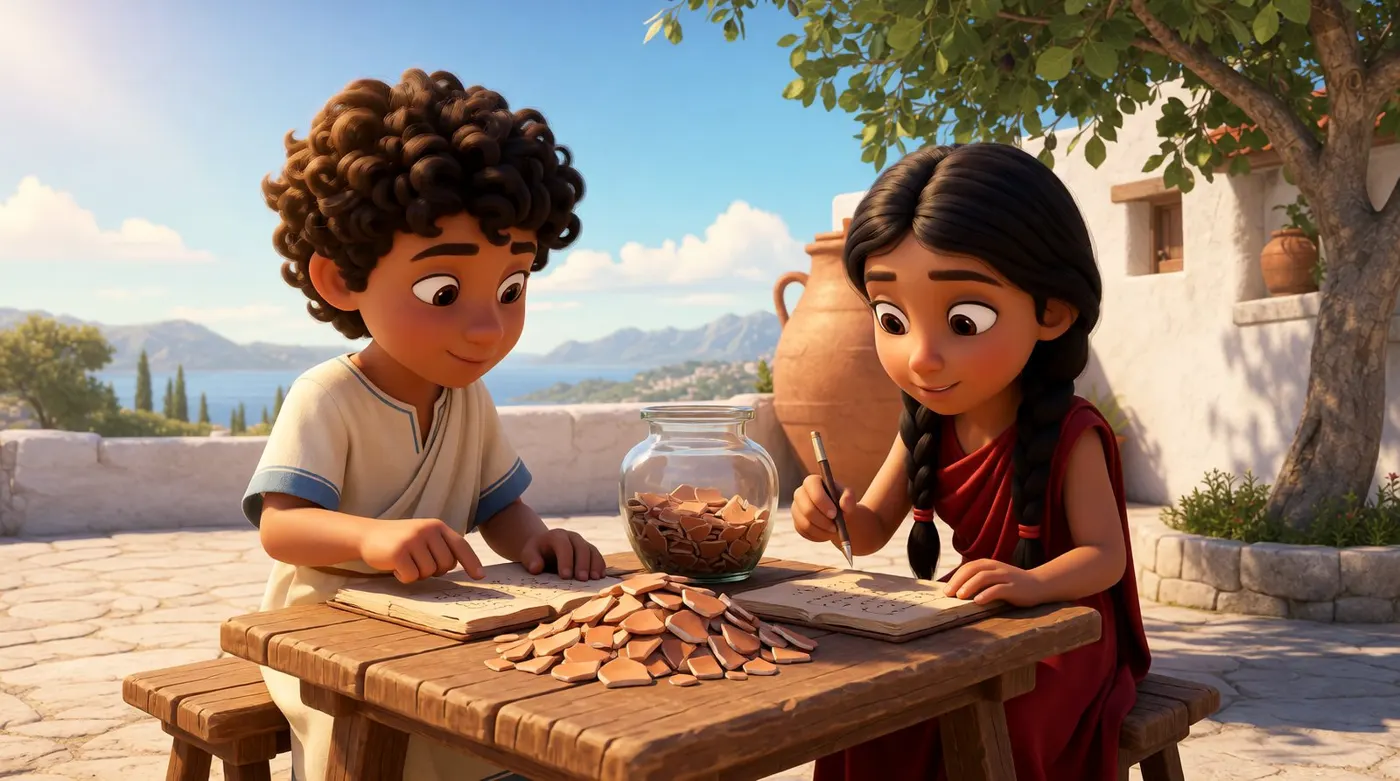
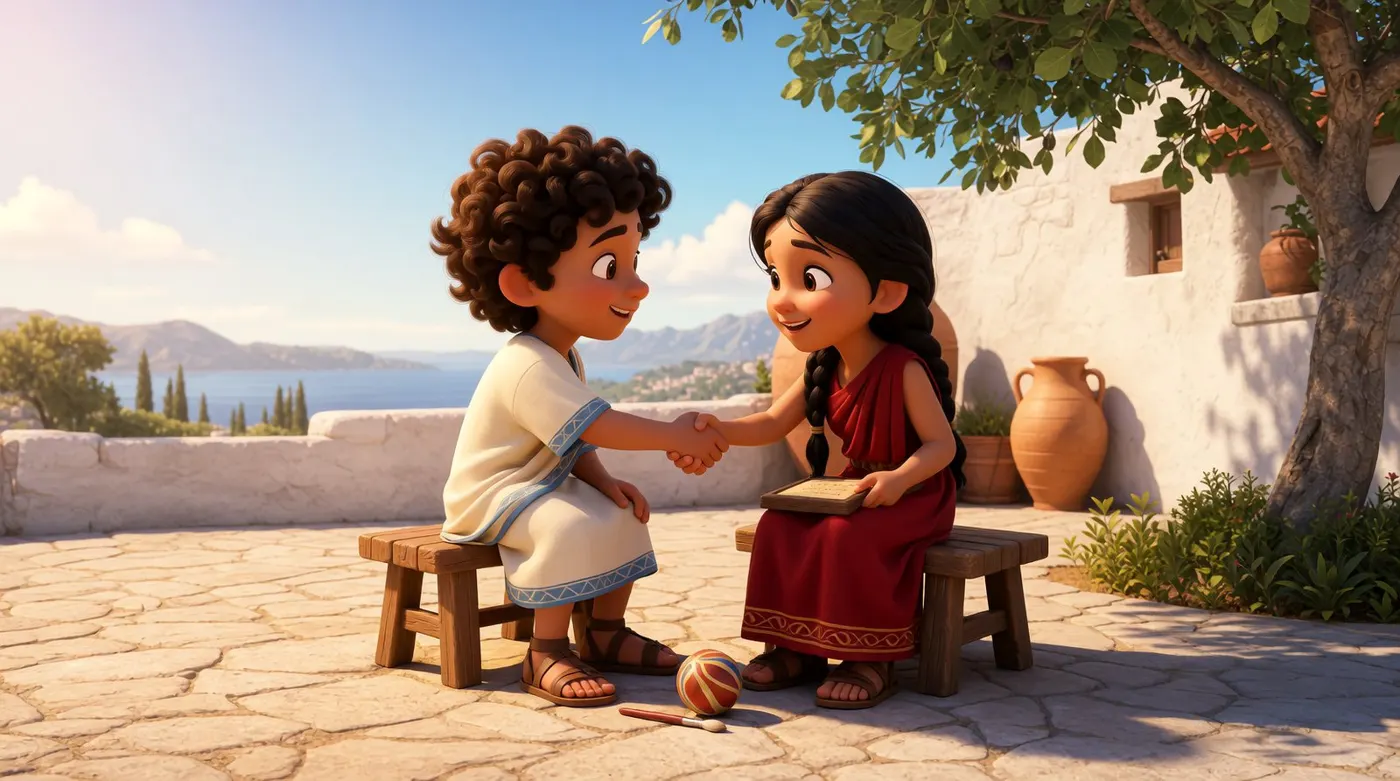
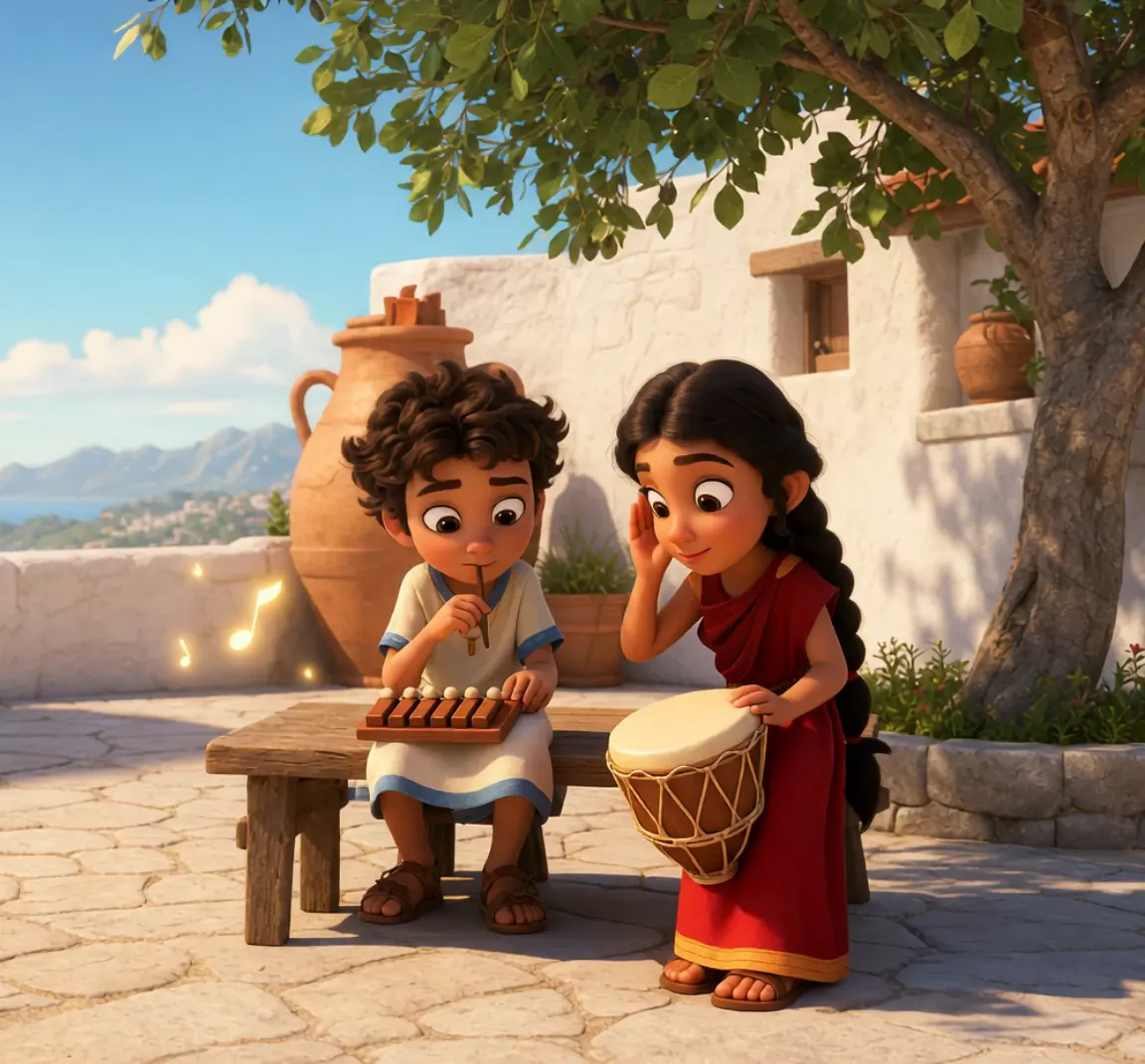
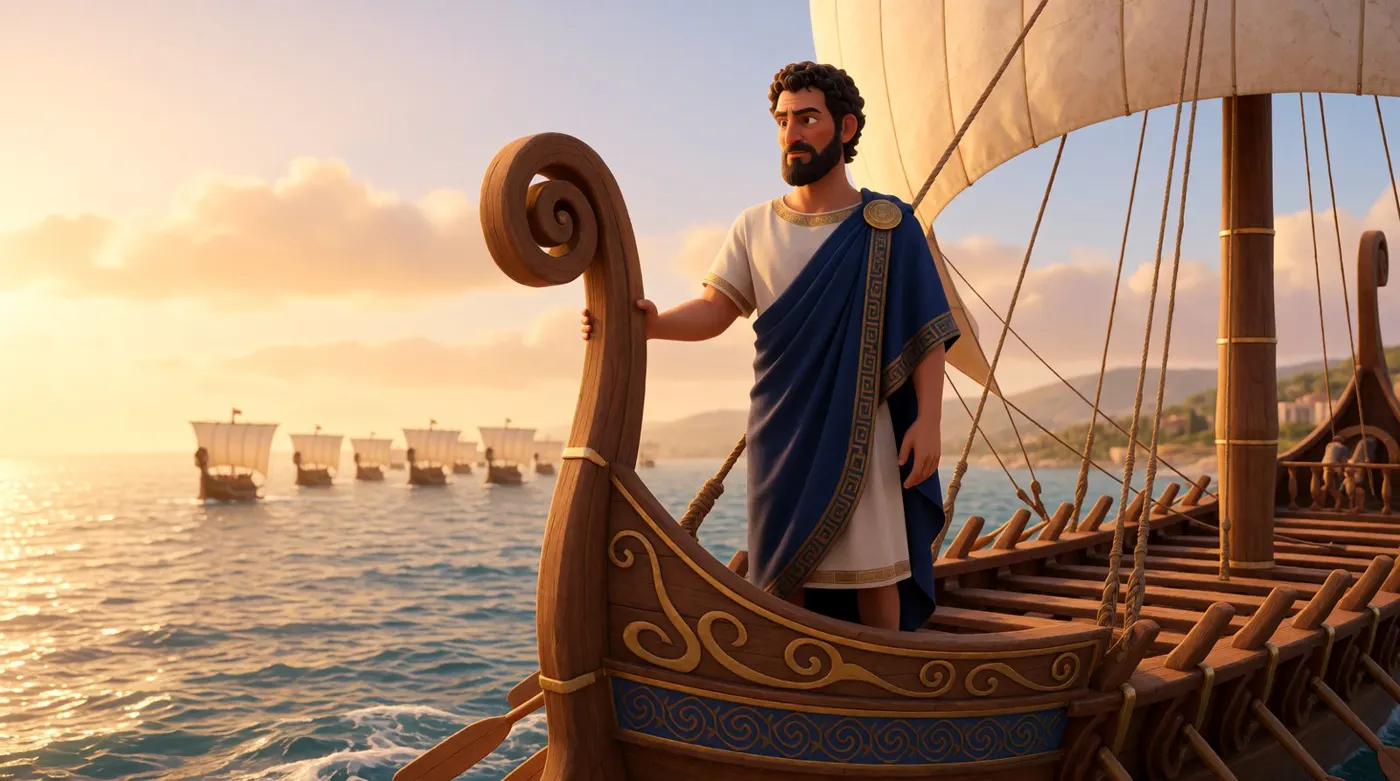
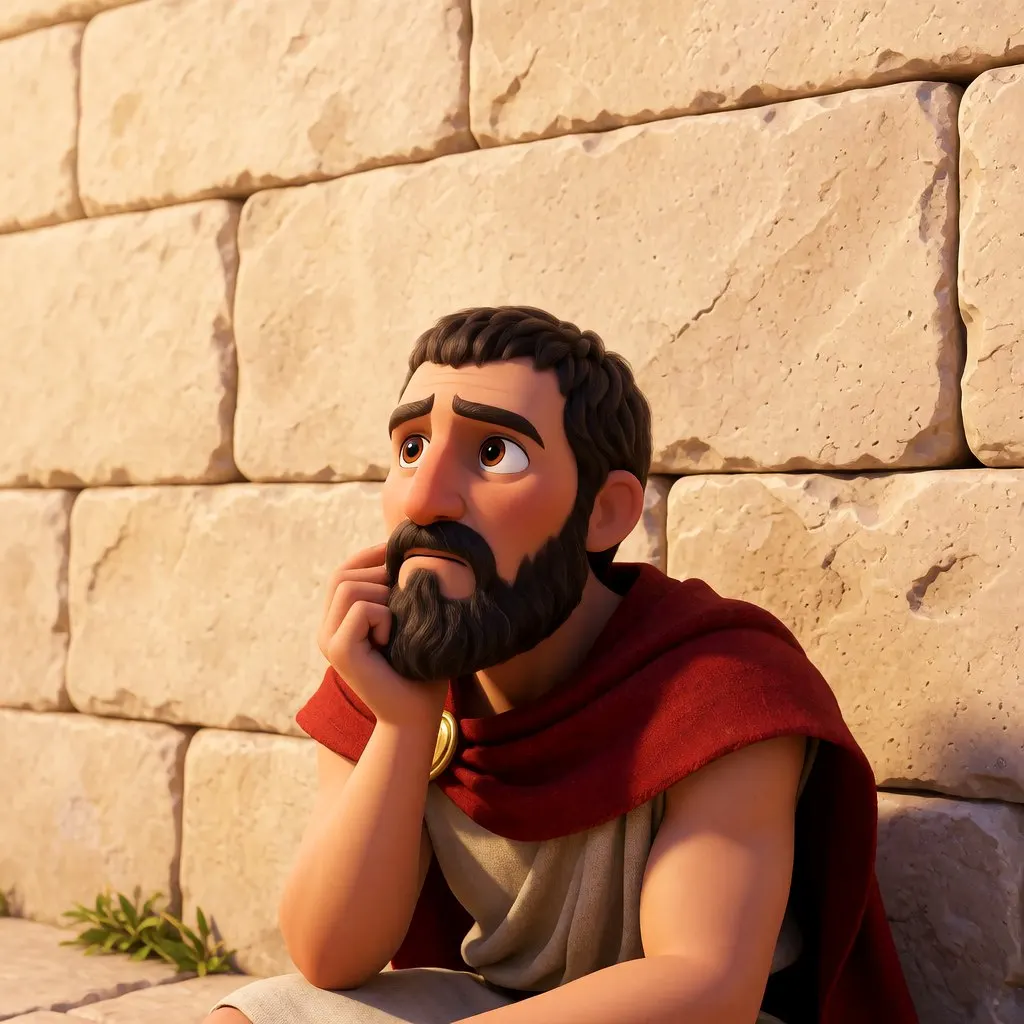
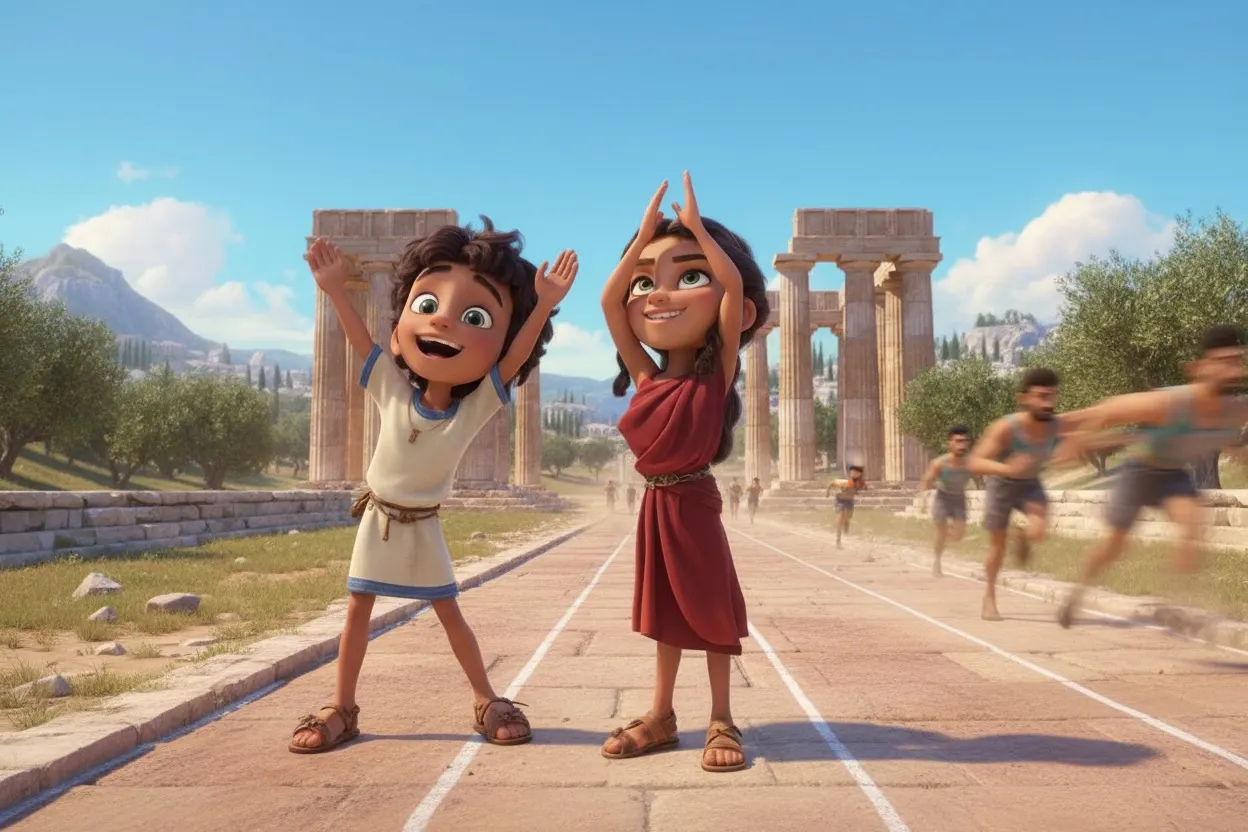
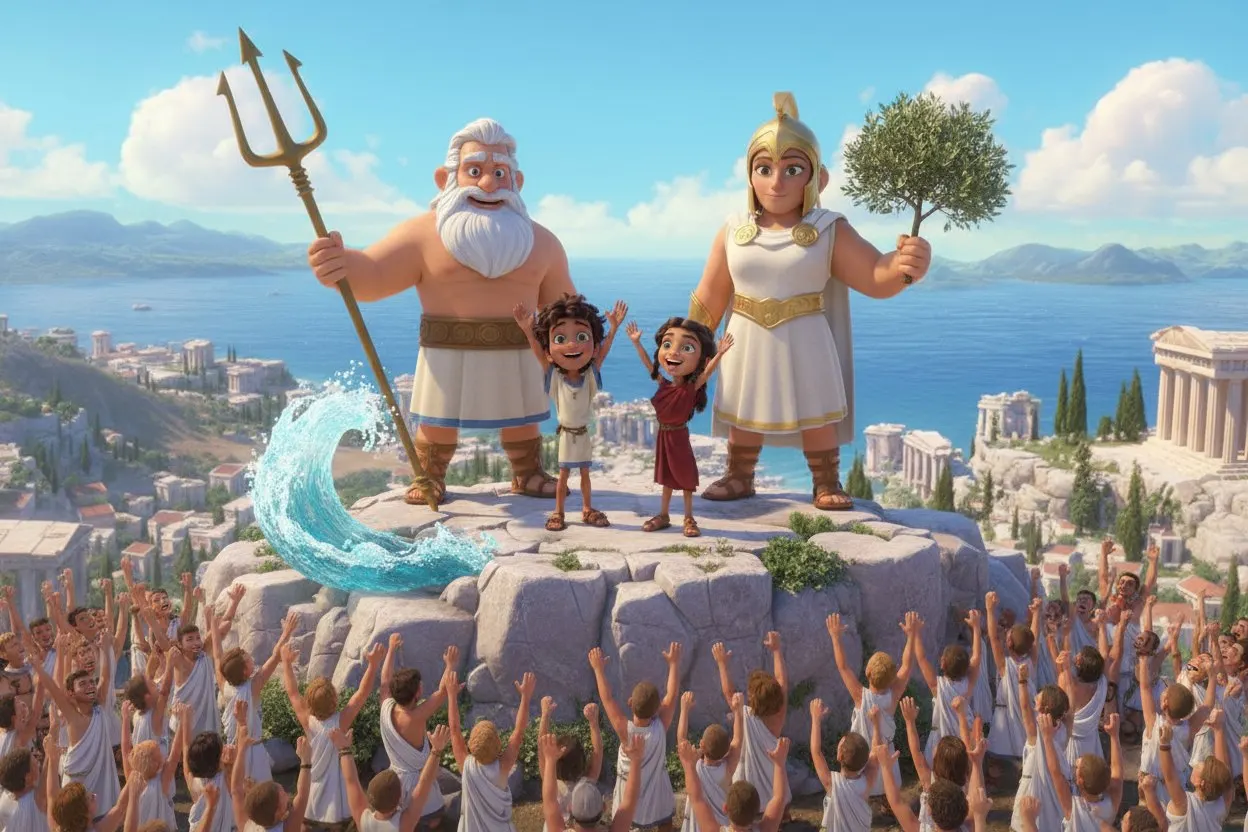
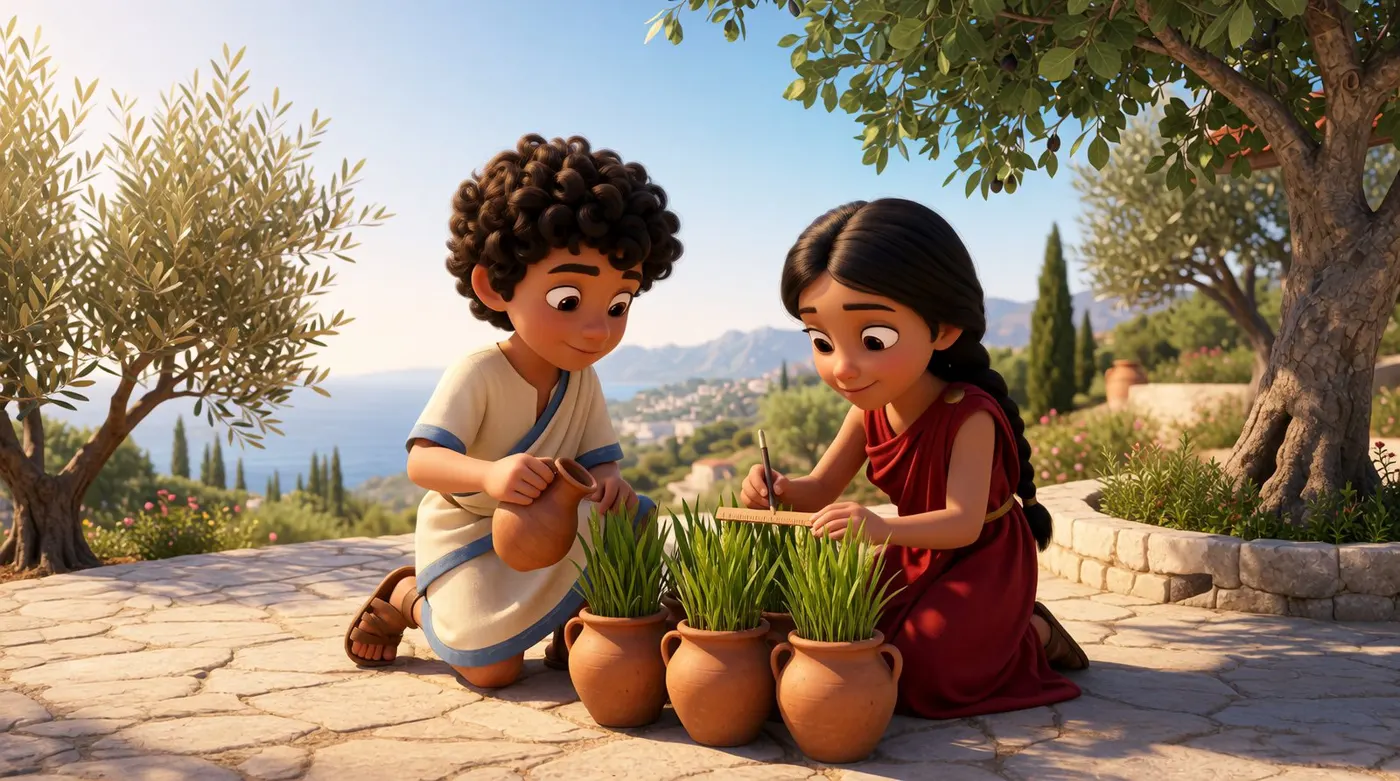
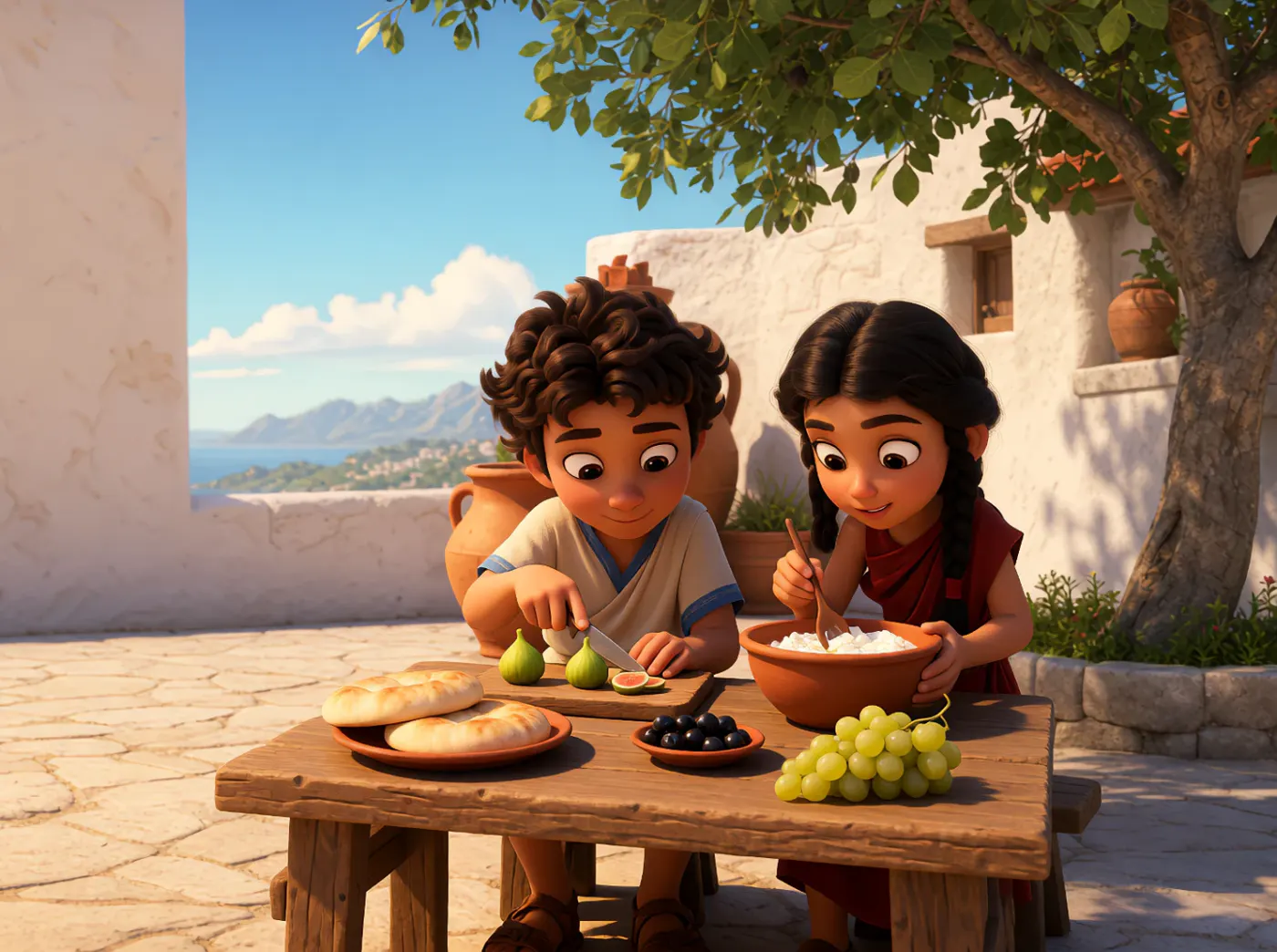
Nikias of Athens and Elpis of Sparta, a mystery pottery shard and a class Assembly Jar that asks how groups choose.
Year 3Also suits Year 4
20Sections to teach
8Subjects, one story
HistoryLead subject
Athens v Sparta, at a glance.
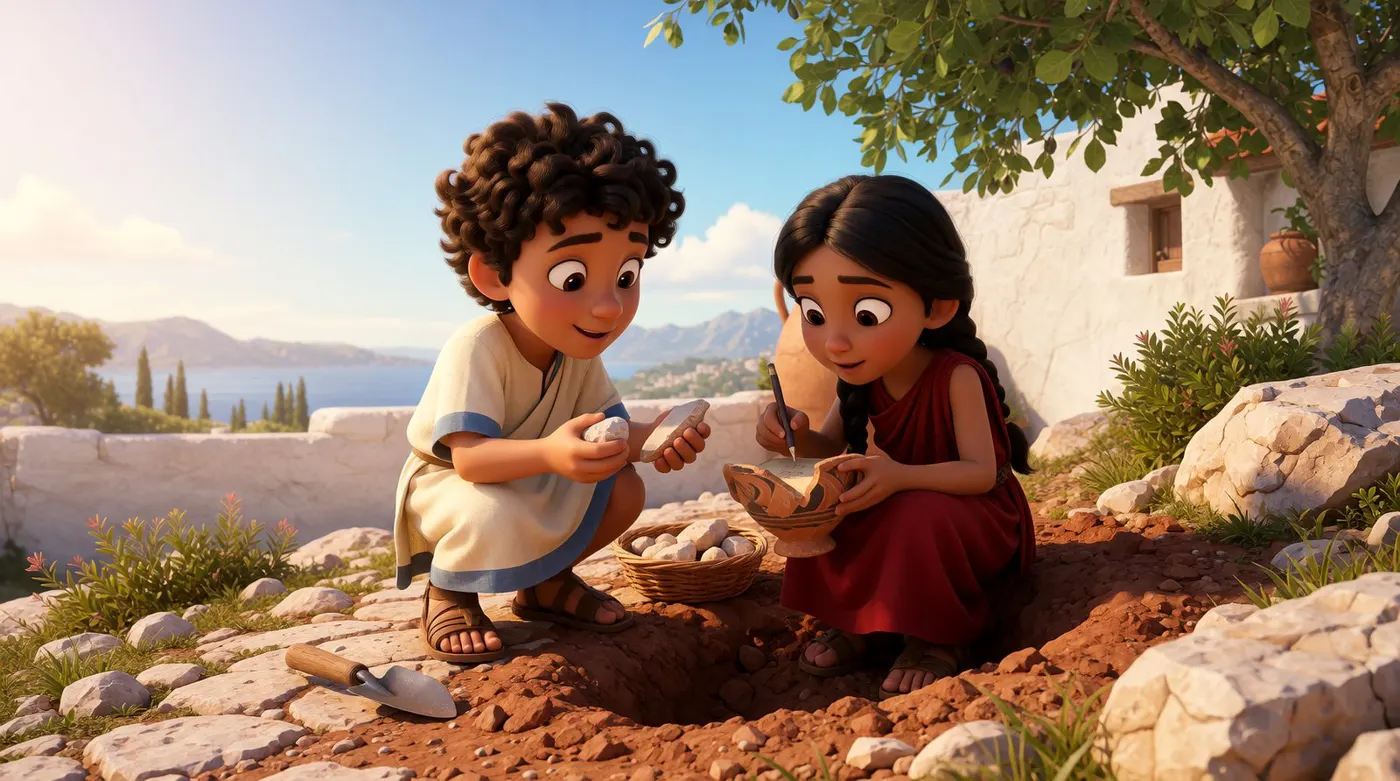
A Year 3 cross-curricular theme unit, led by History, about two Ancient Greek city-states and one question: how do groups choose? It begins with a strange broken shard covered in Greek letters, and an empty jar. The shard turns out to be an ostrakon, a piece of pottery an Athenian scratched a name on to vote, and it becomes the first thing in the class Assembly Jar. Two imagined children, Nikias of Athens and Elpis of Sparta, carry the question through the theme, and the jar fills up with the class's own votes along the way. Twenty sections across eight subjects. History places Ancient Greece in time, compares growing up in the two cities, reads the evidence they left behind, follows how Athens changed its rules until its citizens voted, and asks whether life was fairer in Athens or Sparta. Geography finds the two cities with latitude and an atlas. Science follows the food on a Greek market stall back to its plants, and tests the stone, soil and clay that ancient pottery is made from. Art looks hard at a real vase, then builds one. DT designs a dish for museum visitors and cooks it. Computing turns the class vote into data, writes an algorithm for a fair voting booth and builds audio guides. PSHE asks how a class decides fairly and how to disagree well. Music sings a song about the Olympic Games and composes Athens and Sparta in sound. The unit ends when the class opens the Assembly Jar Museum, with its vases, votes, songs and recorded guides as the exhibits.
How the story unfolds.
Who were Nikias and Elpis?
The first third meets the two cities and the jar. Big Question 1 opens the theme: how many different ways can you think of for a group to make a choice? The ideas become a class poster that grows all theme. History Section 1 places Ancient Greece on a timeline (about 800 BC/BCE to 146 BC/BCE), meets Mount Olympus and three gods, everyday life and real buildings, then Nikias of Athens and Elpis of Sparta, and the shard goes into the jar. Geography Section 1 cracks a coded note with latitude and an atlas, and finds that Athens and Sparta sit almost level, so the weather cannot explain why they lived so differently. History Section 2 compares growing up in the two cities through source packs, profile cards and a Venn sort, and pairs write a truce rule. Music Section 1 learns the song Olympia and records it for the museum. History Section 3 sorts written, visual and material evidence, digs for clues and spots bias in two practice texts. Art Section 1 looks hard at a vase and draws it twice.
From one ruler to a vote.
The middle third asks how Athens came to vote. Big Question 2 opens History Section 4: if you were in charge of a city for one day, what would you change, and what would you keep exactly the same? Pupils follow Draco, Solon and Cleisthenes to the word democracy, then find how little Sparta changed, and stand by Athens, Sparta or Neither. Science Section 1 follows the market stall back to its plants and measures barley. DT Section 1 designs a dish for four museum visitors and the class votes for a winner. History Section 5 separates long-term and short-term causes, debates whether Themistocles should stay, and casts a real class vote with paper shards in the jar. Computing Section 1 turns that vote into data and builds a branching database. PSHE Section 1 decides how to spend the museum's pretend £20 fairly, and asks how every voice can be heard.
What survives, and why?
The final third makes the museum. Science Section 2 tests rocks and soils and shows why fired clay survives when wood rots. Art Section 2 builds a clay vase round a tube. DT Section 2 cooks the winning dish as the Museum Flatbread. Computing Section 2 writes an algorithm for a fair voting booth and asks who it might leave out. PSHE Section 2 practises disagreeing well and makes the Our Class Truce poster from the History Section 2 truce slips. History Section 6 asks who could vote, compares two imagined accounts of one Assembly day, tries Sparta's vote by shouting, runs a conscience alley and takes a final vote both ways before every pupil writes a judgement. Music Section 2 composes Athens and Sparta as an A and a B. Computing Section 3 opens the Assembly Jar Museum with recorded audio guides, and the class looks at the poster of ways to choose one last time.
Every voice heard.
Two threads run through every third. Pupil-led moments, where pupils decide something for themselves, are ticked across the theme, including Music Section 1 (pairs decide where the song is loud and quiet) and PSHE Section 2 (trios find their own solution and decide how to judge if it is fair). The Oracy Focus comes eight times, each with a different technique: listen and echo (History Section 1), a mini-presentation to another pair (History Section 2), teach-back (History Section 3), reasoning aloud in trios (History Section 4), a structured debate (History Section 5), a conscience alley (History Section 6), summarising a partner's idea back (PSHE Section 2) and a recorded address to an absent audience (Computing Section 3).
8 subjects, one journey.
HistoryLead subject
Six sections, one per pillar. Chronology: BC/BCE and AD/CE, the Ancient Greece band on the class timeline, and Nikias and Elpis placed in time and on the map. Similarities and Differences: shared gods and the Olympic Games, the truce, schooling in Athens and the agoge in Sparta, profile cards and a Venn sort. Evidence: written, visual and material sources, heritage, why so little survives from Sparta, bias, and a claim backed by a quote. Continuity and Change: Draco, Solon and Cleisthenes, democracy, Sparta's two kings and elders, and helots. Cause and Consequence: long-term and short-term causes, the tyrant Peisistratos, ostracism, Themistocles and a class vote. Perspectives and Interpretations: who could vote, two accounts of the same day, a missing voice, Sparta's shout vote and a written judgement.
Geography
One section. Finding Athens and Sparta: lines of latitude and longitude, the equator and the North Pole, an atlas index and grid squares, Atlas Detectives in pairs, and Athens and Sparta found almost level at about 38° N and 37° N.
Science
Two sections. What Does a Plant Need?: the parts of a flowering plant and their jobs, what plants need to grow, a fair test with barley measured in millimetres, water moving up a celery stem, pollination and seed dispersal, and why the olive copes with hot, dry summers. Stone, Soil and Clay: the properties of rocks, the scratch test, a rock sort, what soil is made of, a drainage test on sand, compost and clay, and why fired clay lasts.
Art
Two sections. Looking Hard at a Vase: careful observation, proportion measured with a paper strip, a guide box and tick marks, small details, and a before-and-after compare. Building a Vase: the amphora, a plan in steps, a base as a framework, how wet and dry clay behave, score and slip, and a vase built round a tube.
DT
Two sections. A Dish for Our Visitors: user, need and prototype, four visitors and their needs, what the Greeks could and could not have eaten, a sketch, a play dough prototype tested with a partner, and a class vote. Market Day Cooking: food groups, safe hands, the bridge and claw holds, grating, what heat does to food, and the Museum Flatbread cooked and logged.
Computing
Three sections. What Does the Vote Show?: data, tallies, pictograms and bar charts, patterns and what data cannot tell us, and a branching database. An Algorithm for a Fair Vote: algorithms, sequence, bugs and debugging, repetition, inputs and outputs, and a six-step voting booth built in a block-based tool. The Assembly Jar Museum: purpose and audience, success criteria, editing photographs and sound, and a recorded audio guide.
PSHE
Two sections. Our Class, Our Say: communities and shared responsibilities, needs and wants on a budget, fair ways for a class to decide, and speaking up safely when someone is left out. Disagreeing Well: listening, turn-taking and calm words, saying a partner's idea back, negotiation and compromise, repair, and including someone who is left out.
Music
Two sections. A Song for Olympia: forte and piano, a steady pulse, the song learned by echo, a partner chant sung underneath it, dynamics planned in pairs and a recorded class performance. Two Cities, Two Sounds: repetition and contrast, AB form, the five pentatonic notes, an Athens A and a Sparta B composed in pairs, a picture score, and a recording improved and performed.
Every section, in order.
1HistoryMeet Nikias and Elpis
2GeographyFinding Athens and Sparta
3HistoryAthens or Sparta?
4MusicA Song for Olympia
5HistoryWhat Would Nikias and Elpis Leave Behind?
6ArtLooking Hard at a Vase
7HistoryWhose City Changed More?
8ScienceWhat Does a Plant Need?
9DTA Dish for Our Visitors
10HistoryWhy Did Nikias's City Choose to Vote?
11ComputingWhat Does the Vote Show?
12PSHEOur Class, Our Say
13ScienceStone, Soil and Clay
14ArtBuilding a Vase
15DTMarket Day Cooking
16ComputingAn Algorithm for a Fair Vote
17PSHEDisagreeing Well
18HistoryWas Life Fairer in Athens or Sparta?
19MusicTwo Cities, Two Sounds
20ComputingThe Assembly Jar Museum
Big questions to think and talk about.
How many different ways can you think of for a group to make a choice?
If you were in charge of a city for one day, what would you change, and what would you keep exactly the same?
By the end of the unit:
A timeline strip, a labelled map of Greece, a profile card, a recorded class song, a claim backed by a quote, two sketches of a pot, a dish design and prototype, the theme's big written paragraph, charts and a branching database, a clay vase, a cooked Museum Flatbread, a voting booth program, the Our Class Truce poster, a written judgement on fairness, a recorded composition, and an audio guide for the Assembly Jar Museum.
What pupils will know about Ancient Greece.
Ancient Greece
About 800 BC/BCE to 146 BC/BCE. With BC/BCE dates, a bigger number is older.
Two city-states
Athens and Sparta each ran itself, with its own laws and army. They sit almost level, at about 38° N and 37° N.
Same gods, same Games
Both cities shared the gods and the Olympic Games at Olympia. A truce kept travellers safe on the way.
Growing up
Some boys in Athens had a tutor. Boys in Sparta left home at about 7 for the agoge, and girls ran and wrestled.
Athens chose to vote
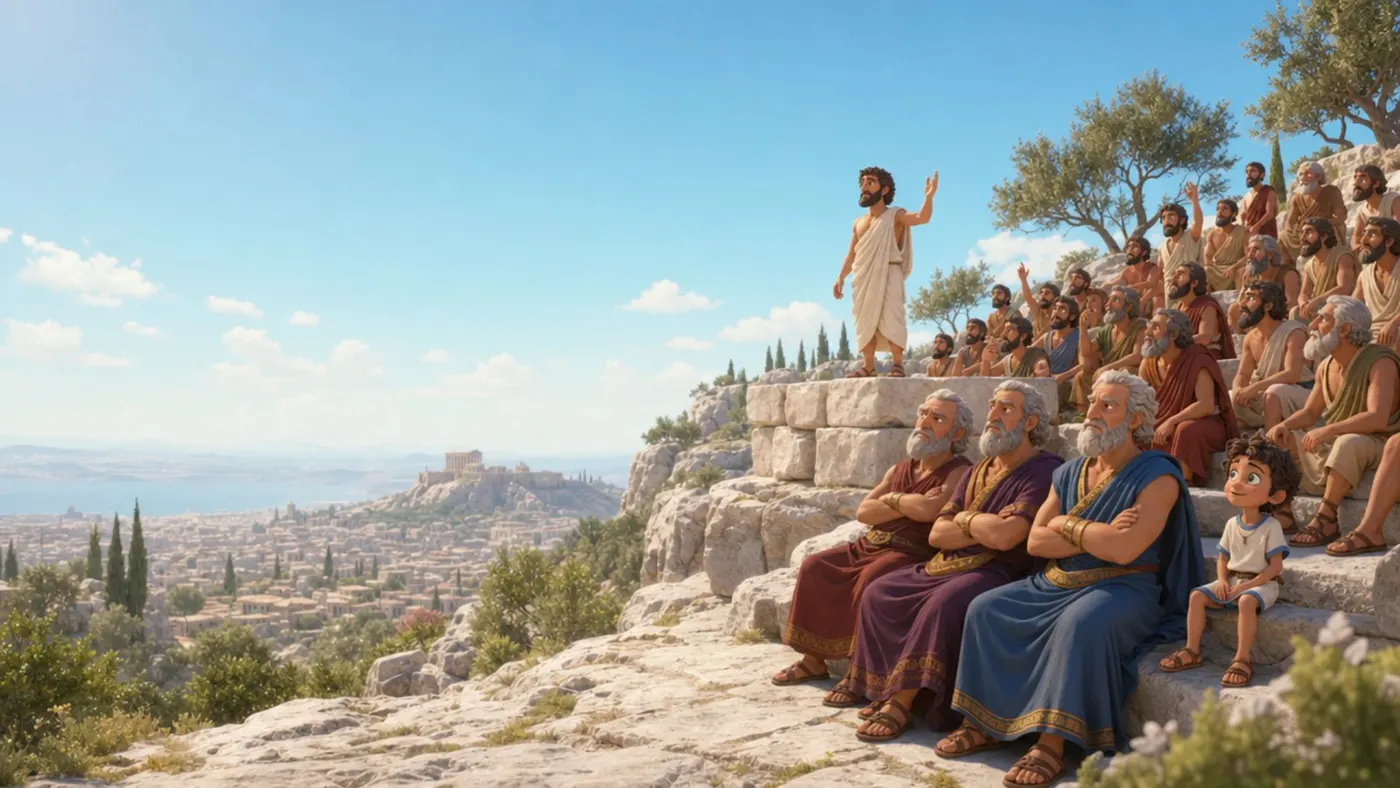
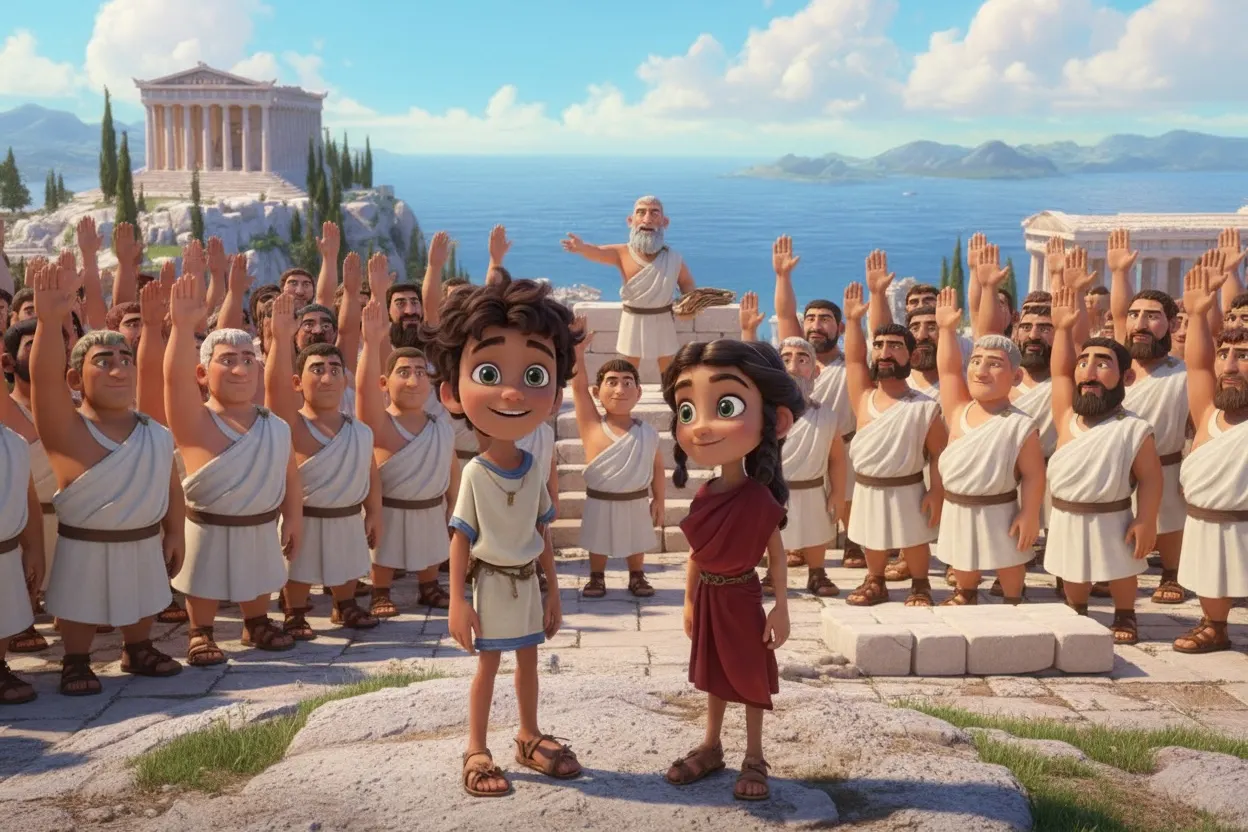
Draco, Solon and Cleisthenes changed the rules. Citizens got a real say in the Assembly: democracy, rule by the people.
A name on a pot
To vote someone out, Athenians scratched a name on an ostrakon. The person named most was sent away for ten years.
Sparta shouted
Sparta had two kings and a council of elders. Its assembly voted by shouting, and very little changed for years.
Who could vote?
In Athens only citizens could vote. Women, enslaved people and metics could not, so many voices were missing.
Evidence
Sources can be written, visual or material. Fired clay pots last for thousands of years, but wood and cloth usually rot.
The olive tree
Roots take in water and leaves make food. The olive's tough, narrow leaves lose less water in hot, dry summers.
What it covers, subject by subject.
History: placing events on a timeline with BC/BCE and AD/CE; comparing two places within a period and backing up each similarity and difference with evidence; pulling facts from written, visual and material sources, knowing that sources can be biased or incomplete, and backing a claim with a quote; describing patterns of change and what stayed the same; telling short-term from long-term causes and intended from unintended consequences; and comparing two accounts of the same event and noticing whose voice is missing.
Geography: using lines of latitude to find places near the equator and the poles, and using an atlas index and coordinates to find places.
Science: the parts of a flowering plant and their jobs, what plants need to grow, how water moves through a plant, and pollination, seed formation and seed dispersal; measuring growth over time; grouping rocks by hardness, colour and texture; and testing soils and recording patterns.
Art: recording careful observations in sketches and notes, using measuring to improve proportion and adding small details; and planning a 3D piece in steps, giving it a base for strength and knowing that clay behaves differently when wet and dry.
DT: designing for a user's needs and testing ideas with a prototype; and preparing and cooking food safely using heat, with chopping, grating and mixing, and knowing that a healthy diet includes different food groups.
Computing: collecting and showing data, comparing ways of showing it and spotting patterns, and sorting with a branching database; designing and testing programs with sequence, repetition, inputs and outputs; and planning and editing digital content for a clear purpose and audience.
PSHE: communities and shared responsibilities, needs and wants on a budget, and speaking up safely; and managing disagreement through respectful communication, negotiation, compromise and repair, and including someone who is left out.
Music: singing with accurate words and a steady pulse, and in two parts; and composing in two contrasting sections, capturing the music in a picture score and a recording and improving it.
Beyond subjects: oracy eight times, each with a different technique (listen and echo, a mini-presentation, teach-back, reasoning aloud, a structured debate, a conscience alley, summarising a partner's idea back and a recorded address to an absent audience), and three longer pieces of independent writing in History (the paragraph in Section 5, the missing voice and the final judgement in Section 6).
The class become conservation experts and build a proposal to save the Araká people's rainforest
Year 6
Ra! Ra! Egypt!
The river that made a civilisation, the woman who ruled it as king, and the argument about her that is still going on
Year 4
When the Blitz Hits
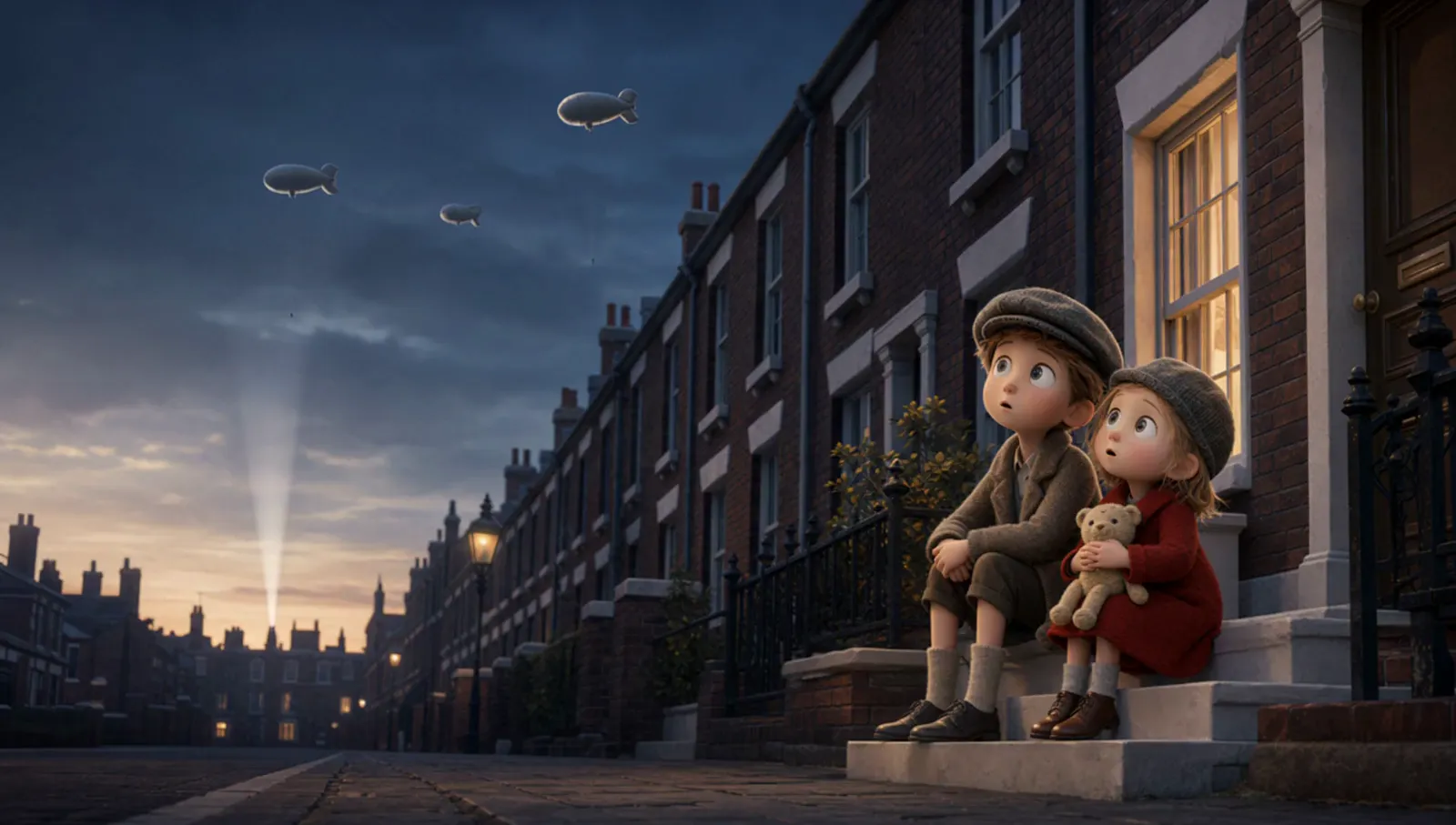
Follow Walter and Edith Wiggins from the 1939 wireless announcement to evacuation, the Blitz and the Home Front, told through the letters in the class postbag
Year 4
Come Fly with Me! Africa
Follow a piece of fruit back to the people who grew it: the true size of Africa, its climates and landscapes, and what a fair deal really means
“As a primary pupil referral unit, creating genuine engagement is essential for our learners. We were looking for a curriculum that places children at the heart of everything and encourages them to immerse themselves in purposeful, meaningful activities. Dimensions has proved to be a strong fit because it enables our pupils to be active, curious learners rather than passive recipients of information. It brings learning to life in a way that motivates them and supports high-quality learning throughout. Plus, the children just love the curriculum!”
BThe Beacon Referral Unit
“Our school fully embraced the Dimensions curriculum and it has brought the world to our classrooms!”
AAlison Steen
“As a school we are really pleased with our decision to go with Dimensions. It has changed the way we teach our topic lessons as a school and has elevated the quality and diversity of the topics taught throughout KS1 and KS2. It is wonderful how the same theme can be so diverse across all age ranges and it has given teachers the confidence to explore themes they may not have taught previously.”
Scoill Phurt Le Moirrey
“Dimensions Curriculum is amazing! We’ve used it for a few years now and the children absolutely love the different topics and are really engaged by the modern and relevant aspect of these. … Added to this is the amazing support that you get from the Dimensions team and nothing is ever too much trouble.”
SSophie Orton
“Introducing the curriculum has been a real game-changer for our team. It’s clear, well-structured, and genuinely supportive of high-quality teaching. Planning is now more streamlined and consistent, while still allowing flexibility for individual classes and teaching styles. The progression is easy to follow, expectations are clear, and it’s saved us valuable time without compromising creativity or impact. A thoughtfully designed resource that’s already making a positive difference in our classrooms.”
Woodford Halse School
“As a class teacher I have really enjoyed using both the Dimensions Curriculum and 3D PSHE. Both products have been very well designed with clear, progressive and sequential plans, incorporating creative, engaging ideas and have given me the peace of mind to know I am teaching the children a quality curriculum. Wouldn’t expect anything less from a product designed by teachers, for teachers. Thank you Dimensions team!”
AAnn Webster
“The Dimensions 3D PSHE curriculum map, programs of study and enrichment unit are so well organised! I am very excited to use it all!”
LLubavitch Primary School
“Children in my school using Dimensions are motivated to learn and can articulate what they are learning and why they are learning it. … The curriculum maps, knowledge organisers and other documents available for subject leadership are super handy and also save on workload. It is excellent value for money.”
LLouise
“Introducing the curriculum has taken the weight off leaders knowing that everything is covered with clear progression documents. Children are getting the breadth and depth of coverage required. It has made a really positive impact especially when planning for mixed age classes. It is great to have the support available for ever changing class structures.”
Beeston Primary School
“I have had an extremely positive experience with Dimensions. They are a fabulous company, producing products to a very high standard that really engage children. Their curriculum is amazing and using it, I have had outstanding progression, engagement and enjoyment both from the children and myself! I would wholeheartedly recommend Dimensions!”
JJules Wilkin
“Music Crew gives teachers much more confidence when teaching music lessons. The children look forward to music and remember what they have learned from previously. The progression is excellent. Music Crew can be adapted to meet the needs of individual classes and the needs of the school.”
Warton St. Paul’s CE School
“It allows teachers to do what they do best, create engaging schemes of work and lessons and then teach accordingly, safe in the knowledge that statutory demands are covered and progression ensured … Our successful inspection outcomes are testament to the confidence we have in Dimensions. I could not ask for more from Dimensions.”
HHelen Ruberto
“We contacted the Customer support team and requested a new document that had the lesson codes and learning objectives for each year group, for each term. They were more than happy to help and emailed the documents to us the same day which was very helpful and exactly what we needed.”
St Andrew’s School
“As a teacher, working in an international school in Hong Kong I have followed the Dimensions Curriculum Thematic Units for a few years now, and I cannot recommend these resources highly enough. I absolutely love how it engages my students, by making learning fun, relevant and interesting for them. … Oh, and I should also mention all the time they save me in planning.”
KKarin Munkholm
“Absolutely loved using the Dimensions Curriculum. It was flexible and creative and allowed us to shape the learning in our school in such a way that it was relevant and purposeful for everyone involved, including the teachers! I enjoyed working with Elaine throughout, and found the support provided to myself as curriculum leader and the staff training given to be excellent.”
SSarah Cooke
“I bought the PSHE Curriculum for my School. The resources are just fantastic! They are packed full of great ideas, easy to use and relevant. I would highly recommend all their resources to any teacher. It’s definitely the way forward.”
KKat Parkinson
“From a teacher’s perspective, this curriculum has revitalized lesson planning. … Overall, this curriculum has been a game-changer. It has enhanced engagement, deepened learning, and created a more dynamic and enjoyable experience for both students and staff. We wholeheartedly recommend this approach to any ASD school …”
SSophie Hatcher
“We have worked with Elaine and the Dimensions team for over 5 years. The staff enjoy teaching the theme units and the pupils love their learning. Ofsted were very impressed with our curriculum and praised the creative learning and experiences the pupils were encountering. … Our school love it.”
AAlison Worthington
“They are a fantastic company with a wealth of knowledge and understanding. Their products are inspiring, innovative, unique to the market and importantly they are fun and exciting. I would recommend every school to have a visit from Elaine or her team, it’s a decision you won’t regret!”
KKJ Krzysiak
“Have used Dimensions to enhance our school curriculum for many years with much success and great results. The support of the Dimensions team and their curriculum has also helped us through two successful OFSTED visits! Would highly recommend.”
DDawn Forrest
“We have seen the knowledge and skills of our children deepen and their experiences in the classroom and of the wider world have broadened. … We have made so many meaningful connections to our whole school vision and values.”
HH Redfern
“Excellent curriculum resources with outstanding provision for all age groups.”





 Scoill Phurt Le Moirrey
 Woodford Halse School
 Beeston Primary School
 Warton St. Paul’s CE School
 St Andrew’s School