Can a place be both dangerous and beautiful at the same time?
Follow a lost explorer into the world's deserts.
Year 5Also suits Year 6
22Sections to teach
7Subjects, one story
GeographyLead subject
Just Deserts, at a glance.
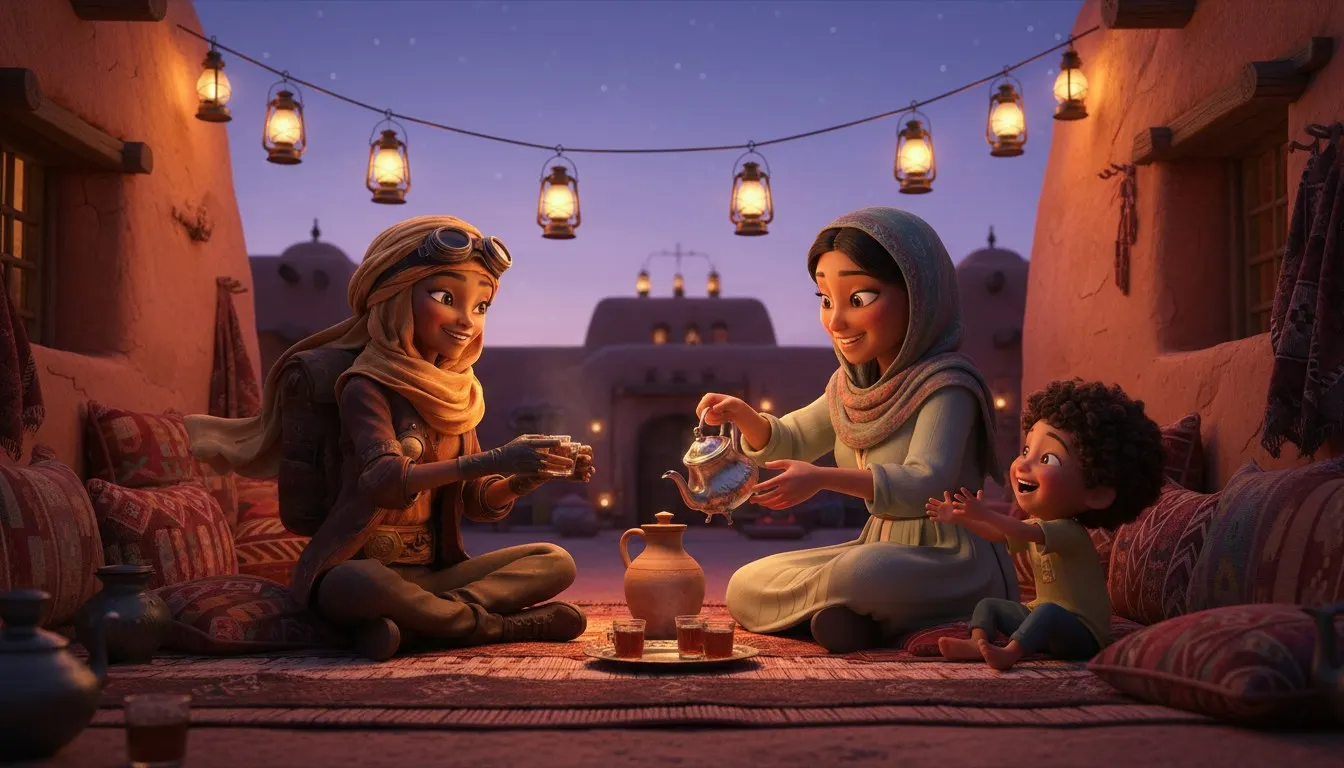
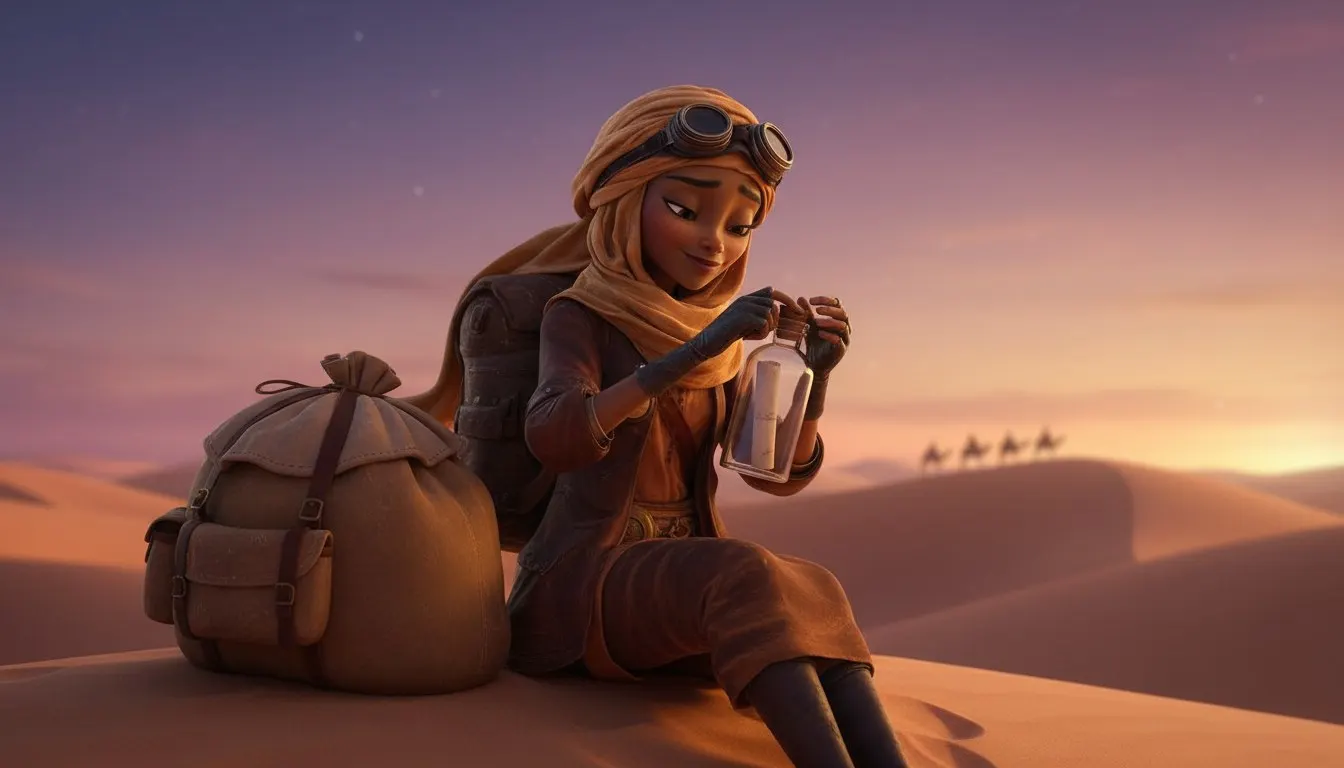
A Year 5 cross-curricular theme unit, led by Geography. A bottle washes up at school carrying a coded message from Dr. Halima Toure, an explorer somewhere in the world's deserts, and the class has to work out where she is. Answering her takes twenty-two sections across seven subjects, and turns a blank space on the map into a place with weather, plants, animals, cities, music, history and people who have to share what little water there is. Nine more messages arrive from the bottle as the unit goes on, and the last one asks the class a question Halima cannot answer herself.
How the story unfolds.
What makes a desert a desert?
The unit opens with a puzzle rather than a fact: a coded message, a riddle, and a class working out that the sender is in the Sahara. The first third establishes what a desert actually is (rainfall, not heat), why deserts sit where they do, why the same place can be scorching by day and freezing by night, and how a mountain range can steal the rain from the land behind it. Halima's ruined map turns that knowledge into a Computing task: maps are designed for a user, so what would hers need to show?
Who can live with so little water?
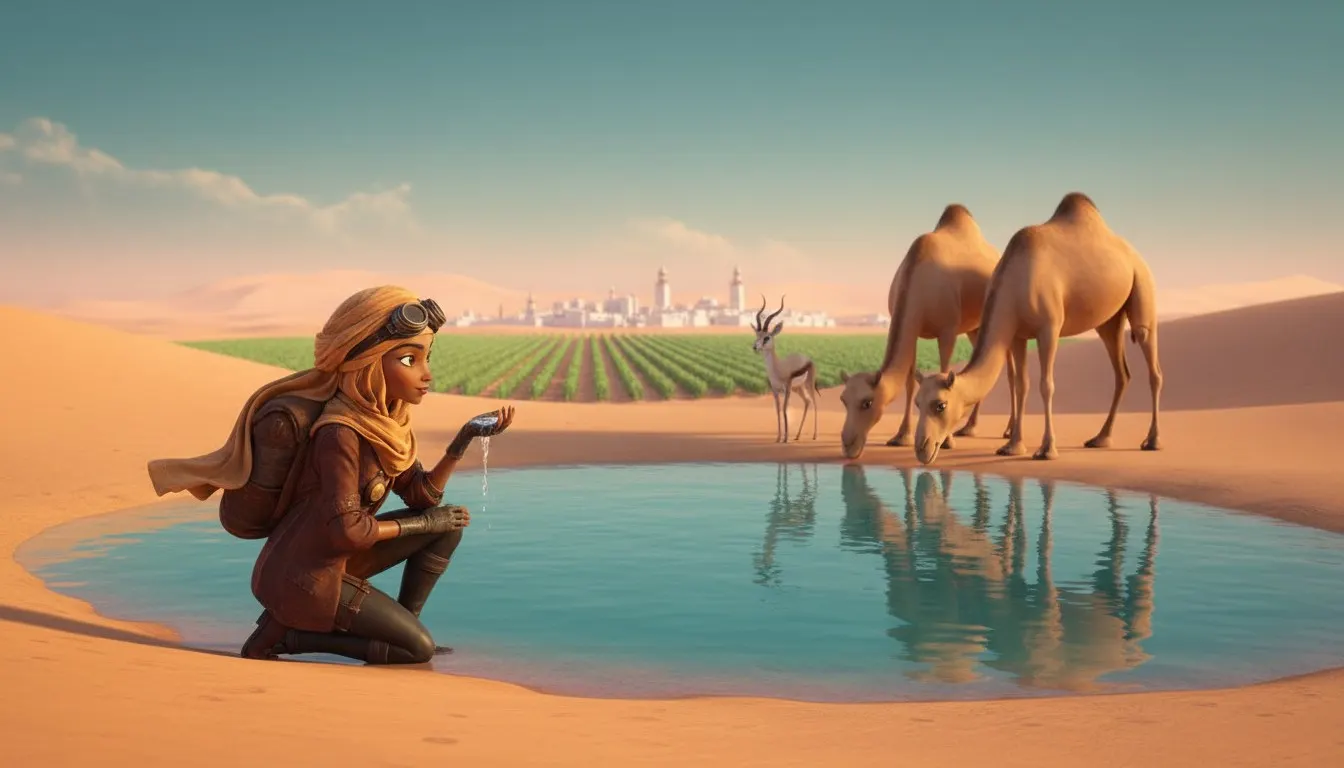
The middle of the unit is about people. Pupils design a survival kit for one named person with real problems, listen to four instruments played across the region for centuries, and then build a city in the desert on a fixed budget before discovering that the group next to them is drawing from the same water. That tension runs straight into a monitoring system in Computing, a negotiation in PSHE over a real shared aquifer, and a water diary that compares the class's own use against a genuine city-wide daily limit. Science and DT interrogate survival from both sides: how living things solve the problem, and how well a shelter you built yourself actually holds up.
Is the desert growing?
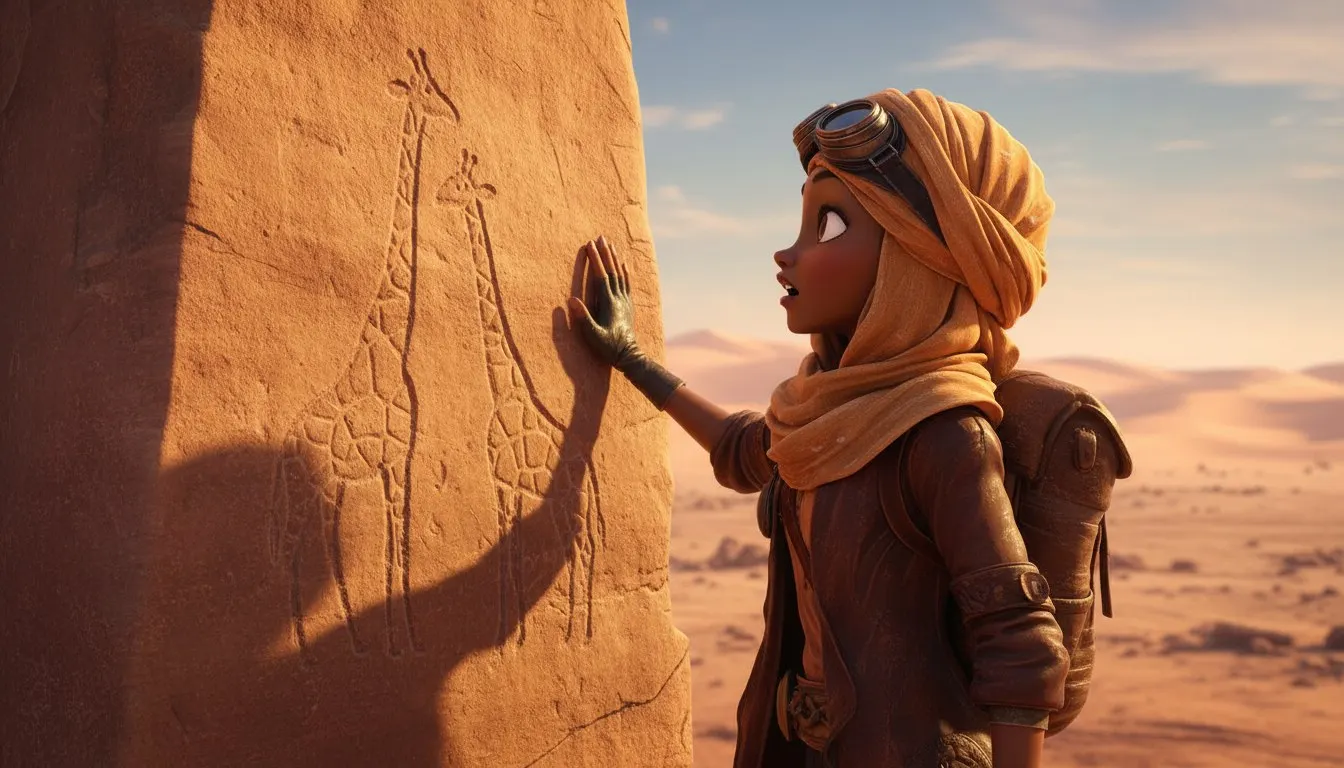
The last third widens the view in time and in scale. History finds giraffes carved into rock in the open desert and weighs an artefact against a sediment core. Geography sends the class outdoors to collect trustworthy data of their own, Science tests it fairly indoors, and Computing turns both datasets into charts. Music composes the whole journey in three sections, then the unit ends with the two honest questions: is the desert really growing, and what would you actually do about any of it? Neither section is given a tidy answer, on purpose.
7 subjects, one journey.
GeographyLead subject
The spine of the unit, six sections: locating the world's deserts and the rainfall rule that defines them, the rain shadow that explains why they form, urbanisation and the growth of a real desert city, the process of saltation and how communities slow advancing sand, real fieldwork in the school grounds, and finally desertification, where the science is genuinely contested and the section says so.
Science
Three enquiries that each serve the story: why the desert surface heats and loses heat so fast, how real desert species are adapted and how you classify them, and a full plan-test-evaluate-improve investigation into which colours hide best against sand, run twice so pupils improve their own method.
Computing
Three sections with three different tools: designing a map for one named user in the Map Studio, building a micro:bit water monitor around a sensor, a rule and an action, and entering the class's own real Geography and Science results into a prepared spreadsheet to see which dataset shows the clearer pattern.
Design & Technology
A full design cycle across three sections: designing one kit item that solves a real problem Halima has described, testing materials and joins and building a scaled shelter with precision, then fair-testing what they built and pushing past "it worked" to what the result actually shows.
Music
Three sections built on real, rights-cleared recordings: identifying the oud, darbuka, ney and riq by timbre alone, holding a steady pulse under contrasting layered rhythms, and composing a desert journey in ternary form, where the B section has to genuinely contrast with the A they already have.
PSHE
Three sections on sharing and responsibility: negotiating assertively over one water source with four genuine competing needs, comparing the class's own tracked water use with real verified figures from a water-scarce city, and a closing personal reflection that deliberately has no right answer.
History
One section, and it carries the unit's evidence work: rock art showing giraffes and hippos in what is now hyperarid desert, set against a sediment core full of savanna pollen. Two completely different source types pointing the same way, evaluated on origin, purpose, audience and context.
Every section, in order.
1GeographyWhere in the World are the Deserts?
2ScienceWhy Is It So Hot?
3GeographyHow Does a Desert Form?
4ComputingHalima's Living Map
5DTCould You Survive Out There?
6MusicMusic Across the Desert
7GeographyCities of the Desert
8ComputingKeeping the City Alive
9PSHEWhose Water Is It?
10ScienceHow Do You Survive Out Here?
11DTBuilding the Shelter
12GeographyShifting Sands
13MusicCamel Caravan
14PSHELiving With Less
15HistoryThe Green Sahara
16GeographyCould You Map a Desert From Here?
17ScienceWhat Hides Best in Sand?
18DTTesting Halima's Kit
19ComputingNumbers From the Sand
20MusicCrossing the Desert
21GeographyIs the Desert Growing?
22PSHEWhat Would You Do?
Big questions to think and talk about.
Can a place be both dangerous and beautiful at the same time?
If people have different needs, is giving everyone the same amount really fair?
Can you really trust a story about the past if you weren't there to see it?
By the end of the unit:
A designed kit item and a built shelter, both fair-tested; a real fieldwork dataset analysed in a spreadsheet; a composed three-part desert journey; a personal answer to the final message.
What pupils will know about deserts.
A desert is about rain
A desert is anywhere that gets less than 250 millimetres of rain in a whole year. It is the rain that counts, not the heat.
Not all deserts are hot
Antarctica is the largest desert on Earth. It is freezing, but almost no rain or snow falls there.
The desert belt
Most hot deserts sit in two bands about 30 degrees north and south of the equator, where dry air sinks back down.
Scorching by day, freezing by night
With no clouds and no moisture to hold the heat in, the day's warmth escapes fast once the sun goes down.
Mountains steal the rain
Wind rises over a mountain range and drops its rain on the near side. The dry land behind it is called a rain shadow.
The hump holds fat
A camel's hump is full of fat, not water. It is a food store for when there is nothing to eat.
Built for the heat
A fennec fox loses heat through its huge ears, and a saguaro cactus swells with water when the rain finally comes.
Cities grow here too
In 1960 Dubai was a trading town of 40,000 people. Today almost four million live there, in the desert.
Water crosses borders
A huge store of ancient water lies under Egypt, Libya, Sudan and Chad at once, so four countries have to share it.
The Sahara was green
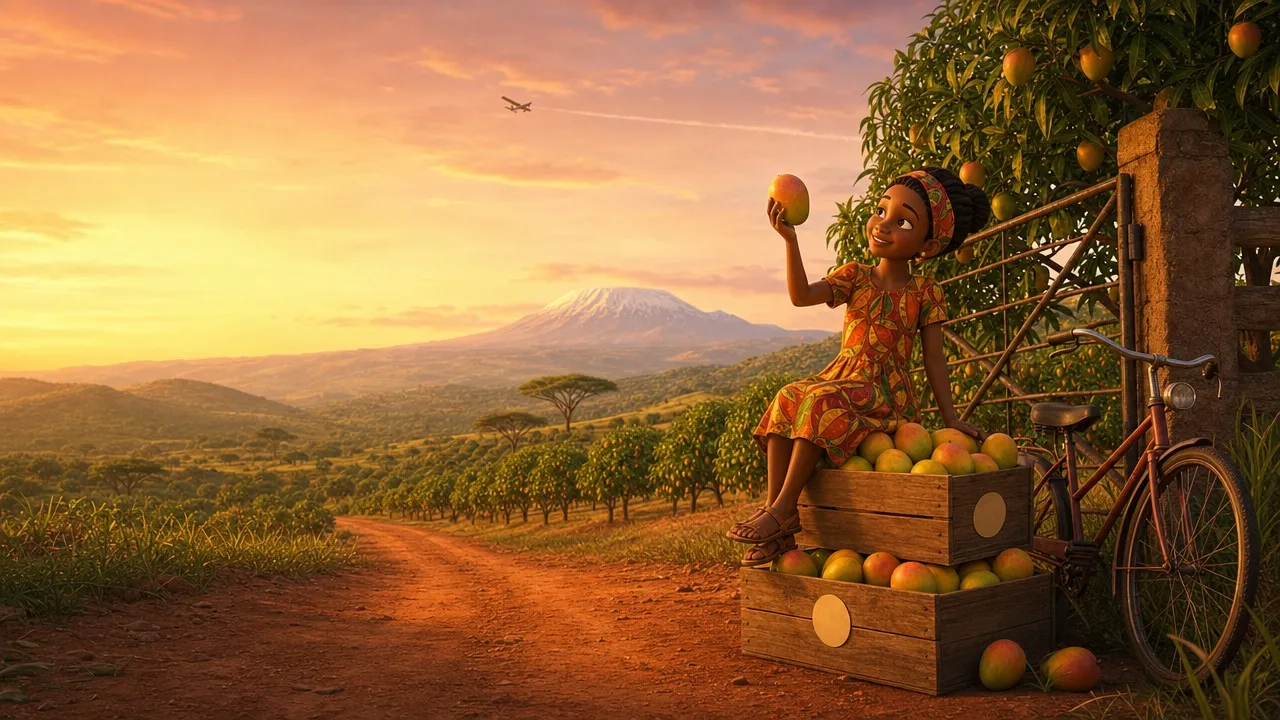
Between 11,000 and 5,000 years ago the Sahara had grass, lakes, giraffes and hippos. People carved them into the rock.
What it covers, subject by subject.
Geography: biomes and climate zones, latitude and the desert belt, rain shadow and physical process, urbanisation and land use change, saltation and management approaches, a full fieldwork enquiry, and human impact on a fragile place.
Science: the Earth's rotation and the day and night temperature swing, adaptation and classification of living things, and a planned, repeated, evaluated and improved fair test.
Computing: designing digital products for a named user, monitoring systems built from a sensor, a rule and an action, and modelling real collected data in a spreadsheet.
Design & Technology: designing for a target audience, precise measuring and joining techniques, and fair-testing and analysing your own product.
Music: identifying instrumental timbre in context, holding a pulse and layering contrasting rhythms, and composing in ternary form with genuine contrast.
PSHE: assertive communication and compromise, shared responsibility for people and living things, and respect for lives lived with far less.
History: source evaluation on origin, purpose, audience and context, and constructing an explanation supported by specific detail from two different source types.
Books to read alongside
A Long Walk to WaterLinda Sue Park
The Boy Who Harnessed the Wind (Young Readers Edition)William Kamkwamba and Bryan Mealer
One Well: The Story of Water on EarthRochelle Strauss
The Water PrincessSusan Verde and Peter H. Reynolds
“As a primary pupil referral unit, creating genuine engagement is essential for our learners. We were looking for a curriculum that places children at the heart of everything and encourages them to immerse themselves in purposeful, meaningful activities. Dimensions has proved to be a strong fit because it enables our pupils to be active, curious learners rather than passive recipients of information. It brings learning to life in a way that motivates them and supports high-quality learning throughout. Plus, the children just love the curriculum!”
BThe Beacon Referral Unit
“Our school fully embraced the Dimensions curriculum and it has brought the world to our classrooms!”
AAlison Steen
“As a school we are really pleased with our decision to go with Dimensions. It has changed the way we teach our topic lessons as a school and has elevated the quality and diversity of the topics taught throughout KS1 and KS2. It is wonderful how the same theme can be so diverse across all age ranges and it has given teachers the confidence to explore themes they may not have taught previously.”
Scoill Phurt Le Moirrey
“Dimensions Curriculum is amazing! We’ve used it for a few years now and the children absolutely love the different topics and are really engaged by the modern and relevant aspect of these. … Added to this is the amazing support that you get from the Dimensions team and nothing is ever too much trouble.”
SSophie Orton
“Introducing the curriculum has been a real game-changer for our team. It’s clear, well-structured, and genuinely supportive of high-quality teaching. Planning is now more streamlined and consistent, while still allowing flexibility for individual classes and teaching styles. The progression is easy to follow, expectations are clear, and it’s saved us valuable time without compromising creativity or impact. A thoughtfully designed resource that’s already making a positive difference in our classrooms.”
Woodford Halse School
“As a class teacher I have really enjoyed using both the Dimensions Curriculum and 3D PSHE. Both products have been very well designed with clear, progressive and sequential plans, incorporating creative, engaging ideas and have given me the peace of mind to know I am teaching the children a quality curriculum. Wouldn’t expect anything less from a product designed by teachers, for teachers. Thank you Dimensions team!”
AAnn Webster
“The Dimensions 3D PSHE curriculum map, programs of study and enrichment unit are so well organised! I am very excited to use it all!”
LLubavitch Primary School
“Children in my school using Dimensions are motivated to learn and can articulate what they are learning and why they are learning it. … The curriculum maps, knowledge organisers and other documents available for subject leadership are super handy and also save on workload. It is excellent value for money.”
LLouise
“Introducing the curriculum has taken the weight off leaders knowing that everything is covered with clear progression documents. Children are getting the breadth and depth of coverage required. It has made a really positive impact especially when planning for mixed age classes. It is great to have the support available for ever changing class structures.”
Beeston Primary School
“I have had an extremely positive experience with Dimensions. They are a fabulous company, producing products to a very high standard that really engage children. Their curriculum is amazing and using it, I have had outstanding progression, engagement and enjoyment both from the children and myself! I would wholeheartedly recommend Dimensions!”
JJules Wilkin
“Music Crew gives teachers much more confidence when teaching music lessons. The children look forward to music and remember what they have learned from previously. The progression is excellent. Music Crew can be adapted to meet the needs of individual classes and the needs of the school.”
Warton St. Paul’s CE School
“It allows teachers to do what they do best, create engaging schemes of work and lessons and then teach accordingly, safe in the knowledge that statutory demands are covered and progression ensured … Our successful inspection outcomes are testament to the confidence we have in Dimensions. I could not ask for more from Dimensions.”
HHelen Ruberto
“We contacted the Customer support team and requested a new document that had the lesson codes and learning objectives for each year group, for each term. They were more than happy to help and emailed the documents to us the same day which was very helpful and exactly what we needed.”
St Andrew’s School
“As a teacher, working in an international school in Hong Kong I have followed the Dimensions Curriculum Thematic Units for a few years now, and I cannot recommend these resources highly enough. I absolutely love how it engages my students, by making learning fun, relevant and interesting for them. … Oh, and I should also mention all the time they save me in planning.”
KKarin Munkholm
“Absolutely loved using the Dimensions Curriculum. It was flexible and creative and allowed us to shape the learning in our school in such a way that it was relevant and purposeful for everyone involved, including the teachers! I enjoyed working with Elaine throughout, and found the support provided to myself as curriculum leader and the staff training given to be excellent.”
SSarah Cooke
“I bought the PSHE Curriculum for my School. The resources are just fantastic! They are packed full of great ideas, easy to use and relevant. I would highly recommend all their resources to any teacher. It’s definitely the way forward.”
KKat Parkinson
“From a teacher’s perspective, this curriculum has revitalized lesson planning. … Overall, this curriculum has been a game-changer. It has enhanced engagement, deepened learning, and created a more dynamic and enjoyable experience for both students and staff. We wholeheartedly recommend this approach to any ASD school …”
SSophie Hatcher
“We have worked with Elaine and the Dimensions team for over 5 years. The staff enjoy teaching the theme units and the pupils love their learning. Ofsted were very impressed with our curriculum and praised the creative learning and experiences the pupils were encountering. … Our school love it.”
AAlison Worthington
“They are a fantastic company with a wealth of knowledge and understanding. Their products are inspiring, innovative, unique to the market and importantly they are fun and exciting. I would recommend every school to have a visit from Elaine or her team, it’s a decision you won’t regret!”
KKJ Krzysiak
“Have used Dimensions to enhance our school curriculum for many years with much success and great results. The support of the Dimensions team and their curriculum has also helped us through two successful OFSTED visits! Would highly recommend.”
DDawn Forrest
“We have seen the knowledge and skills of our children deepen and their experiences in the classroom and of the wider world have broadened. … We have made so many meaningful connections to our whole school vision and values.”
HH Redfern
“Excellent curriculum resources with outstanding provision for all age groups.”













 Scoill Phurt Le Moirrey
 Woodford Halse School
 Beeston Primary School
 Warton St. Paul’s CE School
 St Andrew’s School