Come Fly with Me! America: a Year 5 cross-curricular topic
What makes somewhere feel like it belongs to the people who live there?
The class become junior correspondents, commissioned to write a guide that shows America accurately and fairly.
Year 5Also suits Year 6
21Sections to teach
6Subjects, one story
GeographyLead subject
America, at a glance.
A Year 5 cross-curricular theme unit, led by Geography. It starts with a complaint letter. Hello World, a travel guide company, has pulled its old guide to America off the shelves because readers say it was unfair and wrong, and the class become its junior correspondents, commissioned to put it right. Twenty-one sections across six subjects, three Big Questions, and one running product: every pair adopts one of ten American landmarks and fills a seven-box Landmark Entry Card, one box at a time, in seven different sections. Geography finds who calls America home and why, reads mountains, plains and rivers on real maps, floods a clay town, sorts six climates, explains a hurricane and a tornado as chains of processes, weighs what the Everglades need, and plans real fieldwork. Science asks why the Statue of Liberty turned green, builds and tests a thermometer shelter, and fair-tests whether salt makes steel rust faster. Computing asks whether we can trust what we find, builds a weather database, and finally joins every entry into an interactive guide. PSHE asks what the American Dream means, how to tell fact from opinion from fake, and whose place a landmark really is. Art meets Jackson Pollock, paints a feeling and draws the landmark. Music compares two anthems, learns the Star-Spangled Banner and plays a country-style tune in a band.
How the story unfolds.
What is the land really like?
The first third asks who calls America home and what the land is like. Big Question 1 is asked on the first day, before the complaint letter arrives. Geography Section 1 delivers the letter, makes the class Hello World's correspondents, feels population density with bodies and then reads it on a real map, and ends with the standards the team will hold itself to. Art meets Jackson Pollock and asks what shaped the way he saw the world. PSHE reaches the Statue of Liberty and the idea of the American Dream, with equality, a real quotation about tolerance and a conscience alley. Geography Section 2 turns to the land itself, with a crumpled sheet of paper, a real relief map and a clay tray that floods a town, and every pair adopts a landmark. Science finds out why the Statue turned green and sorts changes into reversible and irreversible. Computing asks whether we can trust what we find, acts out how a web page reaches us, and ranks four websites that disagree.
How do you describe a country this big?
The middle third asks how to measure and describe a country too big to take in at once. Big Question 2 opens it, beside six postcards from six different Americas. Geography Section 3 sorts six climates and biomes by latitude and real climate graphs. Science asks how a weather station gets a number right and builds a thermometer shelter. Music listens to two anthems and starts an aural bank. Geography Section 4 turns the sky wild, with a warm and cold cup test, the real evidence of Hurricane Katrina and a tornado explained as a chain of processes. Computing turns a box of loose record cards into a database and charts real figures for American places and the school. PSHE sorts fact from opinion from fake, plays a whisper chain and a feed game, and makes a Pause Plan.
What needs protecting?
The final third asks what needs protecting, whose place it is, and how to be heard. Big Question 3 opens it. Art paints a feeling in three layers, then draws the chosen landmark in line, tone and texture. Music learns to sing the Star-Spangled Banner, settles a real disagreement about how loud to sing it, and then plays four band parts by ear for a line dance. PSHE asks whose place the Grand Canyon and the Black Hills are, and what a visitor can do to help. Science plans and sets up a fair test of salt water and rusting steel and reads it five days later. Geography Section 6 goes out to a local landmark to count, score and sketch. Computing builds every entry into the Hello World guide, tests it on other readers, chooses three things about America for the front page, and answers a Big Question again.
6 subjects, one journey.
GeographyLead subject
Six sections, and the spine of the unit. Who lives in America and why, population density and push and pull factors. The shape of the land, topography, floodplains and levees, and the adoption of a landmark. Six climates and biomes, latitude and climate graphs. Hurricanes and tornadoes as chains of processes, with real evidence from Hurricane Katrina. And fieldwork: planning a small enquiry, collecting data at a local landmark, judging how reliable it is, and planning the same for the American landmark.
Science
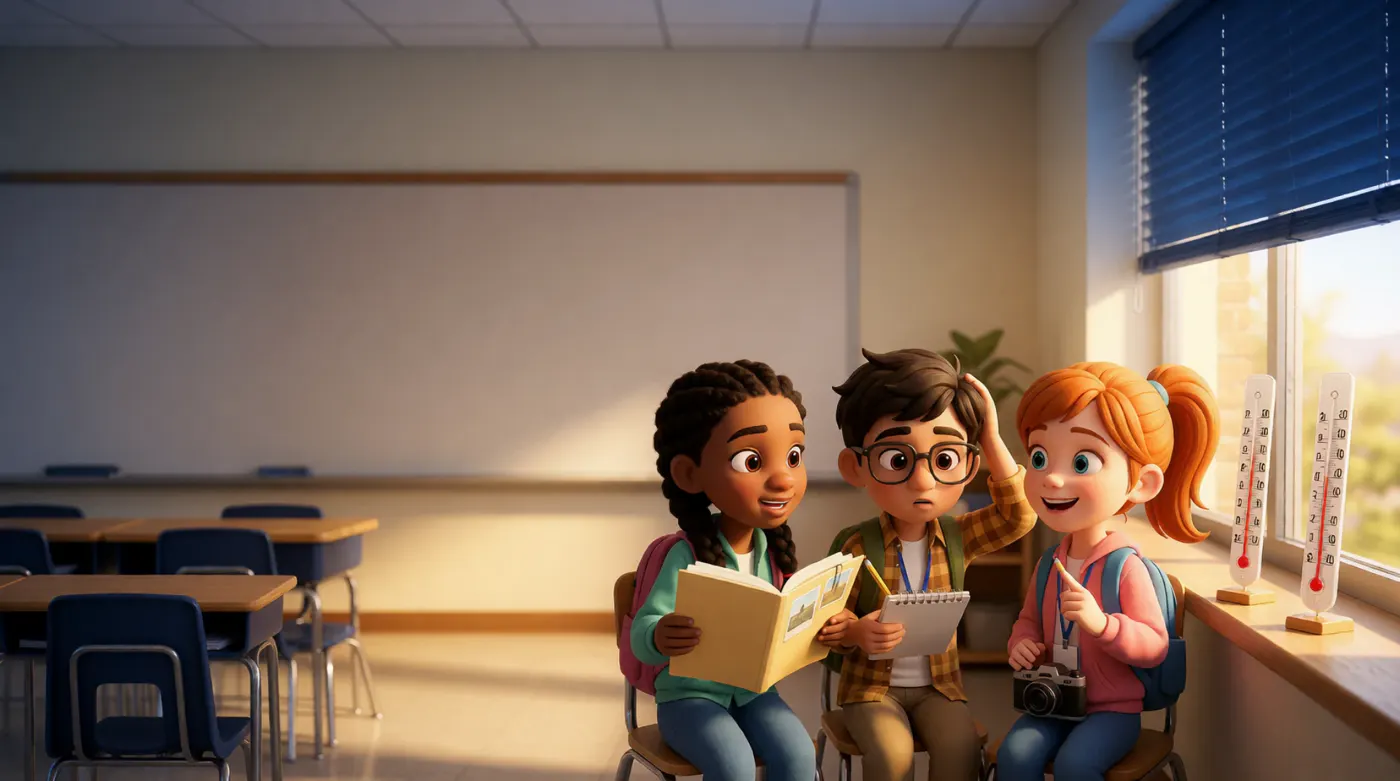
Three sections. Can It Change Back? The Statue of Liberty's green patina, reversible and irreversible changes, salt crystals and a fizz test, a dissolving test, and what each pair's landmark is made of. Getting the Number Right: why a thermometer in the sun tells the wrong story, the mean built from cube towers, and a thermometer shelter designed, built and tested under a lamp. Does Salt Make Steel Rust Faster? A hurried test with its flaws found, then a fair, repeated test planned, set going and read five days later.
Computing
Three sections. Can We Trust What We Find? How a web page reaches you, four checking clues and four invented websites ranked. Reading America's Weather Data: record cards become a database with fields, sort and filter, and real figures are searched and charted, with the school added. Building the Hello World Guide: designing for a user, a storyboard, an entry built with linked pages, tested on other readers and joined into one guide.
PSHE
Three sections. What Is the American Dream? Liberty, equality, a real quotation about living with neighbours, and a conscience alley on where tolerance has limits. Fact, Opinion, or Fake? Misinformation and disinformation, a whisper chain, a feed game with counters, a check of a post and a Pause Plan. Whose Place Is It? Two real places, the many ways to belong to one, speaking up as an active bystander, and a Visitor Promise.
Art
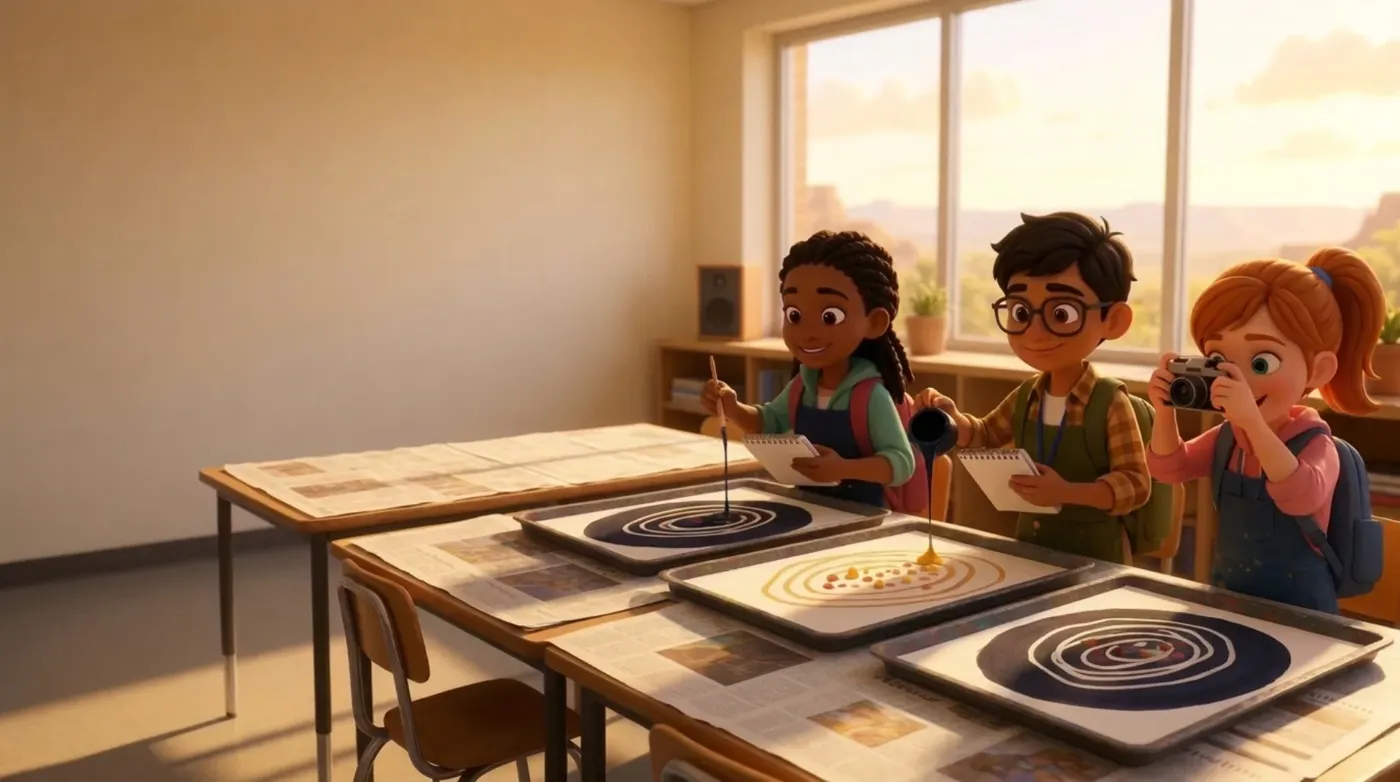
Three sections. Meet an American Artist: Jackson Pollock, real archive footage, what context means, four people with four reactions and a painting made in the air. Painting a Feeling: drip, flick, pour and dribble tested in a sketchbook, a feeling chosen and painted in three layers, and a gallery walk. Drawing Your Landmark: a real 1871 sketch of Yellowstone, line, tone and texture, three studies of the landmark and a final drawing for the Entry Card.
Music
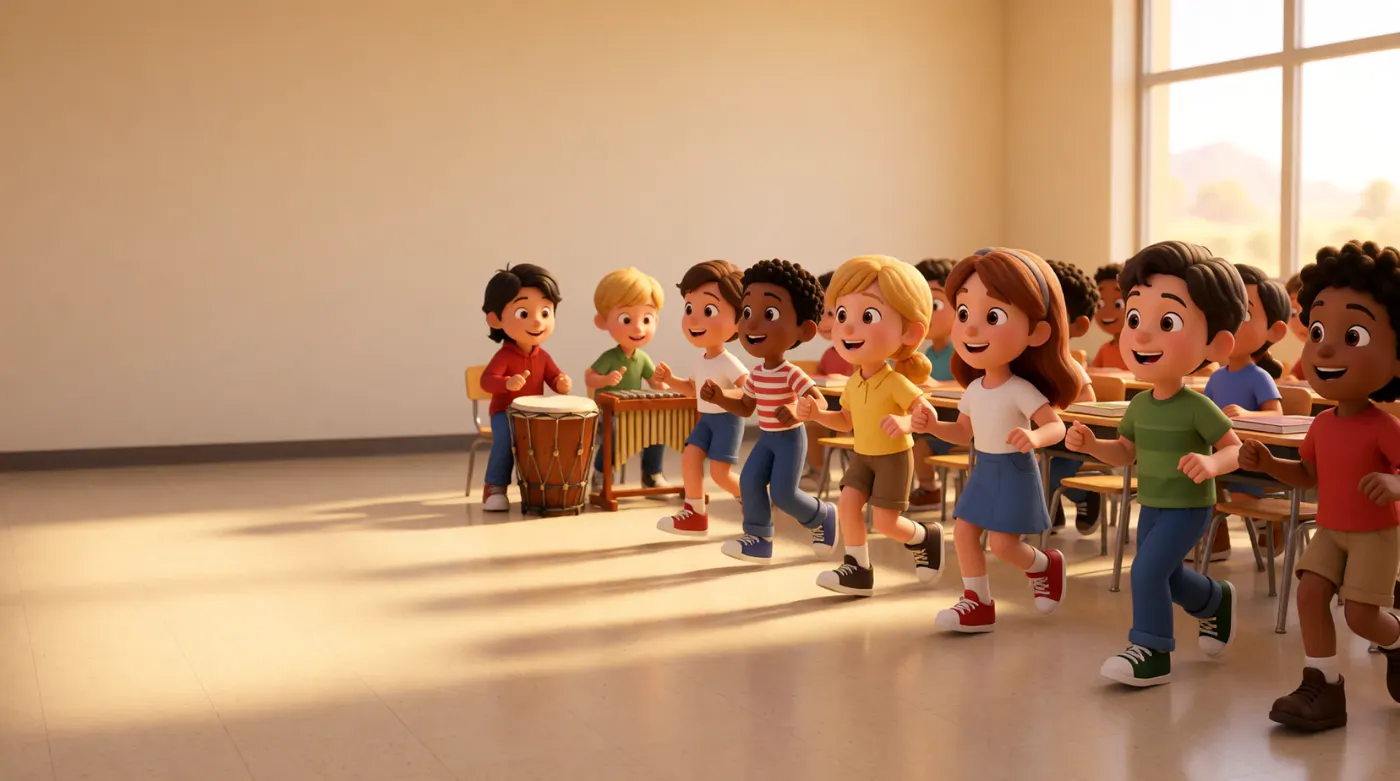
Three sections. The Sound of a Nation: two anthems heard, moved to and drawn, the story of 1814 and an aural bank. Learning the Star-Spangled Banner: range, phrase and breath, all eight lines of the first verse sung by echo, a treaty that ended a war, and a verse shaped by the class and recorded. One Nation, Many Sounds: a country-style tune, a sixteen-count line dance, four band parts learned by ear, a band of six with a leader, and a performance the class dances to.
Every section, in order.
1GeographyWho Calls America Home?
2ArtMeet an American Artist: Jackson Pollock
3PSHEWhat Is the American Dream?
4GeographyWhat Shaped This Huge Land?
5ScienceCan It Change Back?
6ComputingCan We Trust What We Find?
7GeographyOne Country, Six Climates?
8ScienceGetting the Number Right
9MusicThe Sound of a Nation
10GeographyWhen the Sky Turns Wild
11ComputingReading America's Weather Data
12PSHEFact, Opinion, or Fake?
13GeographyWhat Needs Protecting?
14ArtPainting a Feeling
15MusicLearning the Star-Spangled Banner
16MusicOne Nation, Many Sounds
17ArtDrawing Your Landmark
18PSHEWhose Place Is It?
19ScienceDoes Salt Make Steel Rust Faster?
20GeographyGo and See
21ComputingBuilding the Hello World Guide
Big questions to think and talk about.
What makes somewhere feel like it belongs to the people who live there?
When there's too much to take in about a place, how do you decide what matters and what to leave out?
If you could only tell someone three things about America to help them understand it, what would you choose, and how would you make sure they were heard?
By the end of the unit:
A Landmark Entry Card with seven boxes filled for one chosen landmark; a clay flood model and a written verdict on how to protect a town; a tested thermometer shelter; a class weather database and chart; a news bulletin on a hurricane or tornado; a Pause Plan for checking a post before trusting or sharing it; a painting made in three layers; a drawing of the landmark; a rust test run and read after five days; a fieldwork poster; a sung verse of the Star-Spangled Banner; a country-style piece played in a band while the class dances; and an interactive Hello World guide with a pin on a USA map for every landmark.
What pupils will know about America.
Crowded and empty
Population density is how many people live in a space. Many Americans live on the coasts and in big cities, and large areas in the middle and the mountains have far fewer.
The shape of the land
Topography is the shape and height of the land. America has high mountains in the west, wide plains in the middle and older, lower mountains in the east.
The green statue
The Statue of Liberty is covered in copper. It was shiny and reddish-brown when new. It reacted with air and water and turned green, and that change cannot be undone.
Weather or climate?
Weather is what the air is doing today. Climate is the usual pattern over many years. A biome is a large area with its own climate, plants and animals.
Hurricane or tornado?
A hurricane is a huge spinning storm that grows over warm sea. A tornado is a narrow column of spinning air that lasts only minutes.
Fact, opinion or fake?
A fact can be checked and is true. An opinion is what someone thinks. A fake is false, and it may be shared by mistake or on purpose.
A hard song to sing
Francis Scott Key wrote the words of the Star-Spangled Banner in 1814. Its melody climbs higher than most songs, so it is famously hard to sing.
Painting a feeling
Jackson Pollock dripped and poured paint to show movement and feeling. Layers build depth: wide dark lines go down first and fine bright lines go on last.
A river of grass
The Everglades is a huge, shallow wetland in Florida where water flows slowly south across the grass. Every choice about it is a trade-off.
Whose place is it?
Some people live in a place, some look after it, some visit it and some hold it sacred. A fair guide names them all.
What it covers, subject by subject.
Geography: interpreting population density maps, describing a migration case study and knowing basic facts about population distribution; relating climate and settlement to topography and evaluating river management options; locating biomes, relating climate graphs to them and knowing some major world biomes and climate zones; explaining a change by linking two processes and backing it up with a map, graph or photo; assessing human impact on a place, weighing trade-offs, and knowing the main causes and effects of climate change and why habitats need protection; and planning a small enquiry, collecting data carefully and judging how reliable it is.
Science: investigating reversible and irreversible changes and testing materials for solubility and conductivity; using numbers, measurements, graphs, averages and simple calculations to represent and predict, and applying engineering thinking to solve a problem; and planning investigations, choosing the enquiry type, recording data to find patterns and knowing that repeated tests improve reliability.
Computing: explaining how websites share information across the internet and evaluating the reliability of search results; designing and using databases to answer questions and analysing data sets to explain results; and designing digital products for specific users and making interactive multimedia projects.
PSHE: identity as culture, religion, family, interests and values, and equality as fair opportunities and respect; explaining how misinformation and disinformation spread, using strategies to evaluate what is seen online, and how adverts and algorithms can influence choices; and explaining how spending choices affect others and the environment, and being an active bystander.
Art: explaining how context shapes art and that an artwork can be read in different ways; testing techniques in a sketchbook, choosing them to match an intention and knowing that layering builds tone and depth; and using a sketchbook to record, test and refine, selecting work to explain progress and knowing that technique changes how work feels to a viewer.
Music: describing structure and devices such as ostinato and crescendo, explaining how music reflects its purpose, place or time, and knowing that listening choices reflect identity and that repeated listening builds an aural bank; singing with confidence, controlled breathing and clear tone, and explaining how phrasing shapes a melody; and taking a role in an ensemble, using rehearsal to improve tightness and balance, and knowing that playing by ear means copying without notation.
“As a primary pupil referral unit, creating genuine engagement is essential for our learners. We were looking for a curriculum that places children at the heart of everything and encourages them to immerse themselves in purposeful, meaningful activities. Dimensions has proved to be a strong fit because it enables our pupils to be active, curious learners rather than passive recipients of information. It brings learning to life in a way that motivates them and supports high-quality learning throughout. Plus, the children just love the curriculum!”
BThe Beacon Referral Unit
“Our school fully embraced the Dimensions curriculum and it has brought the world to our classrooms!”
AAlison Steen
“As a school we are really pleased with our decision to go with Dimensions. It has changed the way we teach our topic lessons as a school and has elevated the quality and diversity of the topics taught throughout KS1 and KS2. It is wonderful how the same theme can be so diverse across all age ranges and it has given teachers the confidence to explore themes they may not have taught previously.”
Scoill Phurt Le Moirrey
“Dimensions Curriculum is amazing! We’ve used it for a few years now and the children absolutely love the different topics and are really engaged by the modern and relevant aspect of these. … Added to this is the amazing support that you get from the Dimensions team and nothing is ever too much trouble.”
SSophie Orton
“Introducing the curriculum has been a real game-changer for our team. It’s clear, well-structured, and genuinely supportive of high-quality teaching. Planning is now more streamlined and consistent, while still allowing flexibility for individual classes and teaching styles. The progression is easy to follow, expectations are clear, and it’s saved us valuable time without compromising creativity or impact. A thoughtfully designed resource that’s already making a positive difference in our classrooms.”
Woodford Halse School
“As a class teacher I have really enjoyed using both the Dimensions Curriculum and 3D PSHE. Both products have been very well designed with clear, progressive and sequential plans, incorporating creative, engaging ideas and have given me the peace of mind to know I am teaching the children a quality curriculum. Wouldn’t expect anything less from a product designed by teachers, for teachers. Thank you Dimensions team!”
AAnn Webster
“The Dimensions 3D PSHE curriculum map, programs of study and enrichment unit are so well organised! I am very excited to use it all!”
LLubavitch Primary School
“Children in my school using Dimensions are motivated to learn and can articulate what they are learning and why they are learning it. … The curriculum maps, knowledge organisers and other documents available for subject leadership are super handy and also save on workload. It is excellent value for money.”
LLouise
“Introducing the curriculum has taken the weight off leaders knowing that everything is covered with clear progression documents. Children are getting the breadth and depth of coverage required. It has made a really positive impact especially when planning for mixed age classes. It is great to have the support available for ever changing class structures.”
Beeston Primary School
“I have had an extremely positive experience with Dimensions. They are a fabulous company, producing products to a very high standard that really engage children. Their curriculum is amazing and using it, I have had outstanding progression, engagement and enjoyment both from the children and myself! I would wholeheartedly recommend Dimensions!”
JJules Wilkin
“Music Crew gives teachers much more confidence when teaching music lessons. The children look forward to music and remember what they have learned from previously. The progression is excellent. Music Crew can be adapted to meet the needs of individual classes and the needs of the school.”
Warton St. Paul’s CE School
“It allows teachers to do what they do best, create engaging schemes of work and lessons and then teach accordingly, safe in the knowledge that statutory demands are covered and progression ensured … Our successful inspection outcomes are testament to the confidence we have in Dimensions. I could not ask for more from Dimensions.”
HHelen Ruberto
“We contacted the Customer support team and requested a new document that had the lesson codes and learning objectives for each year group, for each term. They were more than happy to help and emailed the documents to us the same day which was very helpful and exactly what we needed.”
St Andrew’s School
“As a teacher, working in an international school in Hong Kong I have followed the Dimensions Curriculum Thematic Units for a few years now, and I cannot recommend these resources highly enough. I absolutely love how it engages my students, by making learning fun, relevant and interesting for them. … Oh, and I should also mention all the time they save me in planning.”
KKarin Munkholm
“Absolutely loved using the Dimensions Curriculum. It was flexible and creative and allowed us to shape the learning in our school in such a way that it was relevant and purposeful for everyone involved, including the teachers! I enjoyed working with Elaine throughout, and found the support provided to myself as curriculum leader and the staff training given to be excellent.”
SSarah Cooke
“I bought the PSHE Curriculum for my School. The resources are just fantastic! They are packed full of great ideas, easy to use and relevant. I would highly recommend all their resources to any teacher. It’s definitely the way forward.”
KKat Parkinson
“From a teacher’s perspective, this curriculum has revitalized lesson planning. … Overall, this curriculum has been a game-changer. It has enhanced engagement, deepened learning, and created a more dynamic and enjoyable experience for both students and staff. We wholeheartedly recommend this approach to any ASD school …”
SSophie Hatcher
“We have worked with Elaine and the Dimensions team for over 5 years. The staff enjoy teaching the theme units and the pupils love their learning. Ofsted were very impressed with our curriculum and praised the creative learning and experiences the pupils were encountering. … Our school love it.”
AAlison Worthington
“They are a fantastic company with a wealth of knowledge and understanding. Their products are inspiring, innovative, unique to the market and importantly they are fun and exciting. I would recommend every school to have a visit from Elaine or her team, it’s a decision you won’t regret!”
KKJ Krzysiak
“Have used Dimensions to enhance our school curriculum for many years with much success and great results. The support of the Dimensions team and their curriculum has also helped us through two successful OFSTED visits! Would highly recommend.”
DDawn Forrest
“We have seen the knowledge and skills of our children deepen and their experiences in the classroom and of the wider world have broadened. … We have made so many meaningful connections to our whole school vision and values.”
HH Redfern
“Excellent curriculum resources with outstanding provision for all age groups.”
















 Scoill Phurt Le Moirrey
 Woodford Halse School
 Beeston Primary School
 Warton St. Paul’s CE School
 St Andrew’s School