



Let’s talk

Come Fly with Me! Arctic Circle: a Year 2 cross-curricular topic

What happens when things get really, really cold?

Pupils follow Dr Jonas Frost north to the invisible line around the top of the world.

Year 2Also suits Year 1
19Sections to teach
6Subjects, one story
GeographyLead subject
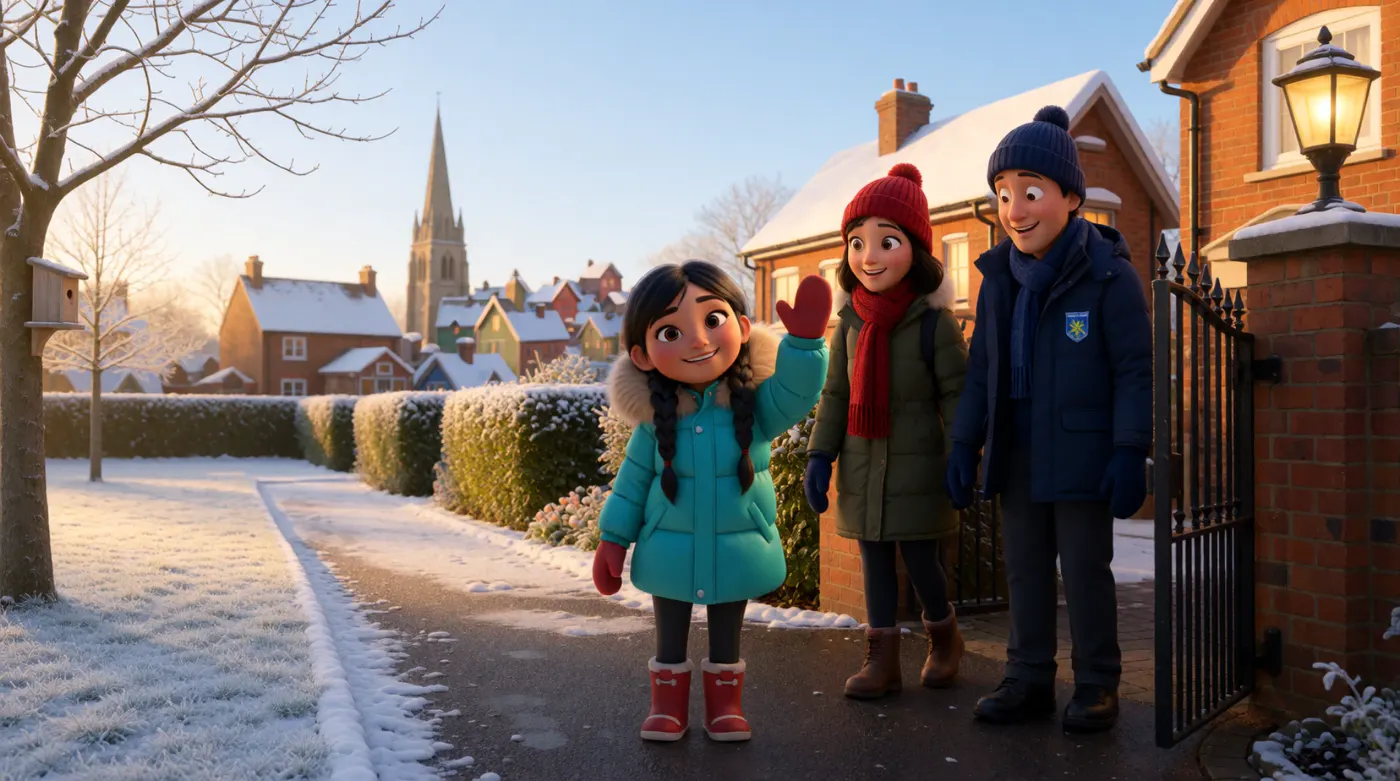
A girl in a turquoise parka waving in the snow outside the brightly painted houses of an Arctic town under the Northern Lights

Arctic Circle, at a glance.

A Year 2 cross-curricular theme unit, led by Geography. A message arrives from the explorer Dr Jonas Frost: there is a line right around the top of the world that nobody can see or touch, and he needs a class to work out whether it is real. Answering him takes nineteen sections across six subjects, and turns a line on a globe into somebody's home. The unit closes with a Northern Lights Exhibition of the children's own artwork.

How the story unfolds.

  1. A camp tent glowing at the foot of a towering blue glacier under the Northern Lights

    Is it a real place?

    The unit opens with a question rather than a fact: is the Arctic Circle a real place? The class establishes that an imaginary line can still be real and agreed, like the equator, then finds out who survives at 66.5°N and what the place is physically like, with its polar night, midnight sun and icebergs. Dr Frost's closing question turns the unit from place to people: how does anybody actually live somewhere like this?

  2. Red, yellow and green wooden houses with smoking chimneys beside the frozen sea at night

    How does anybody live there?

    The middle of the unit answers him twice over: first historically, through igloos, fur clothing and the food that made survival possible, and then in the present day, when Aputi introduces her home town of Qaanaaq with its school, shop, harbour and health centre. The igloo misconception is dismantled deliberately here. Science and History then interrogate the same question from both sides: how did people work out what actually kept the water out and the cold at bay?

  3. Children walking towards a lantern-lit exhibition tent in the snow beneath the aurora

    Whose job is it to care?

    The unit's last third widens the view. A century of photographs of one Alaskan glacier shows the Arctic changing; Art responds to the aurora and builds Inuksuit that carry a message; Music paints Arctic scenes without words; PSHE moves from friendship to disagreement to respect, with Aputi joining the class in person. Fieldwork brings it all home (the same care and responsibility, applied to the school grounds) before the Northern Lights Exhibition puts the children's own work on show.

6 subjects, one journey.

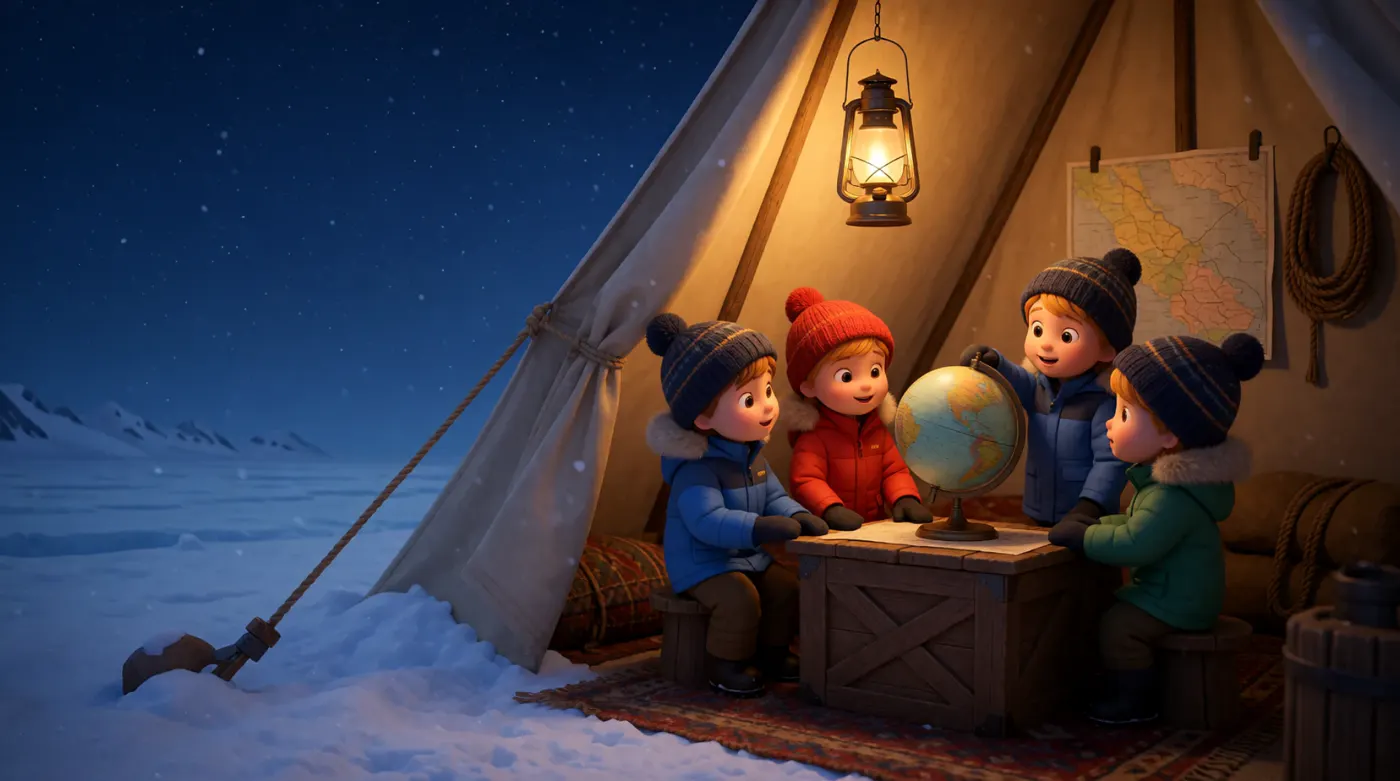
Children gathered round a globe by lantern light inside an explorer's tent

GeographyLead subject

The spine of the unit: locating the Arctic Circle and the equator, reading its physical geography, understanding Qaanaaq as a real settlement, spotting change over time in photographic evidence, reaching a view on why places need protecting, and finally doing real fieldwork in the school grounds. Six sections.
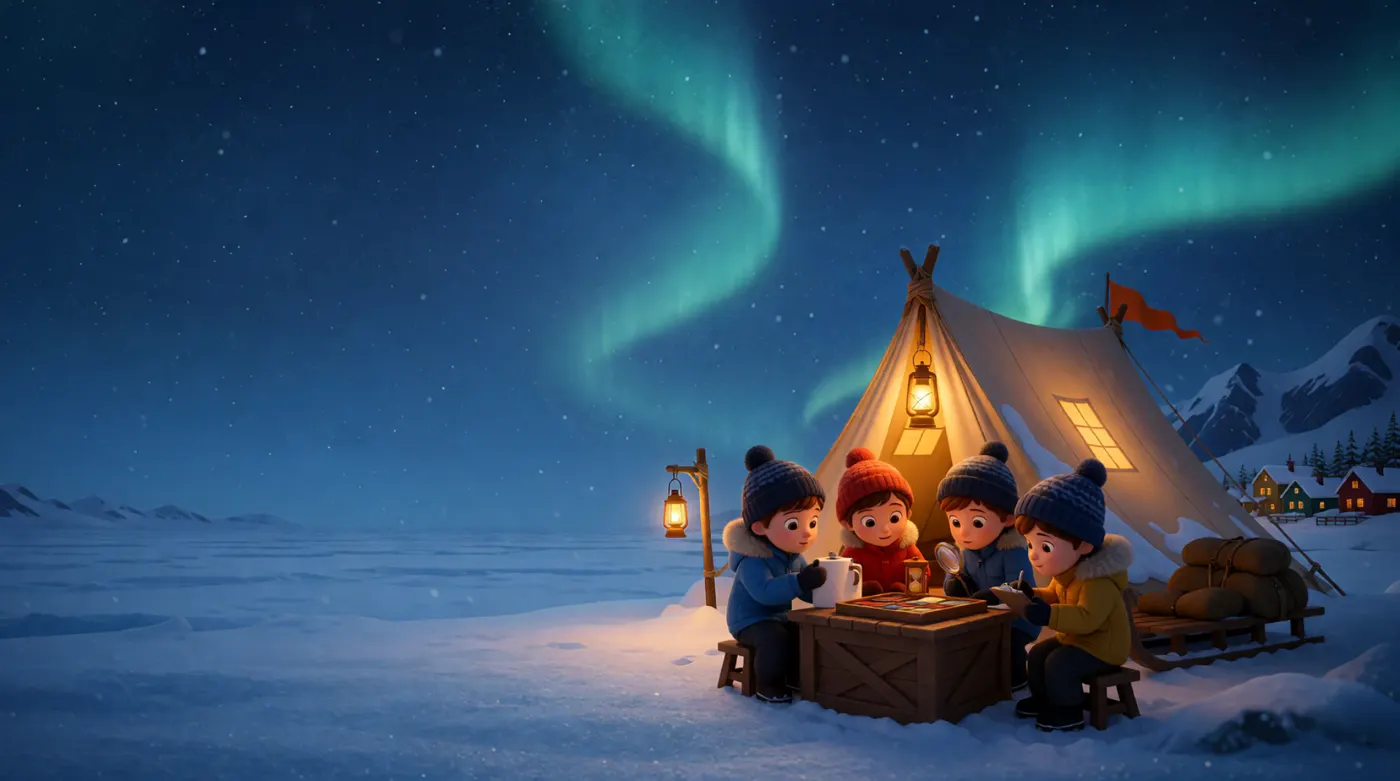

Children testing materials at a wooden crate outside a lantern-lit tent under the Northern Lights

Science

Three enquiries that all serve the story: who lives somewhere this cold (grouping, features, life cycles), what keeps the water out (material properties, fair testing) and which material keeps ice frozen longest (a genuine problem sent by an Arctic research station).

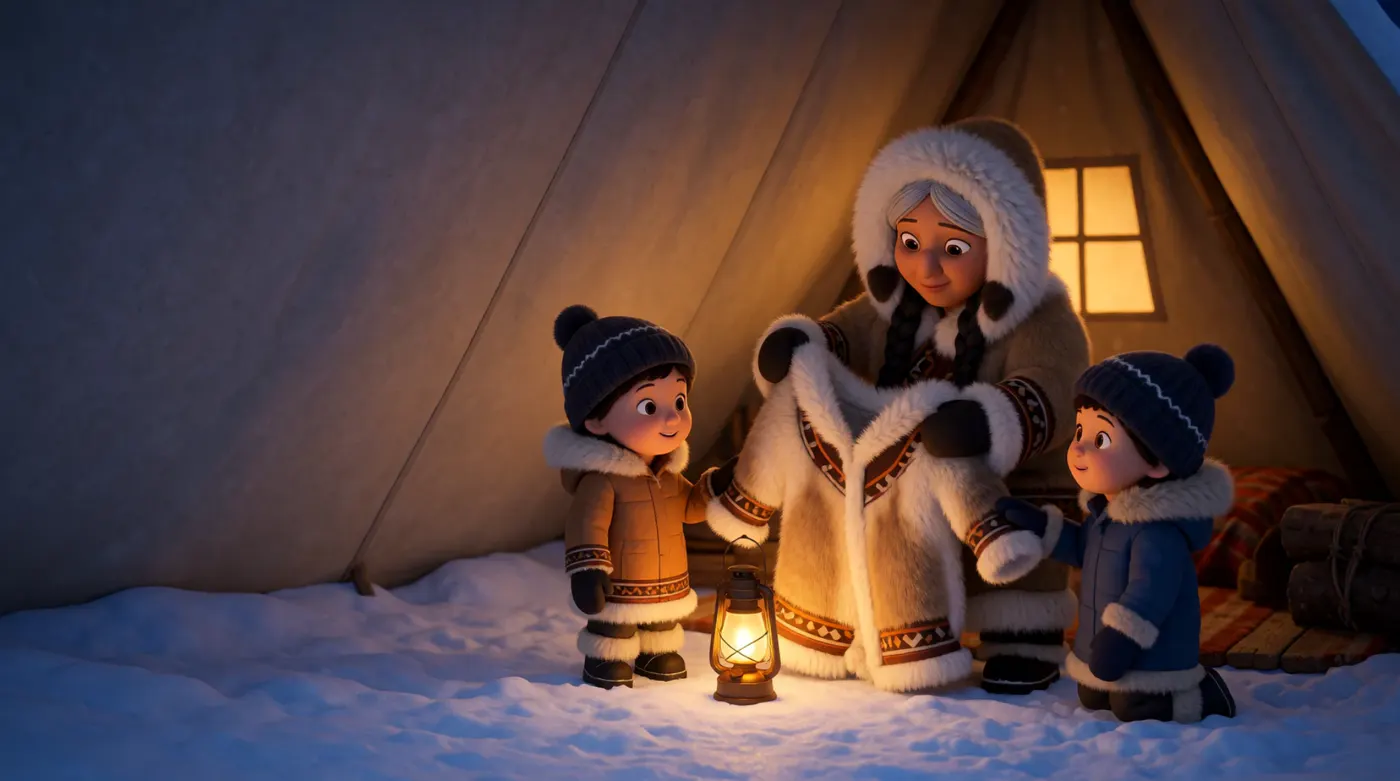
Two children in fur clothing beside a glowing igloo and a wooden sledge

History

Continuity and change, twice: whether Arctic homes have always looked like this, and how people survived through clothing and food. Both sections work from real archive photographs and both end on the same idea: that change is rarely complete, because people keep traditions while adopting new ideas.

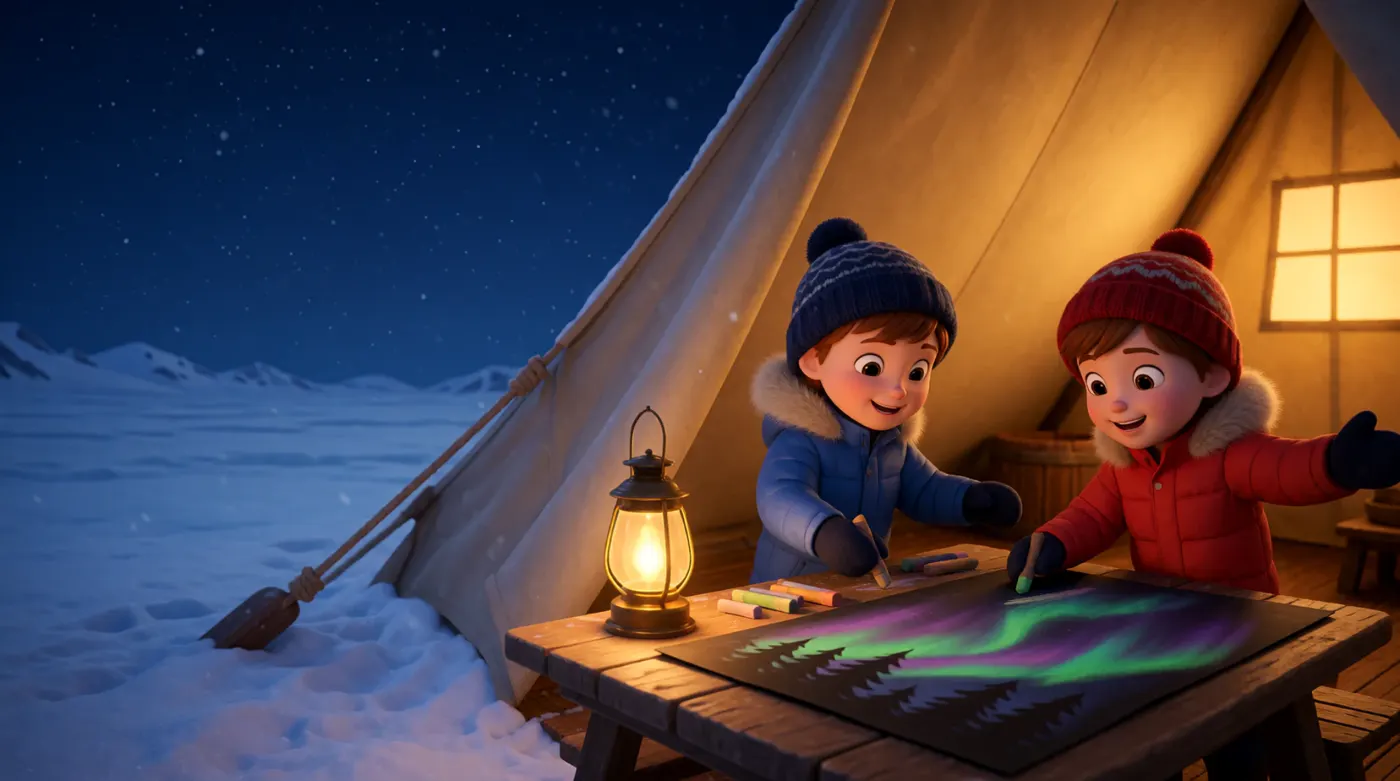
Children making chalk-pastel pictures of the Northern Lights on black paper

Art

Three making sections with real outcomes: a collaged warm mitten (materials and tools), a chalk-pastel Northern Lights artwork on black paper, and an Inuksuk-inspired card sculpture carrying a chosen message. The last two are the pieces the closing exhibition is built from.

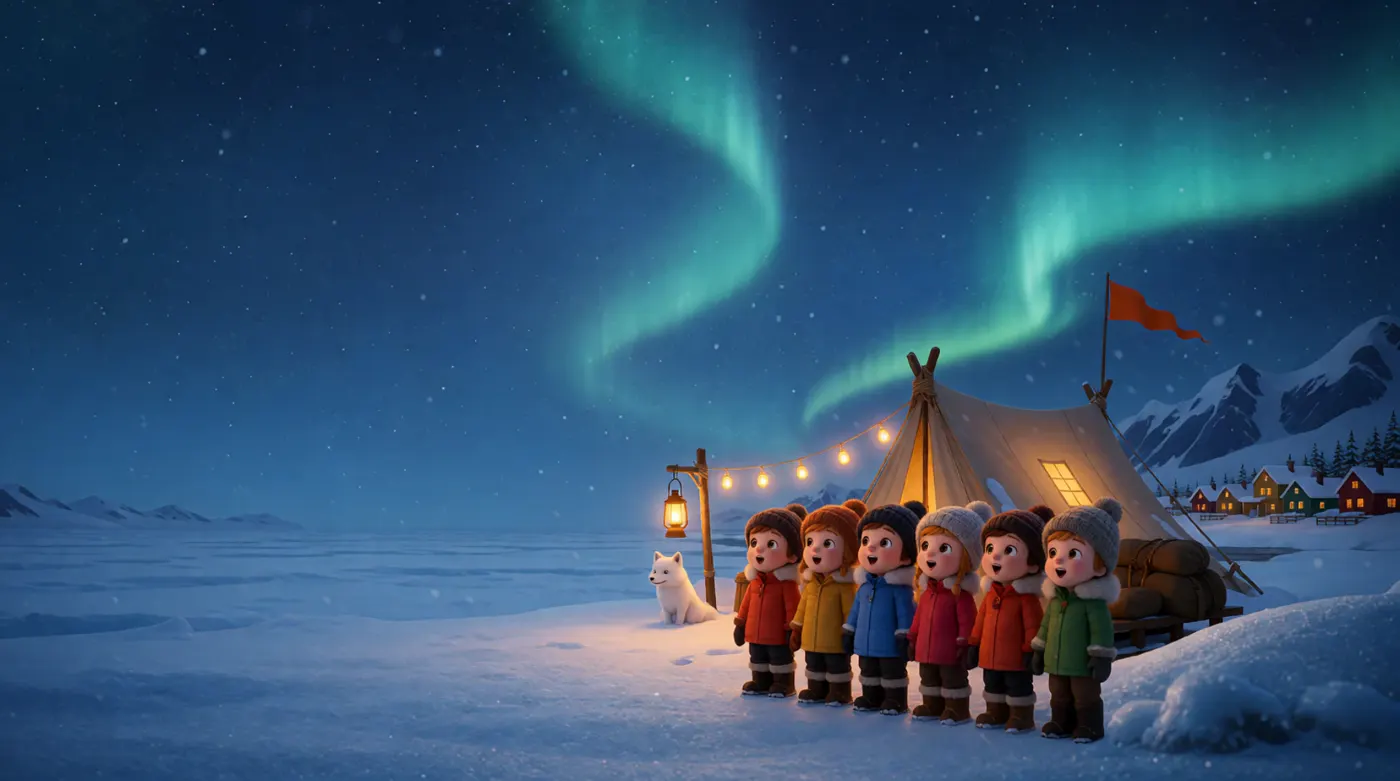
A row of children in bright hats singing together outside a tent strung with lights, an Arctic fox watching

Music

Singing a song about home, the Igloo Song, with proper attention to posture, dynamics and singing as a group, and later using timbre to paint an Arctic scene with untuned instruments. Inuit throat singing is introduced as living culture, listened to rather than imitated.

Aputi waving hello to two new friends outside a tent in the snow

PSHE

Three sections on relationships: what helps friendships grow stronger, how to work together when you do not agree, and how respect is built from small everyday choices, the last two both drawing on Arctic communities whose survival has always depended on cooperation.

Every section, in order.

  1. 1GeographyIs the Arctic Circle a Real Place?
  2. 2ScienceWho Lives Somewhere This Cold?
  3. 3GeographyWhat's It Actually Like There?
  4. 4HistoryHave Arctic Homes Always Looked Like This?
  5. 5ArtWhat Would Keep You Warm Enough?
  6. 6GeographyHow Do People Live There Today?
  7. 7PSHEWhat Helps Friendships Grow Stronger?
  8. 8MusicA Song About Home
  9. 9ScienceWhat Keeps the Water Out?
  10. 10HistoryHow Did People Survive in the Arctic?
  11. 11GeographyHow Is the Arctic Changing?
  12. 12ArtThe Dancing Sky
  13. 13ScienceWhich Material Keeps Ice Frozen Longest?
  14. 14GeographyWhy Do Places Need Protecting?
  15. 15MusicHow Can Music Paint a Picture?
  16. 16PSHEHow Can We Work Together When We Don't Agree?
  17. 17ArtA Symbol of Friendship
  18. 18PSHERespect Starts With Me
  19. 19GeographyHow Can We Care for Our Special Places?
  20. ★ExhibitionThe Northern Lights Exhibition

Big questions to think and talk about.

  • What happens when things get really, really cold?
  • What would you invent to help someone live where it is always freezing?
  • How can you help someone you've never met?

By the end of the unit:

A chalk-pastel Northern Lights artwork and an Inuksuk-inspired card sculpture, both shown at the closing exhibition.

What pupils will know about the Arctic.

A real, imaginary line

The Arctic Circle is a line around the top of the world that nobody can see or touch.

Where is it?

It sits at 66.5°N and passes through eight countries.

The polar night

For part of the year the sun does not rise at all, and for part of it never sets.

Why it is so cold

Sunlight reaches the top of the world at a slant, so its warmth is spread thin.

Built for the cold

Blubber is a thick layer of fat that keeps sea animals warm.

Most of an iceberg hides

Only the tip shows above the water and the rest is hidden underneath.

Igloos were for journeys

Igloos are built from blocks of packed snow and were mainly used while travelling or hunting.

The Arctic is home

About four million people live in the Arctic today, in towns with schools and shops.

Every Inuksuk has a purpose

An Inuksuk is a stone figure built by Arctic peoples to show the way or mark a special place.

The dancing sky

The Northern Lights glow in the night sky and green is the colour people see most often.

What it covers, subject by subject.

  • Geography: the Arctic Circle and the equator as agreed imaginary lines; continents and oceans; hot and cold climate zones; weather symbols; icebergs; settlement types and why people live where they do; natural and human-caused change; reuse, recycle and waste; the four compass points and orientating a map in real fieldwork.
  • Science: grouping animals by their features; life cycles; adaptations including blubber; the properties of materials and what makes them suitable for a job; waterproof and absorbent; insulation; and running a genuinely fair test with measurement, recording and honest reporting of results.
  • History: continuity and change across Arctic homes, clothing, food and travel; sorting big changes from small ones with reasons; reading real archive photographs as evidence; and the idea that change can be slow, partial, and can sit alongside kept traditions.
  • Art: choosing the right tool for the job and knowing it changes the effect; tearing versus cutting; layering for depth; chalk-pastel technique on black paper; building 3D form from card by folding, rolling and layering; responding to feedback with one purposeful improvement; and comparing art from another culture.
  • Music: singing posture, dynamics and starting and finishing together as a group; talking about where music comes from; timbre and choosing instruments for their sound quality; composing a short structured piece with a clear beginning and ending.
  • PSHE: the qualities that make friendships caring; managing disagreement and disappointment kindly; paying attention to the needs of others; and showing respect for people whose background, beliefs or traditions differ from your own.

Books to read alongside

  • Immi's Gift Karin Littlewood
  • The Ice Bear Jackie Morris
  • A Polar Bear in the Snow Mac Barnett & Shawn Harris
  • Sweetest Kulu Celina Kalluk
  • Lost and Found Oliver Jeffers
  • The Snow Bear Holly Webb
  • Ice Bear Nicola Davies & Gary Blythe
  • North: The Amazing Story of Arctic Migration Nick Dowson & Patrick Benson
  • The Polar Bear Jenni Desmond
  • DK Eyewitness: Arctic and Antarctic Barbara Taylor
  • Inhabit Media titles various

More cross-curricular themes.

See the whole curriculum

Year 3

The Rainforest Keepers

The class become conservation experts and build a proposal to save the Araká people's rainforest

Year 1

Books That Changed History

One letter to a poorly little boy led to the story about the most famous rabbit in the world

Year 5

Just Deserts

Follow a lost explorer into the world's deserts

Year 4

When the Blitz Hits

Follow Walter and Edith Wiggins from the 1939 wireless announcement to evacuation, the Blitz and the Home Front, told through the letters in the class postbag

See Arctic Circle on Connect.

What schools say about Dimensions.

“As a primary pupil referral unit, creating genuine engagement is essential for our learners. We were looking for a curriculum that places children at the heart of everything and encourages them to immerse themselves in purposeful, meaningful activities. Dimensions has proved to be a strong fit because it enables our pupils to be active, curious learners rather than passive recipients of information. It brings learning to life in a way that motivates them and supports high-quality learning throughout. Plus, the children just love the curriculum!”
BThe Beacon Referral Unit
“Our school fully embraced the Dimensions curriculum and it has brought the world to our classrooms!”
AAlison Steen
“As a school we are really pleased with our decision to go with Dimensions. It has changed the way we teach our topic lessons as a school and has elevated the quality and diversity of the topics taught throughout KS1 and KS2. It is wonderful how the same theme can be so diverse across all age ranges and it has given teachers the confidence to explore themes they may not have taught previously.”
Scoill Phurt Le Moirrey

“Dimensions Curriculum is amazing! We’ve used it for a few years now and the children absolutely love the different topics and are really engaged by the modern and relevant aspect of these. … Added to this is the amazing support that you get from the Dimensions team and nothing is ever too much trouble.”
SSophie Orton
“Introducing the curriculum has been a real game-changer for our team. It’s clear, well-structured, and genuinely supportive of high-quality teaching. Planning is now more streamlined and consistent, while still allowing flexibility for individual classes and teaching styles. The progression is easy to follow, expectations are clear, and it’s saved us valuable time without compromising creativity or impact. A thoughtfully designed resource that’s already making a positive difference in our classrooms.”
Woodford Halse School
“As a class teacher I have really enjoyed using both the Dimensions Curriculum and 3D PSHE. Both products have been very well designed with clear, progressive and sequential plans, incorporating creative, engaging ideas and have given me the peace of mind to know I am teaching the children a quality curriculum. Wouldn’t expect anything less from a product designed by teachers, for teachers. Thank you Dimensions team!”
AAnn Webster
“The Dimensions 3D PSHE curriculum map, programs of study and enrichment unit are so well organised! I am very excited to use it all!”
LLubavitch Primary School
“Children in my school using Dimensions are motivated to learn and can articulate what they are learning and why they are learning it. … The curriculum maps, knowledge organisers and other documents available for subject leadership are super handy and also save on workload. It is excellent value for money.”
LLouise
“Introducing the curriculum has taken the weight off leaders knowing that everything is covered with clear progression documents. Children are getting the breadth and depth of coverage required. It has made a really positive impact especially when planning for mixed age classes. It is great to have the support available for ever changing class structures.”
Beeston Primary School
“I have had an extremely positive experience with Dimensions. They are a fabulous company, producing products to a very high standard that really engage children. Their curriculum is amazing and using it, I have had outstanding progression, engagement and enjoyment both from the children and myself! I would wholeheartedly recommend Dimensions!”
JJules Wilkin
“Music Crew gives teachers much more confidence when teaching music lessons. The children look forward to music and remember what they have learned from previously. The progression is excellent. Music Crew can be adapted to meet the needs of individual classes and the needs of the school.”
Warton St. Paul’s CE School
“It allows teachers to do what they do best, create engaging schemes of work and lessons and then teach accordingly, safe in the knowledge that statutory demands are covered and progression ensured … Our successful inspection outcomes are testament to the confidence we have in Dimensions. I could not ask for more from Dimensions.”
HHelen Ruberto
“We contacted the Customer support team and requested a new document that had the lesson codes and learning objectives for each year group, for each term. They were more than happy to help and emailed the documents to us the same day which was very helpful and exactly what we needed.”
St Andrew’s School
“As a teacher, working in an international school in Hong Kong I have followed the Dimensions Curriculum Thematic Units for a few years now, and I cannot recommend these resources highly enough. I absolutely love how it engages my students, by making learning fun, relevant and interesting for them. … Oh, and I should also mention all the time they save me in planning.”
KKarin Munkholm
“Absolutely loved using the Dimensions Curriculum. It was flexible and creative and allowed us to shape the learning in our school in such a way that it was relevant and purposeful for everyone involved, including the teachers! I enjoyed working with Elaine throughout, and found the support provided to myself as curriculum leader and the staff training given to be excellent.”
SSarah Cooke
“I bought the PSHE Curriculum for my School. The resources are just fantastic! They are packed full of great ideas, easy to use and relevant. I would highly recommend all their resources to any teacher. It’s definitely the way forward.”
KKat Parkinson
“From a teacher’s perspective, this curriculum has revitalized lesson planning. … Overall, this curriculum has been a game-changer. It has enhanced engagement, deepened learning, and created a more dynamic and enjoyable experience for both students and staff. We wholeheartedly recommend this approach to any ASD school …”
SSophie Hatcher
“We have worked with Elaine and the Dimensions team for over 5 years. The staff enjoy teaching the theme units and the pupils love their learning. Ofsted were very impressed with our curriculum and praised the creative learning and experiences the pupils were encountering. … Our school love it.”
AAlison Worthington
“They are a fantastic company with a wealth of knowledge and understanding. Their products are inspiring, innovative, unique to the market and importantly they are fun and exciting. I would recommend every school to have a visit from Elaine or her team, it’s a decision you won’t regret!”
KKJ Krzysiak
“Have used Dimensions to enhance our school curriculum for many years with much success and great results. The support of the Dimensions team and their curriculum has also helped us through two successful OFSTED visits! Would highly recommend.”
DDawn Forrest
“We have seen the knowledge and skills of our children deepen and their experiences in the classroom and of the wider world have broadened. … We have made so many meaningful connections to our whole school vision and values.”
HH Redfern
“Excellent curriculum resources with outstanding provision for all age groups.”
LLiz Budgen
Read more customer feedback