Brave and Bold: a Year 2 Mary Anning and Elizabeth Blackwell cross-curricular topic
What job would you love to do? And who might say you can't?
The class become the Heritage Committee and decide whether Mary Anning and Elizabeth Blackwell deserve blue plaques.
Year 2Also suits Year 1
21Sections to teach
7Subjects, one story
HistoryLead subject
Brave and Bold, at a glance.
A Year 2 cross-curricular theme unit, led by History, built around two real women and one decision. A sealed letter arrives for the class, and from that moment pupils are the Heritage Committee. Their job is to find the evidence and decide whether Mary Anning, the fossil hunter of Lyme Regis, and Elizabeth Blackwell, the girl from Bristol who became a doctor, each deserve a blue plaque. Every section adds something to the Class Case File, and the wall timeline grows from 1799 AD/CE to 2010 AD/CE. Twenty-one sections across six subjects. History puts Mary's life in order, questions real sources, follows the causes that took Elizabeth's family across the Atlantic, sorts fact from opinion, compares their world with ours and asks what changed because of her. Science sorts shore animals and tests the best material for a bandage. Computing counts fossil finds in a chart, records the Case File in pupils' own voices and searches safely for real plaques. DT designs a safe place for a fragile find, then builds and tests a plaque with a lever that reveals it. Music sings She Sells Seashells, composes the sounds of Elizabeth's infirmary and performs a fanfare. PSHE looks at belonging, stereotypes and staying well. The unit ends with the Closing Event, when visitors watch the Committee vote and unveil both plaques. Three Big Questions are asked, with no right answers, and the class returns to all three at the end.
How the story unfolds.
A fossil hunter in Lyme Regis.
The first third is Mary's. Big Question 1 is asked before anything is taught: what job would you love to do, and who might say you can't? Then a sealed letter turns the class into the Heritage Committee. History Section 1 meets blue plaques and puts five moments of Mary's life on a timeline, from her birth in Lyme Regis in 1799 AD/CE to 2010 AD/CE. Science sorts six real shore animals and compares a shell with an ammonite fossil. History Section 2 questions three sources from Mary's time and sends the class out as fossil hunters. Computing counts the finds in a tally, a table and a block chart. DT designs a safe place for a fragile find from the crumbling Lyme Regis cliffs. Music learns She Sells Seashells, a rhyme many people believe is about Mary, and draws its tune as dots. PSHE asks what it means to belong, meets the scientists' society that only let men join, and closes with Big Question 2: what would you do if someone said you couldn't do something, but you really wanted to?
Twenty-nine schools said no.
The middle third is Elizabeth's. History Section 3 opens the second name on the letter: a girl born in Bristol in 1821 AD/CE, whose family sailed for New York in 1832 AD/CE after riots and a fire at her father's sugar refinery. Pupils build a chain of causes and consequences and fill in the Committee's travel record. Science thinks like a doctor and runs a fair test to find the best material for a bandage pad. History Section 4 hears how twenty-nine medical schools said no before Geneva said yes in 1847 AD/CE, sorts fact from opinion and writes a calm reply to the people who said no. PSHE shows that one real example is enough to prove a stereotype wrong. Music composes the sounds of Elizabeth's infirmary in A, B, A. DT builds a plaque with a lever and a linkage that reveals it, and Computing records the Case File in pupils' own voices for visitors.
Two plaques, one vote.
The final third brings both women together and decides. History Section 5 compares their world with ours, turns the classroom into Elizabeth's infirmary for a role play and tells the hand-washing story. DT tests the plaque models fairly and improves them. PSHE learns how to stop illness before it starts and who to tell. History Section 6 follows Elizabeth onto the Medical Register in 1859 AD/CE, meets Doctor Dorothy, who qualified in 1967 AD/CE, sorts big changes from small ones and counts Mary's 163-year wait. Music rehearses a fanfare, and Computing searches safely for real plaques and drafts an inscription of thirty words or fewer. The third Big Question poster asks what you would want people far in the future to know about you, and why. The Closing Event brings in visitors: the Case File speaks, the Committee votes, both plaques are unveiled to the class fanfare and the three Big Questions are answered again.
7 subjects, one journey.
HistoryLead subject
Six sections, one per pillar, and the spine of the unit. Chronology: blue plaques, heritage and a Long Ago to Now line, then five moments of Mary's life in order with time phrases. Evidence: a source is where information comes from, three sources about Mary, primary and secondary, and a fossil hunt. Cause and Consequence: why Elizabeth's family left Bristol, a cause chain and the long journey. Perspectives and Interpretations: twenty-nine rejections and one yes, two letters, fact and opinion, two views of Mary and a calm reply. Similarities and Differences: light, work, learning and getting well then and now, an infirmary role play and the hand-washing story. Continuity and Change: the Medical Register, Doctor Dorothy, big and small changes and Mary's long wait.
Science
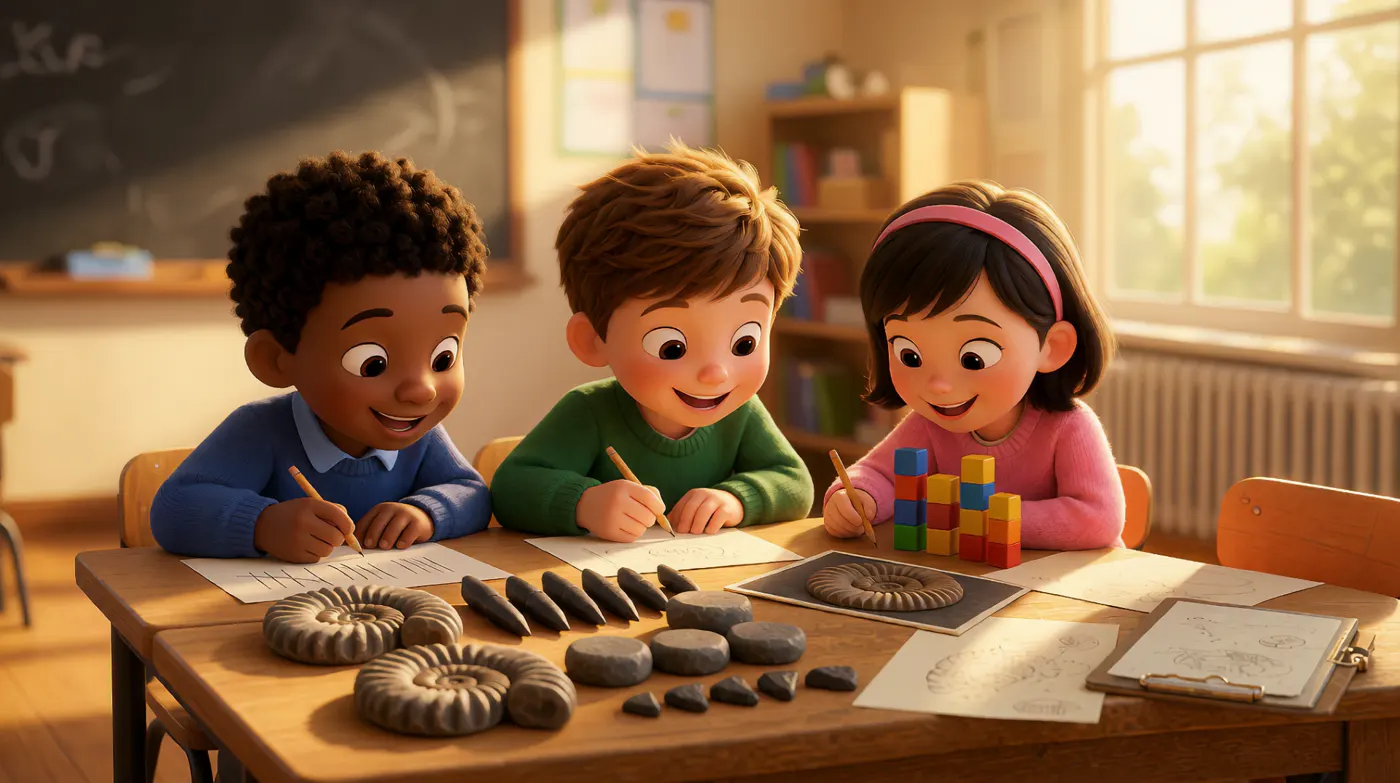
Two sections. Who Lives on the Shore?: six shore animals sorted by a hard shell and by groups pairs choose, a shell drawn to show how it grew, an ammonite fossil compared with it, and a class shore code. The Best Bandage: property and absorbent, a prediction, a fair test of five materials counted in spoonfuls, a results table and a conclusion, then a wrap test and a sort of what soaks up and what keeps water out.
Computing
Three sections. How Many of Each?: data and tallies, the class's fossil finds in a table and a block chart, three questions answered from the chart and what the chart does not show. Our Case File Speaks: text, image, sound and video, three sentences for an audience, a voice recording improved by editing, a photo and a title. Search for a Plaque: search engines and keywords, staying safe, why two searches differ, a real plaque found and an inscription saved in a shared folder.
DT
Three sections. A Safe Place for a Find: fragile, designer and solution, three everyday ways of protecting things, three sketched ideas, a labelled drawing and a quick card model for a shell standing in for a fossil. A Plaque That Reveals: levers, pivots and linkages, folded and rolled paper that holds coins, and a working reveal model that stands up. Does the Reveal Work?: a fair lever test and a fan test, class tallies, two ideas to improve, one change and a retest.
Music
Three sections. She Sells Seashells: the rhyme as a chant and a song, a tune from G and E, steps and jumps, and a tune drawn as dots on a pitch grid. Sounds of the Infirmary: texture, ostinato and structure, and a group piece in A, B, A for an infirmary concert. A Fanfare for the Plaques: a steady four-beat rhythm with a rest, a three-part fanfare, feedback between groups, rehearsal and the class fanfare.
PSHE
Three sections. Who Gets Let In?: belonging, a made-up Red Boots Club, loneliness and what helps, the scientists' society that kept Mary out, stereotypes, a calm and kind conscience alley and a fair club rule. Who Says Girls Can't?: stereotypes proved wrong by one real example, peer influence, kind, fair and respectful answers, respect and a myth buster wall. What Keeps Us Well?: sleep, food, play and clean hands, germs and vaccines in simple terms, telling a trusted adult and a Stay Well plan.
The Closing Event
One closing section for visitors, not mapped to objectives: a Case File lucky dip, the class recordings, each pupil talking to a visitor, a vote and an unveiling for each woman with the class fanfare, a dramatised word from Elizabeth, the three Big Questions answered again, who else deserves a plaque, and the Case File closed.
Every section, in order.
1HistoryWho Was She, and When Was She Alive?
2ScienceWho Lives on the Shore?
3HistoryHow Do We Know About Mary?
4ComputingHow Many of Each?
5DTA Safe Place for a Find
6MusicShe Sells Seashells
7PSHEWho Gets Let In?
8HistoryWhy Did They Leave?
9ScienceThe Best Bandage
10HistoryWhy Wouldn't They Let Her In?
11PSHEWho Says Girls Can't?
12MusicSounds of the Infirmary
13DTA Plaque That Reveals
14ComputingOur Case File Speaks
15HistoryTheir World and Ours
16DTDoes the Reveal Work?
17PSHEWhat Keeps Us Well?
18HistoryWhat Changed Because of Her?
19MusicA Fanfare for the Plaques
20ComputingSearch for a Plaque
21CeremonyBoth Plaques Are Unveiled
Big questions to think and talk about.
What job would you love to do? And who might say you can't?
What would you do if someone said you couldn't do something, but you really wanted to?
What would you want people far in the future to know about you? Why?
By the end of the unit:
A timeline strip and time sentences, fossil recording sheets, a table and block chart of finds, a labelled design and card model of a safe place, a tune drawn on a pitch grid, a fair club rule, Evidence Cards 2 to 6, a travel record, a results table and conclusion, a calm reply, a myth buster sheet, an A, B, A infirmary piece, a plaque reveal model that stands and has been tested, a recorded Case File slide, a Stay Well plan, the class fanfare, a plaque inscription of thirty words or fewer, and two class plaques unveiled at the Closing Event.
What pupils will know about Mary Anning and Elizabeth Blackwell.
We are the Heritage Committee
A blue plaque is a sign on a wall. It shows a name, dates, what someone did and why they matter.
Mary Anning
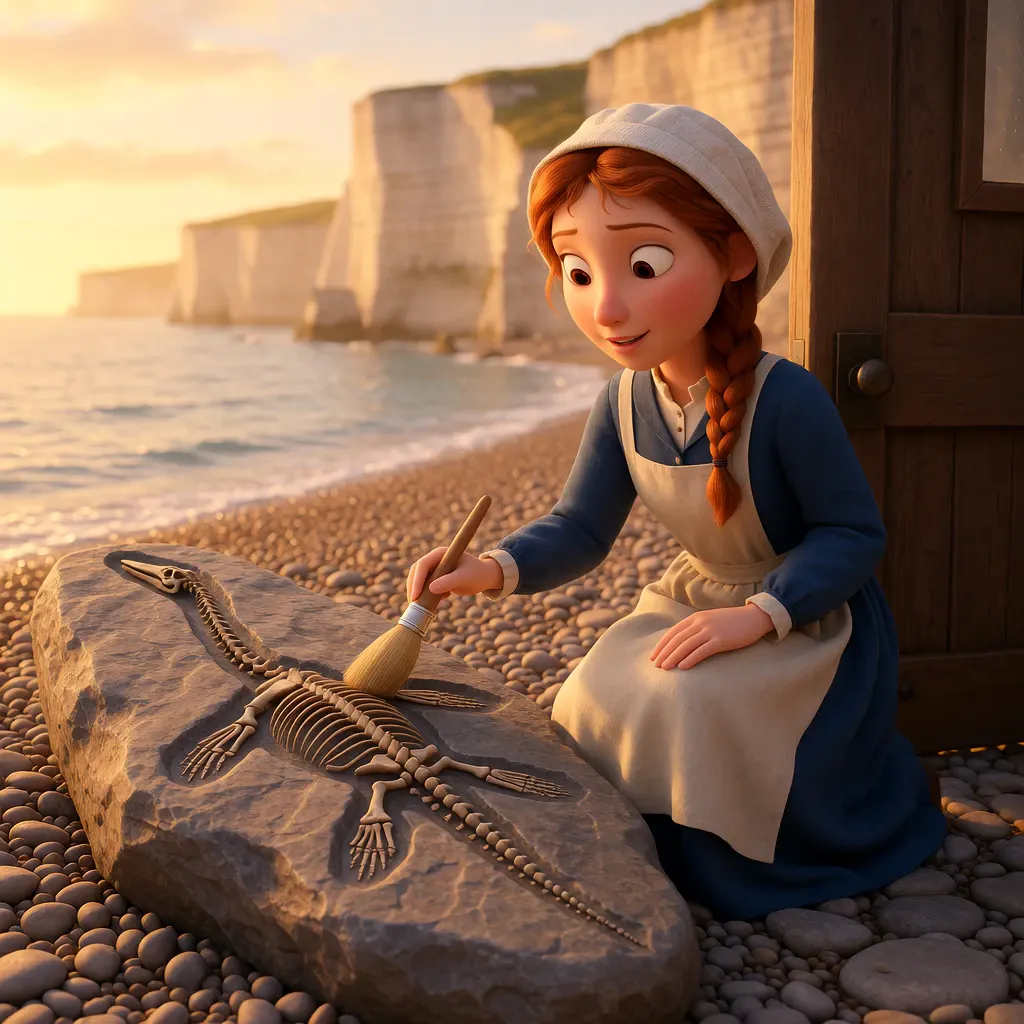
Mary was born in 1799 AD/CE in Lyme Regis, by the sea. She found fossils in the cliffs.
A whole sea creature
In 1823 AD/CE Mary found a whole skeleton of a long-necked sea creature. Nobody had found one before.
How do we know?
A source tells us about the past. A primary source was made at the time, like Mary's own drawing.
A door shut on Mary
The scientists' society only let men join. The rule was unfair. Mary was clever.
Elizabeth Blackwell
Elizabeth was born in Bristol in 1821 AD/CE. When she was 11, her family sailed to New York.
Twenty-nine said no
Elizabeth wanted to be a doctor. Twenty-nine schools said no. In 1847 AD/CE one said yes.
The best bandage
A good pad is absorbent: it soaks up liquid. We found the best one with a fair test.
Wash your hands
Elizabeth asked doctors to wash their hands between patients. Clean hands help stop germs.
Both plaques unveiled
Anyone can be brave and bold. We vote, play our fanfare and unveil both plaques.
What it covers, subject by subject.
History: putting events in order on a timeline using phrases like a long time ago and hundreds of years ago; describing what a source shows and does not show, and sorting primary from secondary sources; finding more than one cause and more than one consequence and joining them in a chain; saying what is fact and what is opinion and why people describe things differently; comparing two times in more than one way and saying which difference matters most; and explaining what changed, what stayed the same and why it mattered.
Science: sorting animals into groups by their features and recording how a shell grew; and testing materials to find the best one for a job, measuring length and time with simple tools.
Computing: organising data in tables and charts and using them to answer questions; creating, editing and combining digital content; and searching safely, explaining why results differ, and saving and finding work.
DT: suggesting different solutions to a problem and showing an idea in a labelled drawing or simple model; using levers and linkages to make something move and explaining how a structure is made stable; and testing products fairly and suggesting more than one way to improve them.
Music: singing and playing a tune from a small set of notes, hearing steps and jumps and drawing pitch as dots; composing a piece with a clear beginning and ending using ostinato and A, B, A; and performing a part accurately and improving it through rehearsal and feedback.
PSHE: recognising loneliness and exclusion and including others; knowing stereotypes can be unfair and hurtful, and challenging them safely; knowing what makes a relationship kind, fair and respectful; and explaining how sleep, activity, food and hygiene keep us well, how illness can be prevented and when to ask for help.
Beyond subjects: sustained oracy, with teaching a partner who was away, a conscience alley, questions to a teacher in role, a then and now role play, a two-sided debate, recorded talks and a minute's talk to a visiting adult; plus the Evidence Cards, a calm reply and a plaque inscription written to a strict word count.
One letter to a poorly little boy led to the story about the most famous rabbit in the world
Year 2
Come Fly with Me! Arctic Circle
Pupils follow Dr Jonas Frost north to the invisible line around the top of the world
Year 1
Once Upon a Toy Box
A battered box comes down from the attic, one toy at a time, and every toy has a story to tell
Year 4
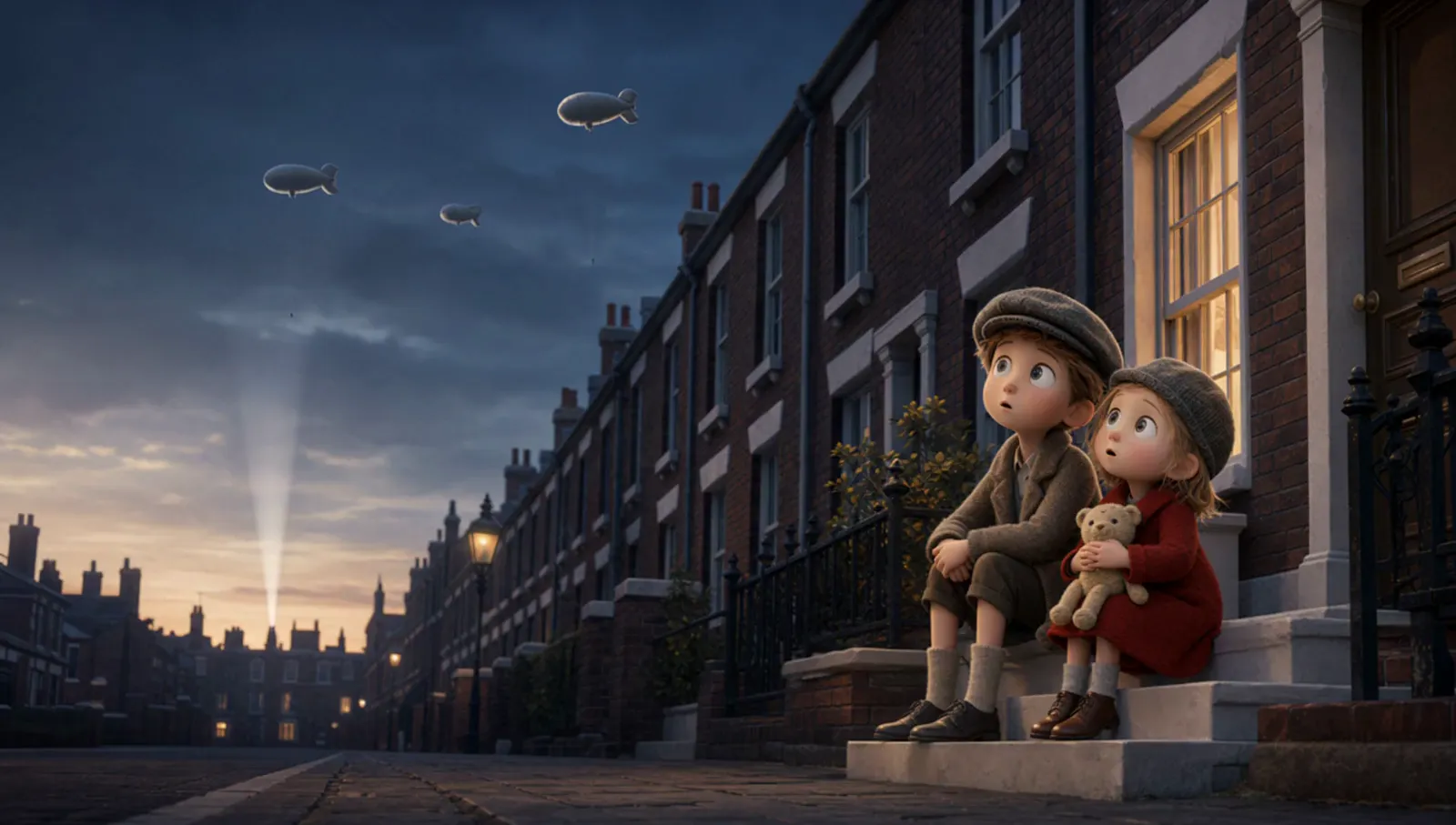
When the Blitz Hits
Follow Walter and Edith Wiggins from the 1939 wireless announcement to evacuation, the Blitz and the Home Front, told through the letters in the class postbag
“As a primary pupil referral unit, creating genuine engagement is essential for our learners. We were looking for a curriculum that places children at the heart of everything and encourages them to immerse themselves in purposeful, meaningful activities. Dimensions has proved to be a strong fit because it enables our pupils to be active, curious learners rather than passive recipients of information. It brings learning to life in a way that motivates them and supports high-quality learning throughout. Plus, the children just love the curriculum!”
BThe Beacon Referral Unit
“Our school fully embraced the Dimensions curriculum and it has brought the world to our classrooms!”
AAlison Steen
“As a school we are really pleased with our decision to go with Dimensions. It has changed the way we teach our topic lessons as a school and has elevated the quality and diversity of the topics taught throughout KS1 and KS2. It is wonderful how the same theme can be so diverse across all age ranges and it has given teachers the confidence to explore themes they may not have taught previously.”
Scoill Phurt Le Moirrey
“Dimensions Curriculum is amazing! We’ve used it for a few years now and the children absolutely love the different topics and are really engaged by the modern and relevant aspect of these. … Added to this is the amazing support that you get from the Dimensions team and nothing is ever too much trouble.”
SSophie Orton
“Introducing the curriculum has been a real game-changer for our team. It’s clear, well-structured, and genuinely supportive of high-quality teaching. Planning is now more streamlined and consistent, while still allowing flexibility for individual classes and teaching styles. The progression is easy to follow, expectations are clear, and it’s saved us valuable time without compromising creativity or impact. A thoughtfully designed resource that’s already making a positive difference in our classrooms.”
Woodford Halse School
“As a class teacher I have really enjoyed using both the Dimensions Curriculum and 3D PSHE. Both products have been very well designed with clear, progressive and sequential plans, incorporating creative, engaging ideas and have given me the peace of mind to know I am teaching the children a quality curriculum. Wouldn’t expect anything less from a product designed by teachers, for teachers. Thank you Dimensions team!”
AAnn Webster
“The Dimensions 3D PSHE curriculum map, programs of study and enrichment unit are so well organised! I am very excited to use it all!”
LLubavitch Primary School
“Children in my school using Dimensions are motivated to learn and can articulate what they are learning and why they are learning it. … The curriculum maps, knowledge organisers and other documents available for subject leadership are super handy and also save on workload. It is excellent value for money.”
LLouise
“Introducing the curriculum has taken the weight off leaders knowing that everything is covered with clear progression documents. Children are getting the breadth and depth of coverage required. It has made a really positive impact especially when planning for mixed age classes. It is great to have the support available for ever changing class structures.”
Beeston Primary School
“I have had an extremely positive experience with Dimensions. They are a fabulous company, producing products to a very high standard that really engage children. Their curriculum is amazing and using it, I have had outstanding progression, engagement and enjoyment both from the children and myself! I would wholeheartedly recommend Dimensions!”
JJules Wilkin
“Music Crew gives teachers much more confidence when teaching music lessons. The children look forward to music and remember what they have learned from previously. The progression is excellent. Music Crew can be adapted to meet the needs of individual classes and the needs of the school.”
Warton St. Paul’s CE School
“It allows teachers to do what they do best, create engaging schemes of work and lessons and then teach accordingly, safe in the knowledge that statutory demands are covered and progression ensured … Our successful inspection outcomes are testament to the confidence we have in Dimensions. I could not ask for more from Dimensions.”
HHelen Ruberto
“We contacted the Customer support team and requested a new document that had the lesson codes and learning objectives for each year group, for each term. They were more than happy to help and emailed the documents to us the same day which was very helpful and exactly what we needed.”
St Andrew’s School
“As a teacher, working in an international school in Hong Kong I have followed the Dimensions Curriculum Thematic Units for a few years now, and I cannot recommend these resources highly enough. I absolutely love how it engages my students, by making learning fun, relevant and interesting for them. … Oh, and I should also mention all the time they save me in planning.”
KKarin Munkholm
“Absolutely loved using the Dimensions Curriculum. It was flexible and creative and allowed us to shape the learning in our school in such a way that it was relevant and purposeful for everyone involved, including the teachers! I enjoyed working with Elaine throughout, and found the support provided to myself as curriculum leader and the staff training given to be excellent.”
SSarah Cooke
“I bought the PSHE Curriculum for my School. The resources are just fantastic! They are packed full of great ideas, easy to use and relevant. I would highly recommend all their resources to any teacher. It’s definitely the way forward.”
KKat Parkinson
“From a teacher’s perspective, this curriculum has revitalized lesson planning. … Overall, this curriculum has been a game-changer. It has enhanced engagement, deepened learning, and created a more dynamic and enjoyable experience for both students and staff. We wholeheartedly recommend this approach to any ASD school …”
SSophie Hatcher
“We have worked with Elaine and the Dimensions team for over 5 years. The staff enjoy teaching the theme units and the pupils love their learning. Ofsted were very impressed with our curriculum and praised the creative learning and experiences the pupils were encountering. … Our school love it.”
AAlison Worthington
“They are a fantastic company with a wealth of knowledge and understanding. Their products are inspiring, innovative, unique to the market and importantly they are fun and exciting. I would recommend every school to have a visit from Elaine or her team, it’s a decision you won’t regret!”
KKJ Krzysiak
“Have used Dimensions to enhance our school curriculum for many years with much success and great results. The support of the Dimensions team and their curriculum has also helped us through two successful OFSTED visits! Would highly recommend.”
DDawn Forrest
“We have seen the knowledge and skills of our children deepen and their experiences in the classroom and of the wider world have broadened. … We have made so many meaningful connections to our whole school vision and values.”
HH Redfern
“Excellent curriculum resources with outstanding provision for all age groups.”















 Scoill Phurt Le Moirrey
 Woodford Halse School
 Beeston Primary School
 Warton St. Paul’s CE School
 St Andrew’s School