
New Primary Curriculum – The Interim Report says What?
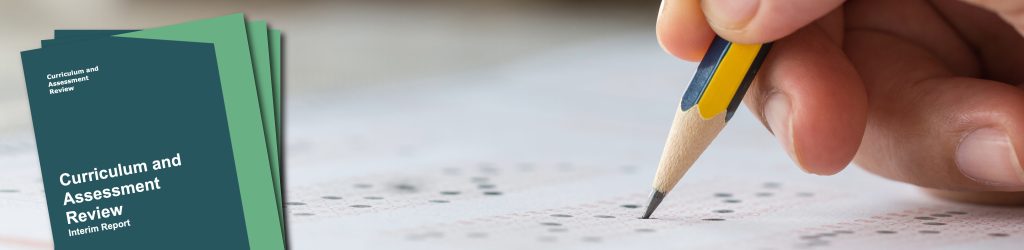
Primary Curriculum Reform: Why We Need More Than Good Intentions
The interim report from the Curriculum and Assessment Review (2024) paints a familiar picture. Primary schools are working hard to meet the demands placed upon them. Leaders are making strategic choices, teachers are doing their utmost for children, and across the country, we see real commitment to improvement. Yet, the report also identifies a fundamental tension: despite best efforts, the system is not delivering equity or coherence. The curriculum and assessment landscape remains cluttered, disjointed, and, at times, counterproductive.
As primary educators, we’ve seen this up close. Since the 2014 national curriculum was introduced, schools have made heroic efforts to “make it work.” In many places, a focus on breadth, rich experiences, and inclusive practice has pushed against the system’s more reductive pressures. But these school-level successes have often occurred in spite of the system, not because of it.
The Review validates what many have felt for some time: we need more than incremental change. We need structural reform, not just tweaks to content or assessment frameworks, but a rethinking of purpose, coherence, and support. Crucially, the report reminds us that “a technically well-designed curriculum cannot achieve its aims without a well-designed and adequately resourced system to support it” (p. 33). This includes professional development, time for planning and reflection, and clarity about what matters most.
One of the most pressing issues the Review identifies is the misalignment between curriculum and assessment. For too long, summative tests at the end of key stages, particularly Key Stage 2 SATs, have shaped what is taught, how it’s taught, and how schools are judged. While accountability matters, the current system distorts priorities and narrows learning. The result is a high-stakes environment where the most vulnerable pupils often lose out.
Equity is a recurring theme in the Review. The current curriculum system, it argues, does not “level the playing field”, despite its intentions. In fact, it may inadvertently widen gaps. Pupils with additional needs, those new to English, or those affected by disadvantage are often least well served by rigid curricular and assessment frameworks. A more inclusive curriculum would not only value different starting points but also support all children to access rich, meaningful learning.
The report also highlights the lack of time and space for deep curriculum thinking. Leaders and teachers are expected to make complex decisions about progression, knowledge, and sequencing, but without sufficient support or time to do it well. This leads to inconsistency and overload. In the absence of a coherent national narrative, many schools have looked to commercial schemes, which brings even more uncertainty. While many are useful, they lack the flexibility to evolve and become a schools own. All come with trade-offs; teacher autonomy, flexibility, local relevance and philosophy.
So what would a better system look like?
The Review does not offer a finished blueprint, but it points towards a system that is simpler, more coherent, and more humane. It advocates for a curriculum that is “clear about what matters most,” built on principles of equity, and underpinned by meaningful assessment. It recognises the central role of teachers, not just as deliverers, but as designers of learning, and calls for a renewed focus on curriculum expertise and professional collaboration.
Importantly, the report resists the temptation to prescribe a single “model curriculum.” Instead, it calls for better alignment between national guidance and local agency, with a system designed to support professional judgement rather than override it. This isn’t about letting a thousand flowers bloom chaotically; it’s about creating the conditions where curriculum thinking can thrive.
For those of us in primary education, the interim report offers both challenge and hope. It challenges the idea that our current approach is “good enough,” and it offers hope that a more joined-up, equitable system is possible. But hope alone is not a strategy. We need to stay engaged in the conversation and push for a future where our curriculum is not only ambitious, but also coherent, inclusive, and fair.
Because our children deserve more than good intentions. They deserve a system that works for them.
If you are looking to make a start in developing your curriculum with experts who care about your children’s experiences and the creative practice of your teachers get in contact with us.
You can read the full report here.

 Scoill Phurt Le Moirrey
 Woodford Halse School
 Beeston Primary School
 Warton St. Paul’s CE School
 St Andrew’s School