
How to Make Learning More Memorable in a Primary Classroom

Children remember learning best when it feels meaningful, active and connected. In a busy primary classroom, memorable learning is not about adding extra “wow” moments, it is about helping pupils understand ideas deeply, talk about them, and apply them in different ways.
At Dimensions Curriculum, we design units that make learning stick by building knowledge through enquiry, purposeful experiences, and strong links across subjects. Here is what memorable learning looks like in practice, and how a unit like Athens v Sparta brings it to life.
What makes learning memorable?
Memorable learning usually includes:
- A clear purpose (a question worth answering)
- Opportunities to think, question and discuss.
- Active, hands-on experiences
- Links across subjects
- Time to revisit and reflect.
When children engage in knowledge in these ways, they’re far more likely to remember it, because they’re not just collecting facts, they’re building understanding.
Start with curiosity, then build understanding.
A strong hook can spark interest, but it is the learning that follows that makes it stick.
In Athens v Sparta, you might begin with a big question like:
Which city state would you rather live in?
Straight away, pupils have a reason to find out more. They are not memorizing information for its own sake, they’re gathering evidence, comparing viewpoints and forming opinions.
That sense of purpose changes everything: it turns “content” into a story children want to follow.
Use comparison to deepen thinking.
Children learn more effectively when they compare ideas, notice differences and make connections.
Athens and Sparta are ideal for this because their lifestyles and values are so different. Pupils can:
- Sort features of each society.
- Debate which life was “better” (and for whom)
- Write in role as a child from each city state.
- Create comparison charts using evidence.
These activities move learning beyond recall to a deeper understanding and that’s where long-term memory is built.
Make learning active and experiential.
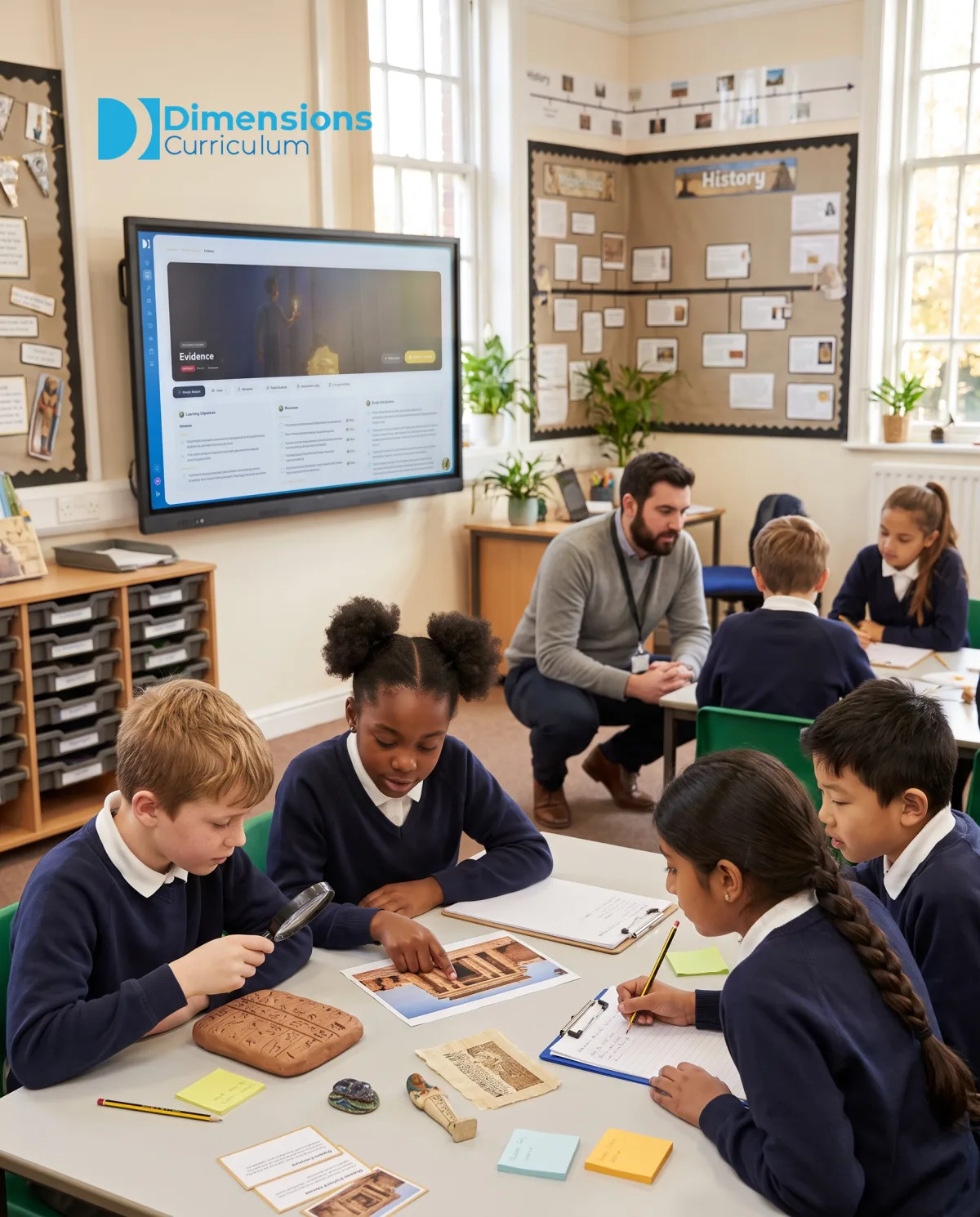
Children remember more when they experience ideas, not just hear about them.
That doesn’t mean every lesson needs a huge activity. It means building in purposeful moments where pupils can explore concepts through drama, movement, making and talk.
In Athens v Sparta, pupils might:
- Take part in debates and decision-making.
- Create freeze frames of daily life.
- Explore how democracy worked (and who it excluded)
These experiences help abstract ideas like power, rights and fairness feel real and meaningful.
Connect subjects so knowledge is revisited in different ways.
Learning becomes stronger when children see links across subjects. A connected theme unit helps pupils return to key ideas in multiple contexts, strengthening understanding each time.
A unit like Athens v Sparta can bring together:
- History: Ancient Greek life and beliefs
- Geography: How natural features influence settlement and society
- Science: Discovering and experimenting with forces
- PSHE: Fairness, rights and how societies are organized.
- Drama: Role play and performance
- Art: Greek-inspired creative work and architecture
- English: Persuasive writing, writing in role, vocabulary, and root words.
This is one of the reasons schools choose Dimensions Curriculum: it supports coherent, progressive learning without teachers having to force connections or start from nothing.
Create space for talk and reflection
Discussion helps children organise their thinking and learn from others. It also gives teachers rich insight into misconceptions and emerging understanding.
Try questions like:
- Was life in Athens fair?
- Why might someone prefer Sparta?
- What do these societies value most?
Reflection matters too. When pupils look back at what they have learned, and how their thinking has changed, they are more likely to retain it.
Revisit learning over time.
Memorable learning builds across a sequence of lessons, not a single activity.
In Dimensions Curriculum units, key vocabulary, concepts, and questions are revisited throughout. By the end of Athens v Sparta, pupils can return to the original question and answer it with confidence using evidence, subject knowledge, and their own reasoning.
That’s what “learning that lasts” looks like.
Final thoughts
Memorable learning is not about doing more. It is about doing things more meaningfully.
When children explore big questions, take part in purposeful experiences, and make clear connections across subjects, they build knowledge that sticks long after the lesson ends.
At Dimensions Curriculum, we are enthusiastic about supporting primary schools to bring learning to life through enquiry-led, connected and knowledge-rich units like Athens v Sparta.
Let’s keep the conversation going.
How are you making learning more memorable in your setting?
If you would like more ideas, examples and classroom inspiration, explore our curriculum approach and resources at dimensionscurriculum.co.uk.
Or follow us on LinkedIn and join the conversation using #LearningMeansTheWorld.


 Scoill Phurt Le Moirrey
 Woodford Halse School
 Beeston Primary School
 Warton St. Paul’s CE School
 St Andrew’s School