
How Curriculum Design Can Support Whole-School Improvement

Since the 2019 framework, Ofsted has put curriculum right at the centre of inspection. In my experience, the schools that have genuinely improved over time are the ones that have treated curriculum as the starting point and used this has a springboard to improve outcomes throughout the school.
By deep-diving into recent Ofsted reports, there’s a clear pattern when you look at schools where things are working well. The curriculum is ambitious, carefully sequenced and crystal clear about what pupils need to know and when. When a curriculum is well thought through, teachers are not guessing what to teach next or how it fits into the bigger picture, but instead, there is a shared understanding throughout the school.
Consistency is one of the hardest things to get right in any school. You can have great individual teachers, but without a clear framework, practice can vary too much between classrooms.
When I was an Assistant Headteacher, this was a real focus for us. Reading outcomes in KS2 were not where we wanted them to be, particularly around inference. Rather than jumping straight to interventions, we stepped back and looked at the curriculum itself – how reading skills were being built over time and where the gaps were.
At the same time, we started to think more deliberately about how subjects could work together. We strengthened links between reading, science, and maths so that learning wasn’t happening in isolation. For example, the vocabulary pupils were encountering in science was reinforced in reading lessons, and mathematical skills were applied in scientific contexts.
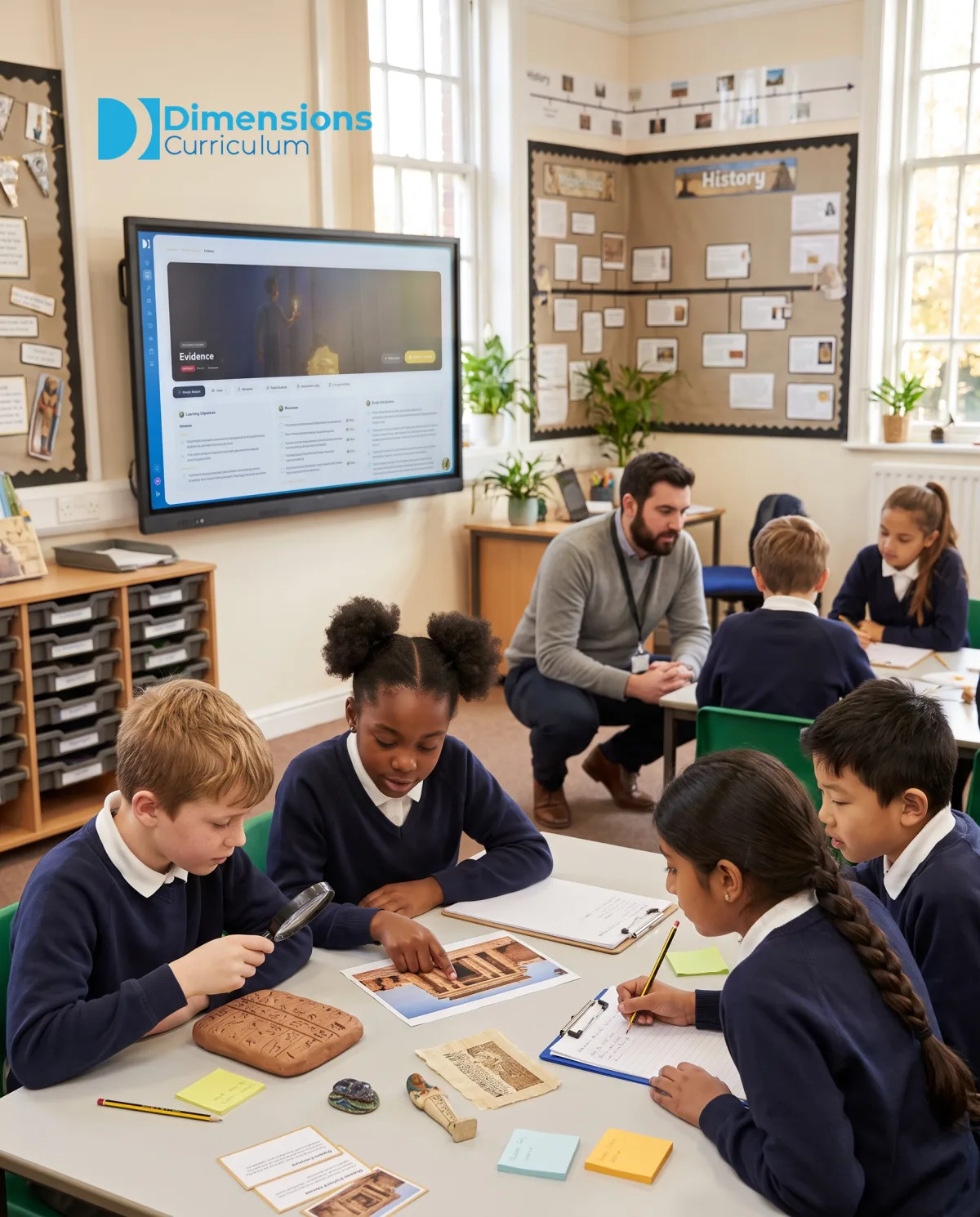
I distinctly remember that it was 2014 and it was the centenary of WWI. In the class that I taught that year, the topics that were to be covered in the autumn term were as follows – The Romans, teeth and digestion in science, a chronological study in medicine over time and WW1. Design and Technology and art were interwoven into The Romans topic. On paper, it looked impossible. However, a complete rethink of how I delivered guided reading was necessary to cover both the WWI and historical study topics. All my sources were based on these topics – both fiction and non-fiction. This was critical in covering so much content without overloading the children with too much. The outcomes spoke themselves. Reading for pleasure soared, as did comprehension skills. Why? Because I made it relevant and engaging for the children, instead of following a set scheme. When we get creative, the impact can be far greater. Pupils had more opportunities to revisit and apply knowledge and there was a much stronger sense of consistency across the phase.
Over time, science outcomes improved significantly, moving from below 70% at ARE to over 90%. Reading and maths outcomes also rose. That wasn’t down to a single strategy or quick fix. It was the result of a team working within a curriculum that made sense and built learning over time. When knowledge is sequenced properly and revisited in different contexts, it sticks. Pupils become more confident because they’re not constantly relearning the same things from scratch.
As a primary teaching consultant, I have always encouraged teachers to think carefully about what comes before and what comes next. If pupils are going to succeed in reading, what vocabulary and background knowledge do they need? If they’re tackling a concept in science, what foundations are already in place?
When that thinking is embedded into the curriculum, you start to see pupils making connections more naturally.
We often talk about engagement as if it’s something separate, but in my experience, it comes from the curriculum itself. When we strengthened those cross-curricular links, pupils became more invested in their learning. Reading wasn’t just an isolated lesson; it became a way of exploring ideas in science and history. Maths wasn’t just calculations; it had a clear purpose.
A well-designed curriculum also supports inclusion. When expectations are clear and learning is carefully structured, it is much easier to support all pupils, including those with additional needs. It gives everyone a shared starting point.
For me, curriculum is the foundation of everything else. When it is done well, teachers feel more confident, pupils achieve more and the whole school moves forward together.
Joe Bradbury

 Scoill Phurt Le Moirrey
 Woodford Halse School
 Beeston Primary School
 Warton St. Paul’s CE School
 St Andrew’s School