
How to Balance Creativity, Courage and Progression in Your Curriculum

As a supply teacher, one of the unexpected benefits of stepping into so many classrooms has been seeing just how differently schools interpret their curriculum. Some schools have embraced creativity wholeheartedly. Children were building, debating, performing, investigating and creating. You could walk into a classroom and immediately sense the excitement.
In other schools, the curriculum was equally ambitious and carefully planned, but the learning sometimes felt more constrained. Lessons followed a tightly prescribed sequence. Resources were comprehensive. Everything was mapped out in great detail. Yet occasionally I found myself wondering whether the children were being given enough opportunities to explore, create and think independently.
The most successful schools were not necessarily the most creative or the most structured. They were the schools that managed to balance creativity, courage and progression. Leaders quite rightly want to know that knowledge is building over time. Subject leaders want confidence that pupils are developing the skills and understanding they need. Teachers want clarity about what should be taught and when. But somewhere along the way, I think some schools have started to see creativity and progression as competing priorities.
My experience tells me they are not. In fact, some of the most effective teaching I have witnessed has combined both beautifully.
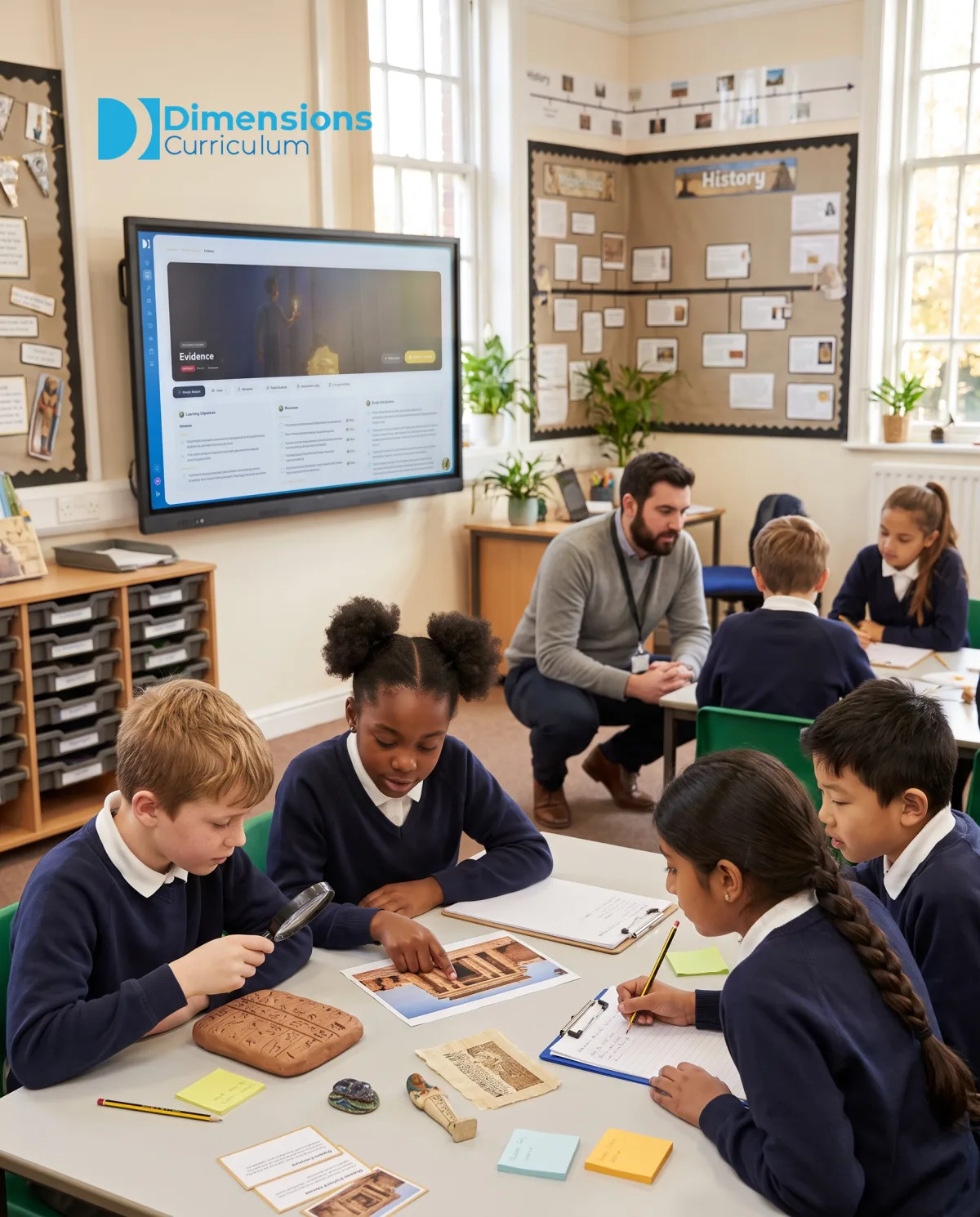
I remember visiting one school where pupils were studying a local history topic. Rather than simply reading about the events, they had transformed the classroom into a museum. Children had researched artefacts, written information panels, produced artwork and acted as tour guides for visitors. The quality of the writing was exceptional. The historical knowledge was secure. Most importantly, the children couldn’t stop talking about it.
I saw something similar in another school where a science topic became the driving force behind weeks of learning. Mathematical skills were applied through data collection and analysis. Writing was purposeful because pupils were communicating genuine findings. Art was used to record observations. Everything connected.
I believe that it takes courage to move beyond worksheets when they feel like the safer option. It takes courage to trust professional judgement. It takes courage to allow children time to explore ideas in depth when there is always pressure to move on to the next objective. It also takes courage to resist the temptation to cram everything into a topic.
One of the most common concerns I hear from teachers is that there simply isn’t enough time. They worry about fitting everything in and having to race from one objective to the next. To be honest, I think we sometimes mistake coverage for learning. The schools that seem to achieve the most often focus on doing fewer things better. They know what the essential knowledge is. They sequence it carefully, revisit it regularly and then they create rich opportunities for children to apply and connect that learning in meaningful ways.
This is what progression should enable. Progression provides the structure and creativity provides the engagement. When children are given the opportunity to learn within a curriculum that is coherent, ambitious and genuinely engaging, they truly remember the experience. And years later, that’s often what stays with them. It certainly did with me.

 Scoill Phurt Le Moirrey
 Woodford Halse School
 Beeston Primary School
 Warton St. Paul’s CE School
 St Andrew’s School