
Year 3
Lindow Man
The discovery at Lindow Moss opens an investigation stretching from the Stone Age to the Iron Age.
 Let’s talk
A frightened town, a chronicle kept by candlelight, and six hundred years of people working out what really makes us ill.

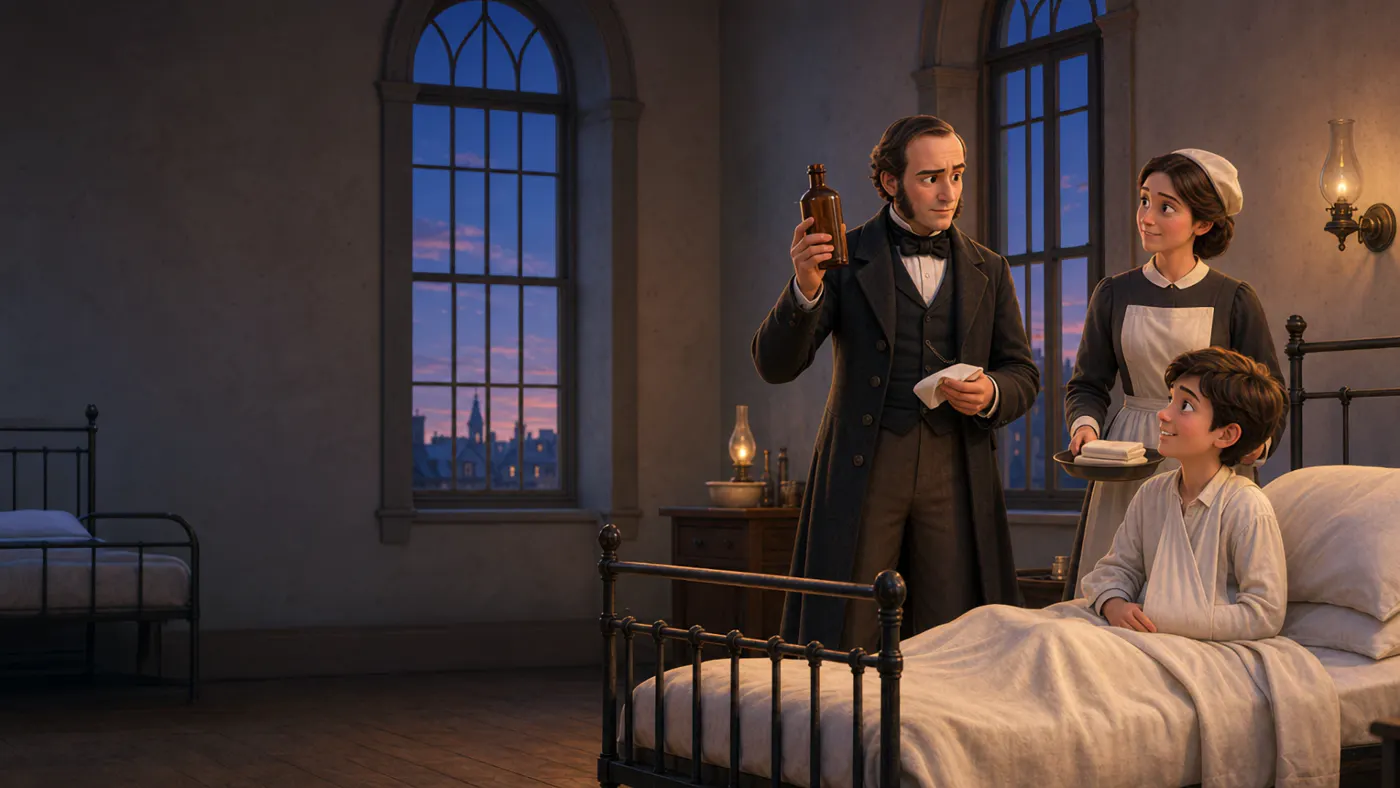
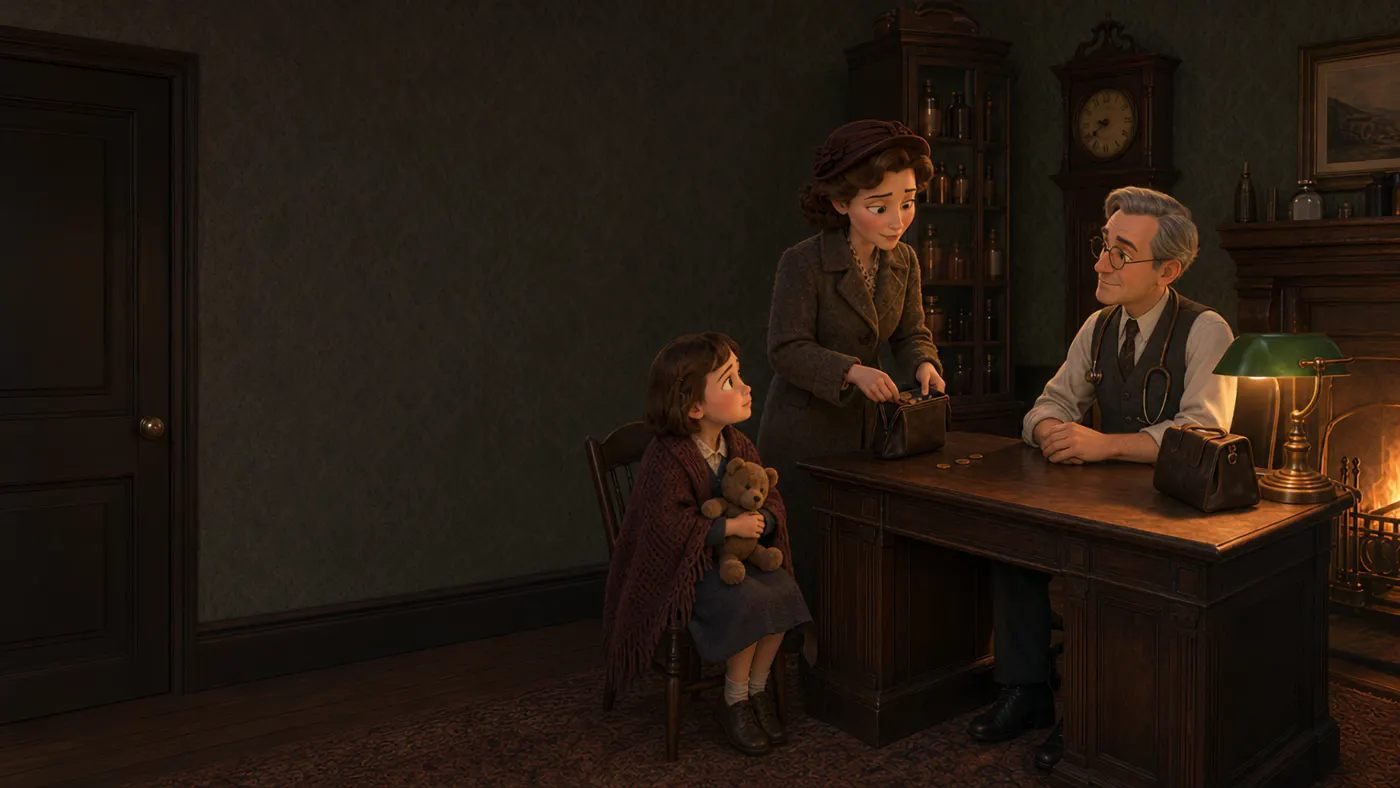
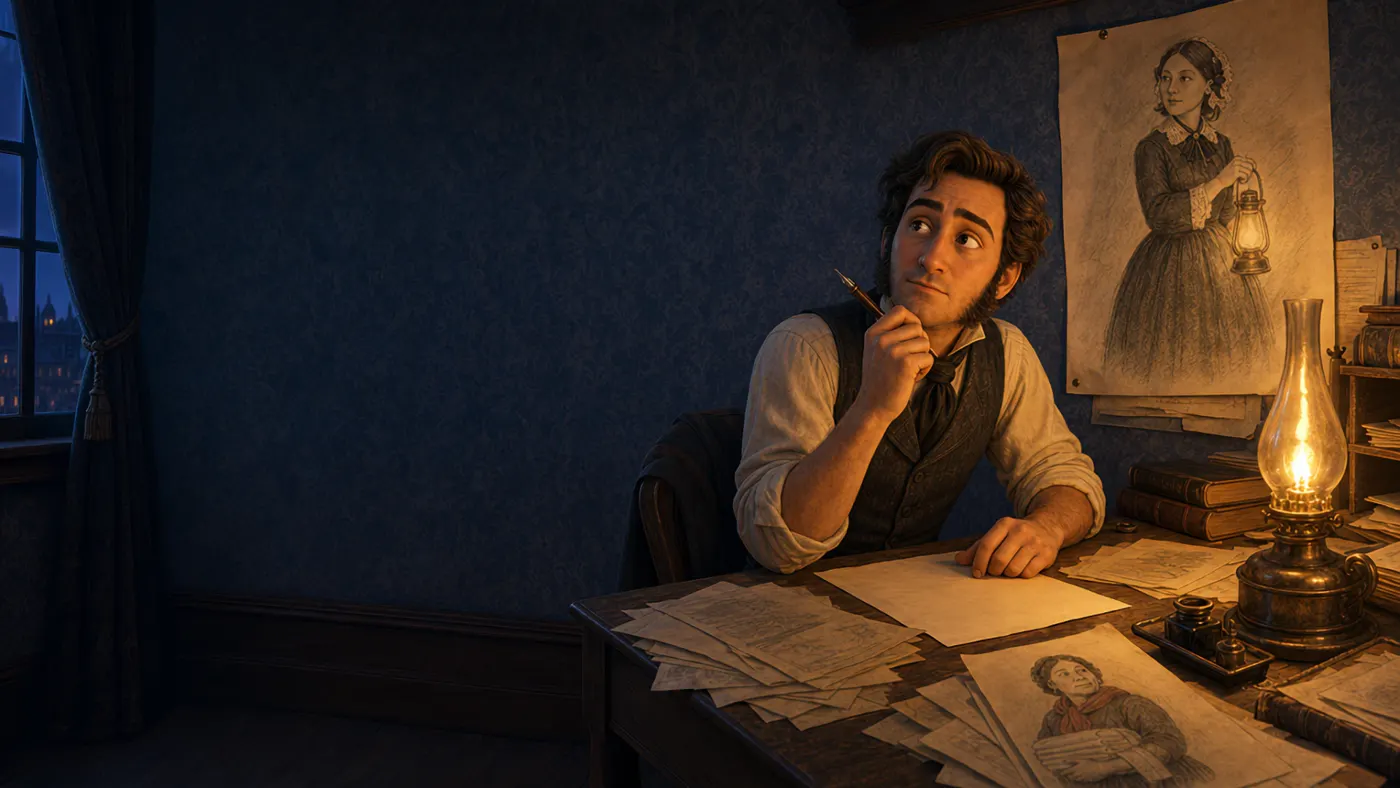
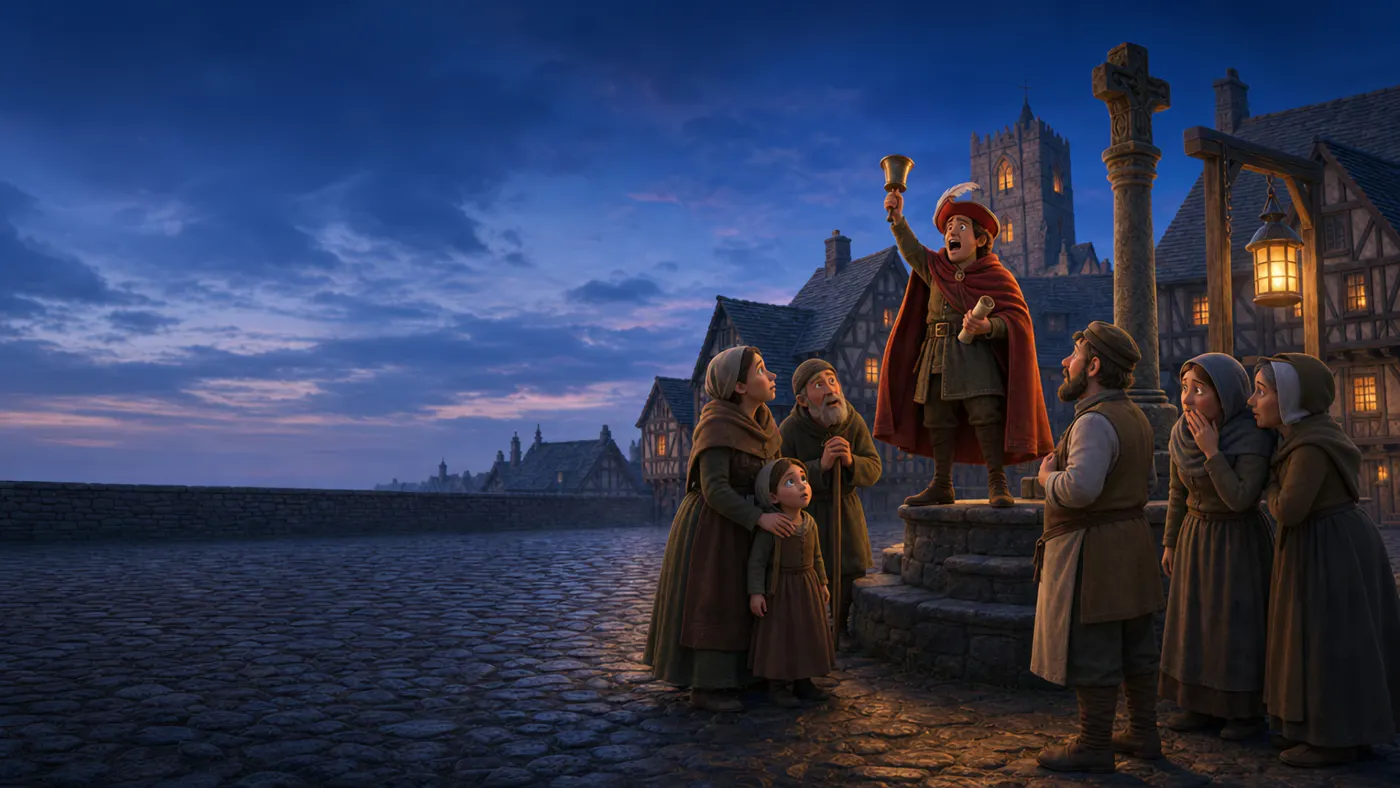
A Year 3 History scheme, six sections long, that follows one question for six hundred years: what did people think was making them ill, and how did they find out? It opens in an invented English town in AD/CE 1349 with a bell, a proclamation and nobody who can explain anything, and it closes on the first day of the National Health Service, 5 July AD/CE 1948. The class keeps a real exercise book from the first lesson to the last, the Town Health Chronicle, and writes an entry in it in every section. In the final lesson the whole book is read back from beginning to end, and that reading is the last act of the unit rather than another task. The town in Section 1 is invented and every slide that shows it says so; so are Thomas and Ruby, the two eight-year-olds compared in Section 6. Every date is written AD/CE (and BC/BCE where the timeline needs it), the ones that are teaching conventions rather than events say "about", and the plague is shown as black spots on doors and houses, never as bodies.

Chronology. Section 1 teaches the AD/CE and BC/BCE system rather than the labels: the years before Year 1 count backwards, so a bigger BC/BCE number is older. A number line is built on screen, three quickfire questions check it, and then every pupil handles five period cards, finds the one deliberately placed wrongly on the class timeline, and adds the Black Death to it. The clue-card task removes the dates altogether, so pupils have to reason from evidence (knights and castles, Roman roads, black-and-white television) rather than recall a number. Competency: Community, in the thought bubble for the neighbour next door to a marked house.

Evidence. Section 3 of the unit's evidence work is done on real sources. Two genuine printed pages of the Bill of Mortality for 15 to 22 August 1665 are shown and inspected, then a readable extract carries the real figures so pupils can find facts in it. The searchers are taught honestly: not trained physicians, working with limited knowledge, and the labels they wrote (Teeth, Frighted) are not modern diagnoses. A class vote asks whether a record with mistakes in it is useless. Then a genuine remedies handbill is set against a labelled invented advert, and eight statements are sorted into Recording and Persuading with the exact phrase that gave each one away. Competency: Courage.

Continuity and Change. Section 3 runs two discoveries and then asks what did not move. Harvey's 1628 publication is contrasted with the older explanation it displaced, and the blood loop is shown as an explicitly simplified animation with a pause control. Jenner's 1796 test is described and never reenacted. Changes are then grouped into social, cultural and technological with five cards, and the notes are clear that a card can belong to more than one group if the pupil explains which aspect they mean. The closing task requires one continuity and a reason: people still became seriously ill, families still wanted to protect each other. Competency: Creativity, in the Connect the Unconnected task.

Cause and Consequence. Section 4 separates short-term from long-term cause on an everyday example (an overloaded schoolbag whose strap finally snaps) before applying it to Soho in 1854: wells and cesspits built close together for years, against contaminated water drunk that week. Pupils investigate a simplified classroom map before the real one is revealed, and the notes hold the uncertainty, because cases were already falling when the handle came off the pump. Activity 2 builds a seven-card chain from Pasteur's experiments to safer surgery, and the linking phrases led to, resulted in and due to are modelled, rehearsed aloud and then written. Competency: Commitment.

Perspectives and Interpretations. Section 5 is built on one honest asymmetry. Nightingale and Seacole both cared for soldiers in the same war, and for a long time only one of them was widely remembered. Author and purpose are taught with four familiar examples, then two constructed accounts of the same history are read in full: the narrower one is examined for what it chooses to emphasise, not simply corrected. The notes refuse the easy story in both directions, because Seacole was known in her own lifetime and a newer account is not automatically more accurate. Four invented source summaries ask whose voice is missing, and every pupil rewrites the narrower account. Competency: Courage.

Similarities and Differences. Section 6 compares two invented eight-year-olds, Thomas in AD/CE 1349 and Ruby after 5 July AD/CE 1948, across five rows: belief about cause, who treats them, where, what evidence is used and who pays. Significance is taught before anything is ranked, using clothing against reliable medical knowledge as the contrast, and the on-screen scales start in the middle with no marked right answer. Pupils choose one difference, justify it with evidence from both periods, and present it. The unit then closes on the question it has been building all along: did medicine simply get better and better? Competency: Community.
By the end of the unit:
The Town Health Chronicle, read from beginning to end in the final lesson, plus each pupil's own chronicle entry, Fact Hunt, claim and evidence paragraph, change and continuity explanation, cause and consequence chain, rewritten fuller account and a written judgement on which difference mattered most.
The Black Death reached Britain in AD/CE 1348 and 1349. There were no microscopes and nobody had heard of germs.
People blamed bad air, God's anger, the planets, or the body being out of balance. These were careful ideas, not silly ones.
In the Great Plague of AD/CE 1665, London printed a Bill of Mortality every week. A cause written in a record is not proof.
Houses with plague were shut up and guarded. Healthy family members were shut inside too.
In AD/CE 1628 William Harvey showed that the heart pumps blood around the body and that it returns.
In AD/CE 1796 Edward Jenner tested whether cowpox could protect people from smallpox. His work helped develop vaccination.
In AD/CE 1854 John Snow gathered evidence that cholera in Soho spread through water, not through bad air.
Louis Pasteur's experiments supported the role of germs. In AD/CE 1865 Joseph Lister used carbolic acid to treat wounds.
Florence Nightingale and Mary Seacole both cared for soldiers in the Crimean War. For a long time only one of them was remembered.
The NHS began on 5 July AD/CE 1948. It was paid for together, so care could be based on need.


Year 3
The discovery at Lindow Moss opens an investigation stretching from the Stone Age to the Iron Age.

Year 3
Two children, two city-states and a jar of broken pottery that decides who stays and who goes.
Year 4
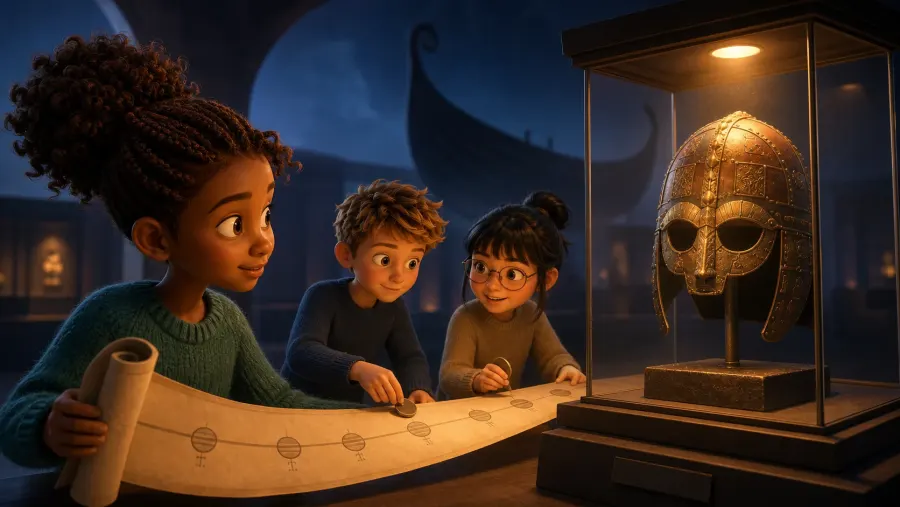
One ship burial, an extraordinary helmet and a museum exhibition that needs an honest answer.

Year 4
One family, one wireless announcement and a postbag of letters that carries the class through the war.
“As a primary pupil referral unit, creating genuine engagement is essential for our learners. We were looking for a curriculum that places children at the heart of everything and encourages them to immerse themselves in purposeful, meaningful activities. Dimensions has proved to be a strong fit because it enables our pupils to be active, curious learners rather than passive recipients of information. It brings learning to life in a way that motivates them and supports high-quality learning throughout. Plus, the children just love the curriculum!”
“Our school fully embraced the Dimensions curriculum and it has brought the world to our classrooms!”
“As a school we are really pleased with our decision to go with Dimensions. It has changed the way we teach our topic lessons as a school and has elevated the quality and diversity of the topics taught throughout KS1 and KS2. It is wonderful how the same theme can be so diverse across all age ranges and it has given teachers the confidence to explore themes they may not have taught previously.”
 Scoill Phurt Le Moirrey
“Dimensions Curriculum is amazing! We’ve used it for a few years now and the children absolutely love the different topics and are really engaged by the modern and relevant aspect of these. … Added to this is the amazing support that you get from the Dimensions team and nothing is ever too much trouble.”
“Introducing the curriculum has been a real game-changer for our team. It’s clear, well-structured, and genuinely supportive of high-quality teaching. Planning is now more streamlined and consistent, while still allowing flexibility for individual classes and teaching styles. The progression is easy to follow, expectations are clear, and it’s saved us valuable time without compromising creativity or impact. A thoughtfully designed resource that’s already making a positive difference in our classrooms.”
 Woodford Halse School
“As a class teacher I have really enjoyed using both the Dimensions Curriculum and 3D PSHE. Both products have been very well designed with clear, progressive and sequential plans, incorporating creative, engaging ideas and have given me the peace of mind to know I am teaching the children a quality curriculum. Wouldn’t expect anything less from a product designed by teachers, for teachers. Thank you Dimensions team!”
“The Dimensions 3D PSHE curriculum map, programs of study and enrichment unit are so well organised! I am very excited to use it all!”
“Children in my school using Dimensions are motivated to learn and can articulate what they are learning and why they are learning it. … The curriculum maps, knowledge organisers and other documents available for subject leadership are super handy and also save on workload. It is excellent value for money.”
“Introducing the curriculum has taken the weight off leaders knowing that everything is covered with clear progression documents. Children are getting the breadth and depth of coverage required. It has made a really positive impact especially when planning for mixed age classes. It is great to have the support available for ever changing class structures.”
 Beeston Primary School
“I have had an extremely positive experience with Dimensions. They are a fabulous company, producing products to a very high standard that really engage children. Their curriculum is amazing and using it, I have had outstanding progression, engagement and enjoyment both from the children and myself! I would wholeheartedly recommend Dimensions!”
“Music Crew gives teachers much more confidence when teaching music lessons. The children look forward to music and remember what they have learned from previously. The progression is excellent. Music Crew can be adapted to meet the needs of individual classes and the needs of the school.”
 Warton St. Paul’s CE School
“It allows teachers to do what they do best, create engaging schemes of work and lessons and then teach accordingly, safe in the knowledge that statutory demands are covered and progression ensured … Our successful inspection outcomes are testament to the confidence we have in Dimensions. I could not ask for more from Dimensions.”
“We contacted the Customer support team and requested a new document that had the lesson codes and learning objectives for each year group, for each term. They were more than happy to help and emailed the documents to us the same day which was very helpful and exactly what we needed.”
 St Andrew’s School
“As a teacher, working in an international school in Hong Kong I have followed the Dimensions Curriculum Thematic Units for a few years now, and I cannot recommend these resources highly enough. I absolutely love how it engages my students, by making learning fun, relevant and interesting for them. … Oh, and I should also mention all the time they save me in planning.”
“Absolutely loved using the Dimensions Curriculum. It was flexible and creative and allowed us to shape the learning in our school in such a way that it was relevant and purposeful for everyone involved, including the teachers! I enjoyed working with Elaine throughout, and found the support provided to myself as curriculum leader and the staff training given to be excellent.”
“I bought the PSHE Curriculum for my School. The resources are just fantastic! They are packed full of great ideas, easy to use and relevant. I would highly recommend all their resources to any teacher. It’s definitely the way forward.”
“From a teacher’s perspective, this curriculum has revitalized lesson planning. … Overall, this curriculum has been a game-changer. It has enhanced engagement, deepened learning, and created a more dynamic and enjoyable experience for both students and staff. We wholeheartedly recommend this approach to any ASD school …”
“We have worked with Elaine and the Dimensions team for over 5 years. The staff enjoy teaching the theme units and the pupils love their learning. Ofsted were very impressed with our curriculum and praised the creative learning and experiences the pupils were encountering. … Our school love it.”
“They are a fantastic company with a wealth of knowledge and understanding. Their products are inspiring, innovative, unique to the market and importantly they are fun and exciting. I would recommend every school to have a visit from Elaine or her team, it’s a decision you won’t regret!”
“Have used Dimensions to enhance our school curriculum for many years with much success and great results. The support of the Dimensions team and their curriculum has also helped us through two successful OFSTED visits! Would highly recommend.”
“We have seen the knowledge and skills of our children deepen and their experiences in the classroom and of the wider world have broadened. … We have made so many meaningful connections to our whole school vision and values.”
“Excellent curriculum resources with outstanding provision for all age groups.”