
Year 4
Norse Neighbours
Asking who the Vikings really were, and getting to the truth about horned helmets!
 Let’s talk
One ship burial, an extraordinary helmet and a museum exhibition that needs an honest answer.

A Year 4 History scheme, six sections long, built around one real object and one real dig: the Sutton Hoo helmet, and the ship-shaped stain Basil Brown uncovered in a Suffolk field in 1939. The class becomes the museum's Finds Team, and the teacher, in a lanyard or with a clipboard, becomes the Curator who keeps asking for an answer the evidence will not quite give. An exhibition wall grows across the whole unit: a scaled timeline in Section 1, evidence labels, a hall reconstruction, signed consequence chains, a gallery verdict, and at last a title panel. The question the unit circles, who was buried in the ship, is never settled. Rædwald is a strong candidate and stays a candidate, and the class earns the right to open its exhibition by putting uncertainty on the labels rather than hiding it.
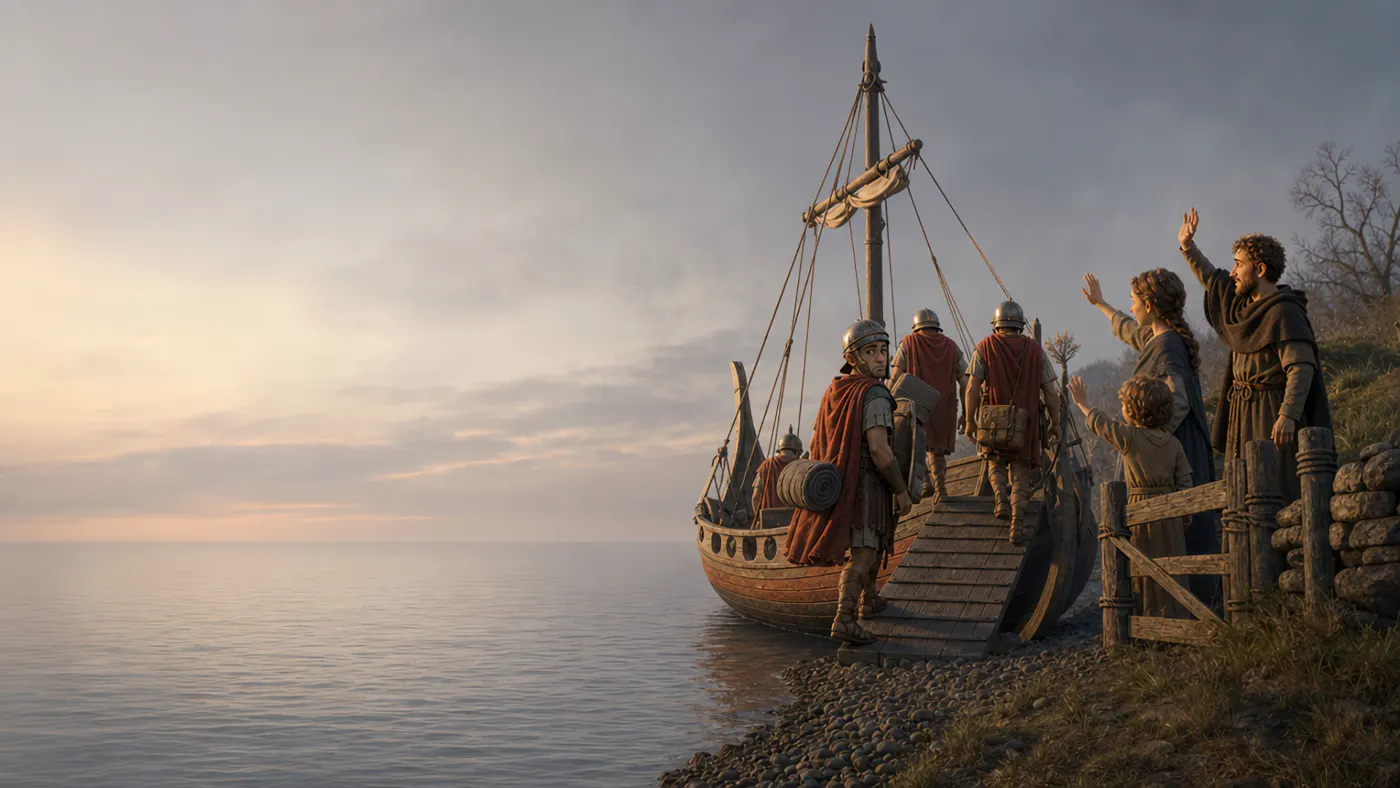
Chronology. Section 1 builds a scaled timeline from AD/CE 400 to 650 where equal lengths mean equal time, places four dated events on it (one of them a range, because historians do not know when the Scots settled Argyll), and teaches overlap: different movements in different parts of Britain during some of the same decades.

Evidence. Section 2 teaches four reliability questions on the great gold buckle, compares a genuine photograph with a deliberately thin teaching-created description, and uses the purse group of coins to show how several sources can point to a likely date (around AD/CE 610 to 635) without proving one. Corroboration is the central habit.
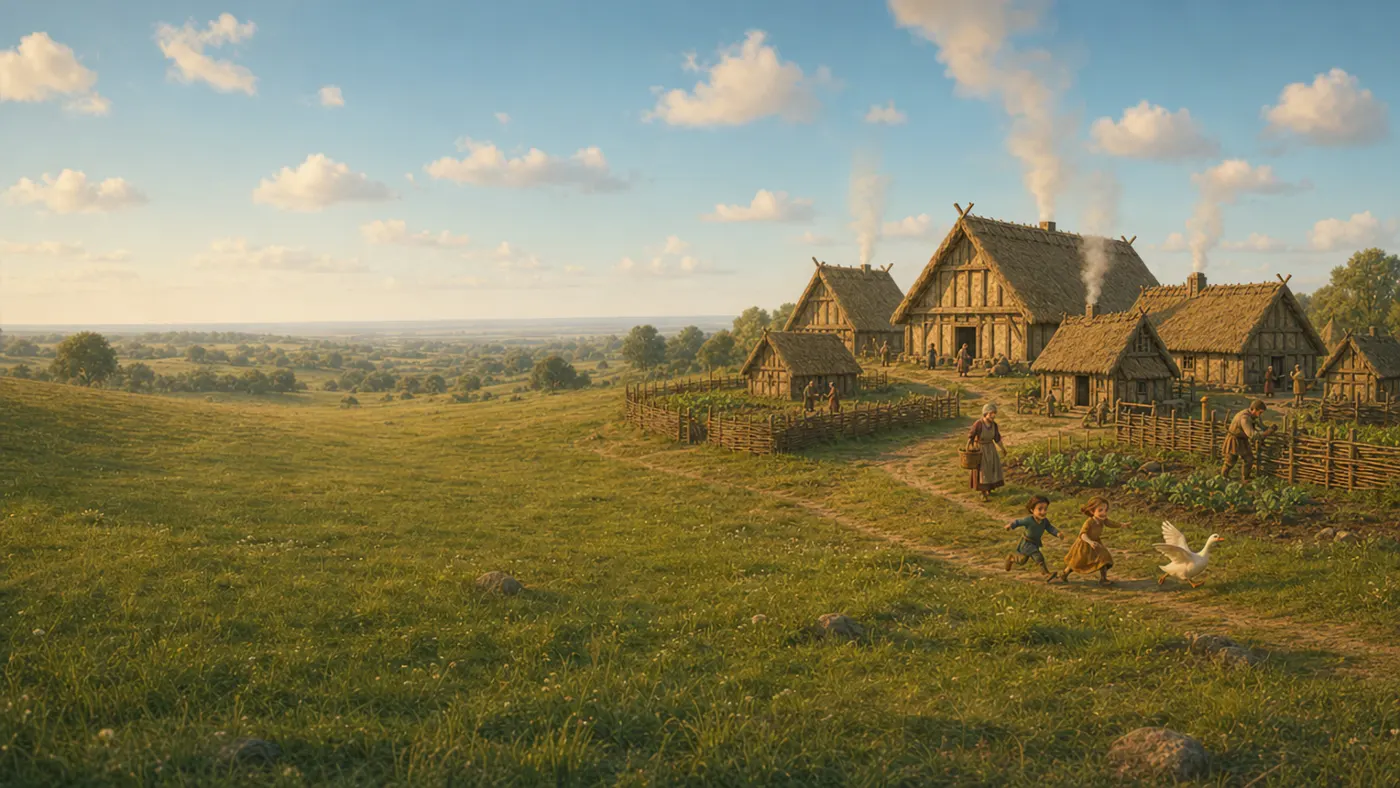
Continuity and Change. Section 3 reconstructs a hall from postholes, tracks how some settlements grew more grouped over generations, then sorts rapid events (Iona founded, Aidan sent to Lindisfarne) from gradual change (Christianity spreading unevenly), and judges whether changing settlements or changing beliefs had the bigger impact.

Cause and Consequence. Section 4 categorises causes of migration and mission as political, economic, religious or environmental while allowing overlap, distinguishes secure explanations from later traditions such as Vortigern's invitation, and builds signed consequence chains from immediate effect to long-term trace.
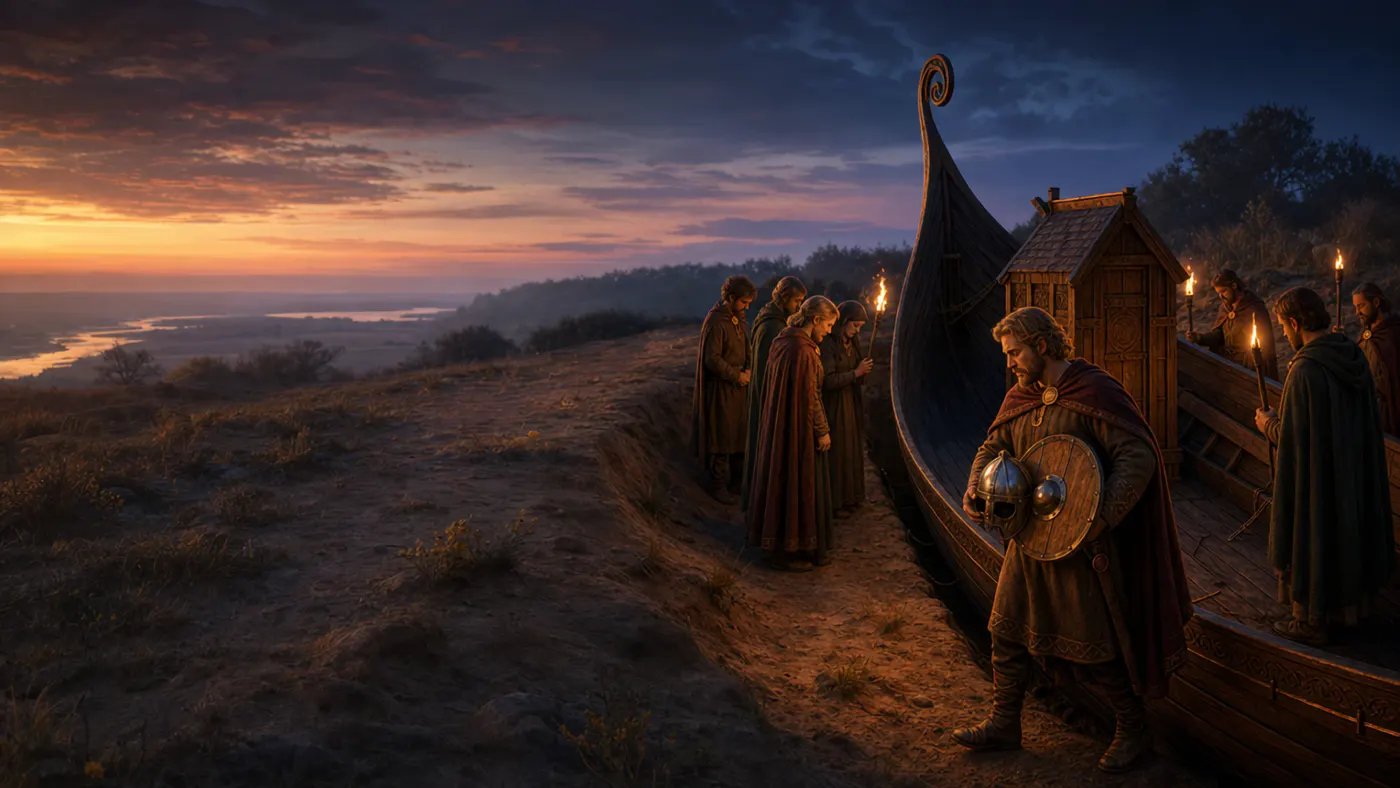
Perspectives and Interpretations. Section 5 compares a paraphrase of Bede with a teaching-created museum panel, asks who made each, when, why and for what question it is useful, teaches that bias shapes selection without automatically making a source false, and ends in a gallery verdict that names Rædwald as a candidate and explains why nobody can be certain.

Similarities and Differences. Section 6 compares Anglo-Saxon kingdoms and Dál Riata through four organised criteria without treating either as one unchanging people, uses a double timeline to reveal sequence and connection, and settles the label question in a conscience alley: distinct, and connected.
By the end of the unit:
The completed Sutton Who? exhibition on the classroom wall: a scaled timeline, evidence labels, a labelled hall reconstruction, signed consequence chains, every pupil's gallery verdict and a collaboratively written title panel.
In 1939 Basil Brown dug into a mound in Suffolk and found the shape of a ship, a helmet and treasure. No name was found.
The timber had gone. Only a ship-shaped stain and the iron rivets were left in the sand.
Roman rule in Britain ended gradually around AD/CE 410. Historians use 410 as a useful marker.
Angles, Saxons and Jutes settled in southern and eastern Britain over many decades, in overlapping waves.
A Gaelic-speaking kingdom grew around Argyll with strong links across the sea to Ireland. Nobody knows its exact start date.
Coins from Francia in the purse point to a burial around AD/CE 610 to 635. The newest coin gives the earliest possible date.
No timber Anglo-Saxon house survives standing. Dark marks in the soil show where the posts once stood.
Columba founded a monastery on Iona in AD/CE 563. In 635 Aidan went from Iona to Lindisfarne.
King Rædwald of East Anglia is a strong candidate for the grave. No source names him, so historians say likely, not certain.
Bede wrote about Rædwald a century later as a Christian monk. His viewpoint shapes what he chose to say.






Year 4
Asking who the Vikings really were, and getting to the truth about horned helmets!

Year 5
A birthday invitation written on wood, an empire that arrived twice, and where all of it actually sits in time.

Year 3
The discovery at Lindow Moss opens an investigation stretching from the Stone Age to the Iron Age.

Year 4
One family, one wireless announcement and a postbag of letters that carries the class through the war.
“As a primary pupil referral unit, creating genuine engagement is essential for our learners. We were looking for a curriculum that places children at the heart of everything and encourages them to immerse themselves in purposeful, meaningful activities. Dimensions has proved to be a strong fit because it enables our pupils to be active, curious learners rather than passive recipients of information. It brings learning to life in a way that motivates them and supports high-quality learning throughout. Plus, the children just love the curriculum!”
“Our school fully embraced the Dimensions curriculum and it has brought the world to our classrooms!”
“As a school we are really pleased with our decision to go with Dimensions. It has changed the way we teach our topic lessons as a school and has elevated the quality and diversity of the topics taught throughout KS1 and KS2. It is wonderful how the same theme can be so diverse across all age ranges and it has given teachers the confidence to explore themes they may not have taught previously.”
 Scoill Phurt Le Moirrey
“Dimensions Curriculum is amazing! We’ve used it for a few years now and the children absolutely love the different topics and are really engaged by the modern and relevant aspect of these. … Added to this is the amazing support that you get from the Dimensions team and nothing is ever too much trouble.”
“Introducing the curriculum has been a real game-changer for our team. It’s clear, well-structured, and genuinely supportive of high-quality teaching. Planning is now more streamlined and consistent, while still allowing flexibility for individual classes and teaching styles. The progression is easy to follow, expectations are clear, and it’s saved us valuable time without compromising creativity or impact. A thoughtfully designed resource that’s already making a positive difference in our classrooms.”
 Woodford Halse School
“As a class teacher I have really enjoyed using both the Dimensions Curriculum and 3D PSHE. Both products have been very well designed with clear, progressive and sequential plans, incorporating creative, engaging ideas and have given me the peace of mind to know I am teaching the children a quality curriculum. Wouldn’t expect anything less from a product designed by teachers, for teachers. Thank you Dimensions team!”
“The Dimensions 3D PSHE curriculum map, programs of study and enrichment unit are so well organised! I am very excited to use it all!”
“Children in my school using Dimensions are motivated to learn and can articulate what they are learning and why they are learning it. … The curriculum maps, knowledge organisers and other documents available for subject leadership are super handy and also save on workload. It is excellent value for money.”
“Introducing the curriculum has taken the weight off leaders knowing that everything is covered with clear progression documents. Children are getting the breadth and depth of coverage required. It has made a really positive impact especially when planning for mixed age classes. It is great to have the support available for ever changing class structures.”
 Beeston Primary School
“I have had an extremely positive experience with Dimensions. They are a fabulous company, producing products to a very high standard that really engage children. Their curriculum is amazing and using it, I have had outstanding progression, engagement and enjoyment both from the children and myself! I would wholeheartedly recommend Dimensions!”
“Music Crew gives teachers much more confidence when teaching music lessons. The children look forward to music and remember what they have learned from previously. The progression is excellent. Music Crew can be adapted to meet the needs of individual classes and the needs of the school.”
 Warton St. Paul’s CE School
“It allows teachers to do what they do best, create engaging schemes of work and lessons and then teach accordingly, safe in the knowledge that statutory demands are covered and progression ensured … Our successful inspection outcomes are testament to the confidence we have in Dimensions. I could not ask for more from Dimensions.”
“We contacted the Customer support team and requested a new document that had the lesson codes and learning objectives for each year group, for each term. They were more than happy to help and emailed the documents to us the same day which was very helpful and exactly what we needed.”
 St Andrew’s School
“As a teacher, working in an international school in Hong Kong I have followed the Dimensions Curriculum Thematic Units for a few years now, and I cannot recommend these resources highly enough. I absolutely love how it engages my students, by making learning fun, relevant and interesting for them. … Oh, and I should also mention all the time they save me in planning.”
“Absolutely loved using the Dimensions Curriculum. It was flexible and creative and allowed us to shape the learning in our school in such a way that it was relevant and purposeful for everyone involved, including the teachers! I enjoyed working with Elaine throughout, and found the support provided to myself as curriculum leader and the staff training given to be excellent.”
“I bought the PSHE Curriculum for my School. The resources are just fantastic! They are packed full of great ideas, easy to use and relevant. I would highly recommend all their resources to any teacher. It’s definitely the way forward.”
“From a teacher’s perspective, this curriculum has revitalized lesson planning. … Overall, this curriculum has been a game-changer. It has enhanced engagement, deepened learning, and created a more dynamic and enjoyable experience for both students and staff. We wholeheartedly recommend this approach to any ASD school …”
“We have worked with Elaine and the Dimensions team for over 5 years. The staff enjoy teaching the theme units and the pupils love their learning. Ofsted were very impressed with our curriculum and praised the creative learning and experiences the pupils were encountering. … Our school love it.”
“They are a fantastic company with a wealth of knowledge and understanding. Their products are inspiring, innovative, unique to the market and importantly they are fun and exciting. I would recommend every school to have a visit from Elaine or her team, it’s a decision you won’t regret!”
“Have used Dimensions to enhance our school curriculum for many years with much success and great results. The support of the Dimensions team and their curriculum has also helped us through two successful OFSTED visits! Would highly recommend.”
“We have seen the knowledge and skills of our children deepen and their experiences in the classroom and of the wider world have broadened. … We have made so many meaningful connections to our whole school vision and values.”
“Excellent curriculum resources with outstanding provision for all age groups.”